Shangri-Ha Cactus Ranch
Trichocereus pachanoi f. cristata variegata – Crested & Variegated San Pedro Cactus
Trichocereus pachanoi f. cristata variegata – Crested & Variegated San Pedro Cactus
Couldn't load pickup availability
Trichocereus pachanoi f. cristata variegata — Crested & Variegated San Pedro Cactus
Extraordinary Crested & Variegated South American Cactus
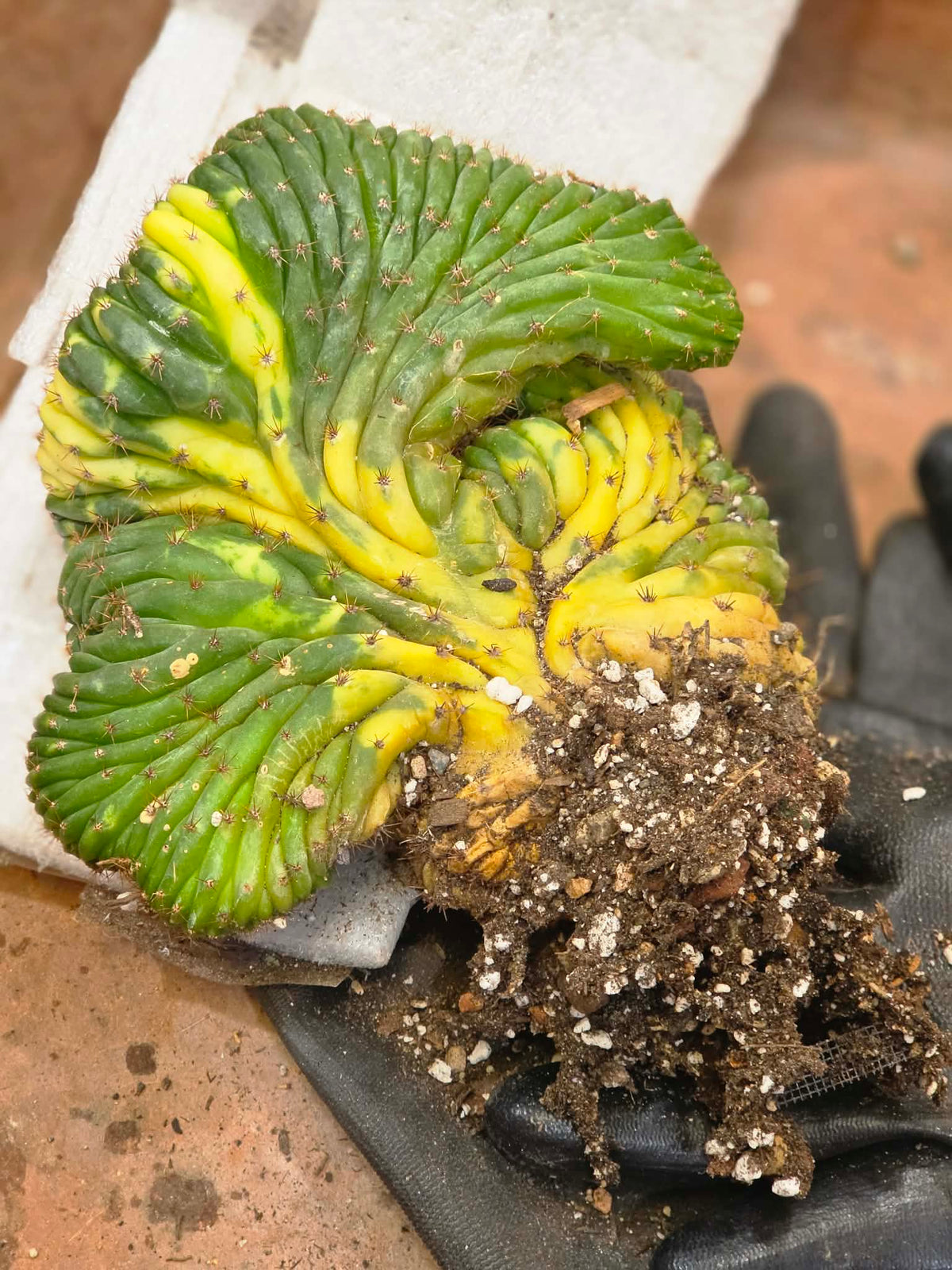
You will receive this exact, large, crested and variegated specimen.
Measures approximately 6.5" wide × 4.5" tall above the soil line.
Features an exceptional arrangement of broad, undulating crested fans with dramatic yellow-and-green variegation, deeply folded growth, and beautifully defined ribbing.
Showcased here in One-of-a-Kind Handmade Pottery — Obsidian Ruffles Vessel No. 232 (sold separately).
Roots as shown.
Will be shipped bare root.
🌵
Trichocereus pachanoi f. cristata variegata is an extraordinary ornamental expression of the San Pedro cactus, combining two highly desirable botanical characteristics: crested growth and variegated pigmentation. The species, also known in botanical literature as Echinopsis pachanoi, is native to the Andes of South America, particularly Ecuador and Peru, where it is associated with mountainous environments and a long history of human cultivation.
In its conventional form, Trichocereus pachanoi develops tall, upright, ribbed columns with green stems and relatively short spines. Crested specimens depart dramatically from this familiar architecture. Instead of producing a single, concentrated growing point, the growing meristem develops along an elongated line, creating flattened, fan-shaped structures that may fold, curve, and undulate as they expand. This phenomenon, known as fasciation, produces some of the most remarkable architectural forms found among cultivated cacti.
Variegation introduces an additional layer of complexity. Rather than displaying uniformly green tissue, this specimen exhibits striking areas of bright yellow interspersed with rich green and blue-green pigmentation. These contrasting colors follow the contours of the crested growth, emphasizing the ribs, folds, and overlapping surfaces. The result is an unusually dynamic combination of color and form.
This substantial specimen is especially impressive for its multiple interconnected crested formations. A broad upper fan rises above a series of smaller, curling crests, creating a layered composition with pronounced depth. The largest crest displays beautifully defined ribs sweeping outward in a continuous wave, while the smaller growth beneath it curls inward, forming an intricate arrangement of overlapping folds.
Measuring approximately 6.5 inches wide × 4.5 inches tall above the soil line, this specimen already possesses exceptional visual presence. Its combination of substantial width, deeply sculpted growth, and vivid variegation makes it a particularly desirable example of the ornamental possibilities within Trichocereus pachanoi.
Care Instructions
☀️ Light
Provide abundant bright, indirect light with carefully controlled exposure to direct sunlight. Although conventional green Trichocereus pachanoi can tolerate considerable sun, strongly variegated specimens require additional protection because yellow tissues contain less chlorophyll and are more vulnerable to sun damage. Gentle morning sunlight may be beneficial once the plant has been properly acclimated, but intense midday and afternoon exposure should generally be avoided, particularly in hot climates. Bright, filtered light is an excellent starting point. Introduce any increase in sunlight gradually, monitoring the yellow portions of the crests for signs of bleaching, discoloration, or scorching. Avoid prolonged low-light conditions, which can encourage weak growth.
💧 Water
Water thoroughly during periods of active growth, allowing the growing medium to dry substantially between applications. Crested and variegated specimens may grow more slowly than conventional green plants and should not be watered according to an inflexible schedule. Always consider temperature, light, root development, and the moisture content of the substrate. Avoid keeping the roots continuously wet, particularly during cool weather. Reduce watering considerably as temperatures decline and growth slows. During winter dormancy, maintain predominantly dry conditions, providing limited moisture only when appropriate for the plant's environment and condition. Excess moisture combined with poor drainage can cause root and stem rot.
🪨 Soil
Requires an exceptionally well-draining, highly aerated cactus medium. A mineral-rich mixture containing pumice, lava rock, coarse grit, decomposed granite, or similar inorganic materials is recommended. A modest proportion of organic material may be incorporated to support root development, provided the finished medium drains rapidly and does not retain excessive moisture. Avoid dense, compacted soils. Select a stable container with adequate drainage and sufficient width to accommodate the specimen's broad, crested architecture. Because the plant grows outward in multiple directions, a relatively low, stable pot may be preferable to a tall, narrow container.
🌡️ Temperature
Prefers moderate to warm growing conditions with protection from frost and prolonged cold, wet weather. As a conservative guideline for this valuable variegated specimen, maintain temperatures above approximately 45–50°F (7–10°C), particularly when the growing medium contains moisture. Although established green San Pedro cacti may tolerate brief exposure to cooler conditions, crested and strongly variegated specimens should be treated more cautiously. Avoid freezing temperatures, abrupt environmental changes, and prolonged exposure to cold rain. During winter, provide a bright, dry, protected location with adequate ventilation.
🌬️ Humidity
Prefers moderate to relatively dry atmospheric conditions with excellent air circulation. The deeply folded surfaces of crested cacti can create sheltered areas where moisture remains trapped, increasing the risk of fungal problems or localized rot. Avoid allowing water to collect within the overlapping crests. Good airflow is especially important around the lower folds and areas where multiple crested sections meet. When watering, direct moisture toward the growing medium rather than repeatedly wetting the crown. Avoid stagnant, persistently humid environments, particularly during cool weather.
📈 Growth Habit
Conventional Trichocereus pachanoi develops upright, columnar stems with longitudinal ribs. In the crested form, the growing meristem becomes elongated, producing flattened, fan-shaped growth that expands along an irregular line rather than from a single point. As the crest develops, it may fold, curl, branch, or form overlapping waves. The resulting architecture is highly individual and cannot be predicted precisely. This specimen already exhibits multiple broad crested sections with pronounced undulation and intricate overlapping growth. Its variegation may also change in distribution as new tissue develops. Green areas generally possess greater photosynthetic capacity than yellow areas, making balanced light exposure and conservative cultivation particularly important.
✍️ Special Note
This specimen combines cresting and variegation, two characteristics that require thoughtful handling. The yellow portions contain reduced chlorophyll and are more susceptible to intense sunlight, while the folded crested surfaces can be vulnerable to mechanical damage and trapped moisture. Avoid unnecessary handling of the delicate ribs and growing edges. During repotting, support the specimen from its base rather than applying pressure to the crest. Following bare-root shipping, establish the plant in dry, well-draining medium and allow any disturbed roots time to recover before gradually resuming watering. Protect the specimen from strong sunlight immediately after shipping. Because variegation and crested development can vary over time, the exact future pattern of growth and coloration cannot be guaranteed.
Why It Stands Out
- Extraordinary Trichocereus pachanoi f. cristata variegata
- Combines two highly desirable ornamental characteristics: cresting and variegation
- Substantial specimen measuring approximately 6.5" wide × 4.5" tall above the soil line
- Magnificent broad, fan-shaped crested growth
- Striking combination of bright yellow, rich green, and blue-green coloration
- Multiple interconnected crested sections create an exceptionally complex silhouette
- Large upper crest with beautifully defined, sweeping ribs
- Smaller curled crests form intricate overlapping structures beneath the main fan
- Pronounced undulating growth with exceptional architectural depth
- Natural variegation emphasizes the contours and folds of the crest
- Numerous small areoles and spines distributed along the ribbed surfaces
- Distinctive example of fasciation in a South American columnar cactus
- Ornamental expression of the celebrated San Pedro cactus
- Species native to the Andean region of South America
- Each developing crest contributes to an unpredictable and highly individual growth pattern
- Particularly desirable for collectors of crested, variegated, and unusual cacti
- Established, broad specimen with remarkable sculptural presence
- Showcased in One-of-a-Kind Handmade Pottery — Obsidian Ruffles Vessel No. 232 (sold separately)
- An exceptional addition to a collection emphasizing botanical mutations, unusual growth forms, and living sculpture
Collector Notes
Trichocereus pachanoi, widely known as the San Pedro cactus, belongs to the family Cactaceae and is native to the Andean region of South America. The species is particularly associated with Ecuador and Peru, where it grows in mountainous environments and has a long history of cultivation. Its botanical classification has undergone revision, and the name Echinopsis pachanoi is also widely encountered in horticultural and taxonomic literature. The use of Trichocereus pachanoi remains especially familiar among cactus collectors and specialist nurseries.
In its conventional form, San Pedro is an upright, columnar cactus capable of developing substantial height. Its stems are typically green to blue-green, with broad longitudinal ribs and relatively small spines arising from regularly spaced areoles. The species is admired for its vigorous growth under favorable conditions, imposing architectural presence, and large, showy flowers that may be produced by mature plants. Its long association with Andean cultivation has also contributed to its recognition well beyond its native region.
The crested form represents a dramatic departure from the familiar columnar silhouette. In ordinary cactus growth, new tissue is produced from a relatively concentrated apical meristem. In a crested plant, this growing region becomes elongated into a line or irregular band. Rather than extending upward as a cylindrical stem, the developing tissue expands along this extended growing edge, producing a flattened, fan-like structure. As growth continues, the expanding crest may bend, fold, curve, or divide into increasingly elaborate configurations.
This phenomenon is known botanically as fasciation. It occurs in a wide range of plants, although it is especially conspicuous among cacti because their succulent stems preserve the resulting structural changes so visibly. Fasciation may arise through alterations in meristem development associated with genetic, developmental, or environmental factors. In cultivated crested cacti, the precise original cause is often unknown. What matters horticulturally is the continued expression of the altered growing pattern, which produces the extraordinary sculptural forms sought by collectors.
Variegation adds a second, independent dimension to this specimen's ornamental character. In variegated plants, different regions of tissue contain differing amounts or distributions of chlorophyll and other pigments. Areas with normal chlorophyll production appear green, while regions with reduced chlorophyll may appear yellow, cream, or occasionally nearly white. In this specimen, the vivid yellow sections are interwoven with green and blue-green tissue, creating dramatic bands and irregular patches that follow the undulating contours of the crests.
The relationship between cresting and variegation is particularly fascinating. Each characteristic is visually remarkable on its own, but their combination produces an unusually complex result. The crested growth creates folds, ridges, and overlapping surfaces, while the variegation accentuates those structures through contrasting color. Yellow sections may appear along the raised ribs, within recessed folds, or across the broader surfaces of the fans. As the plant develops, the distribution of color can change, introducing an additional element of unpredictability.
This exact specimen is especially notable for the scale and complexity of its crested architecture. The largest fan occupies the upper portion of the plant, forming a broad, sweeping structure with closely arranged ribs. Its upper margin rises and curves across the composition, while the lower portion folds inward over a cluster of smaller crests. The resulting arrangement creates a striking impression of movement, with different sections appearing to curl, overlap, and emerge from one another.
The smaller crested formations are equally compelling. Along the lower left side, a rounded fan expands outward with pronounced radial ribbing, while the central and right-hand portions contain tightly folded growth with contrasting green and yellow surfaces. These interconnected sections give the specimen considerable visual depth. Rather than presenting a single flat crest, it offers a three-dimensional composition that can be appreciated from multiple viewing angles.
The specimen's pigmentation is another defining feature. Broad yellow regions extend through the central portions of the plant and into several of the crested folds, while the outer surfaces retain substantial green and blue-green tissue. This distribution is especially attractive because it highlights the natural geometry of the growth without obscuring the underlying rib structure. The small spines and regularly distributed areoles provide additional texture across the sculpted surfaces.
From a cultivation perspective, variegated cacti require careful management because yellow tissues generally contain less chlorophyll and therefore contribute less to photosynthesis than fully green tissue. Plants with extensive variegation may grow more slowly or require more carefully balanced light conditions. Too little light can compromise healthy growth, while excessive direct sunlight can damage the less-pigmented tissues. A specimen with substantial green areas, such as this one, possesses photosynthetically active tissue that can help support continued development, although its future growth rate and coloration remain dependent on cultivation conditions.
Crested growth also presents practical considerations. As the fan-shaped structures enlarge, their weight and distribution may become increasingly irregular. Unlike a conventional columnar cactus, which generally develops around a central vertical axis, a crested specimen can expand laterally and produce considerable weight toward one side. Appropriate container selection, careful handling, and attention to the plant's center of gravity are therefore important. The folded surfaces should also be kept free from persistent moisture and accumulated debris.
The specimen is presented here in Obsidian Ruffles Vessel No. 232, a distinctive handmade ceramic vessel whose layered, textured exterior provides a beautiful visual counterpoint to the plant's undulating growth. The dark, earthy finish emphasizes the vivid yellow and green coloration of the cactus, while the vessel's broad, low profile complements the expansive form of the crested fans. The relationship between the pottery's horizontal layers and the cactus's sweeping ribbed structures creates an especially harmonious composition. The handmade vessel is offered separately.
For collectors, the appeal of a crested and variegated Trichocereus pachanoi extends beyond rarity alone. Such plants represent remarkable expressions of developmental variation, revealing how changes in growing tissue and pigmentation can transform a familiar columnar species into an entirely different architectural form. Each specimen develops its own relationship between crest width, folding, branching, and color distribution. Even plants originating from similar material may eventually acquire noticeably different silhouettes.
Ultimately, this large, crested and variegated San Pedro cactus is an exceptional example of living botanical sculpture. Its broad fans, intricate folds, vivid yellow-and-green coloration, and established multi-crested structure give it a commanding presence far beyond its modest height. For a specialized collection emphasizing unusual cactus morphology, variegation, and extraordinary natural architecture, this specimen offers a particularly memorable combination of botanical interest and visual beauty.