Skip to product information
1 of 8

Shangri-Ha Cactus Ranch

Trichocereus pachanoi f. cristata variegata – Crested & Variegated San Pedro Cactus

Trichocereus pachanoi f. cristata variegata – Crested & Variegated San Pedro Cactus

Regular price $135.00 USD
Regular price $135.00 USD Sale price $135.00 USD
Sale Sold out
Shipping calculated at checkout.

Trichocereus pachanoi f. cristata variegataCrested & Variegated San Pedro Cactus

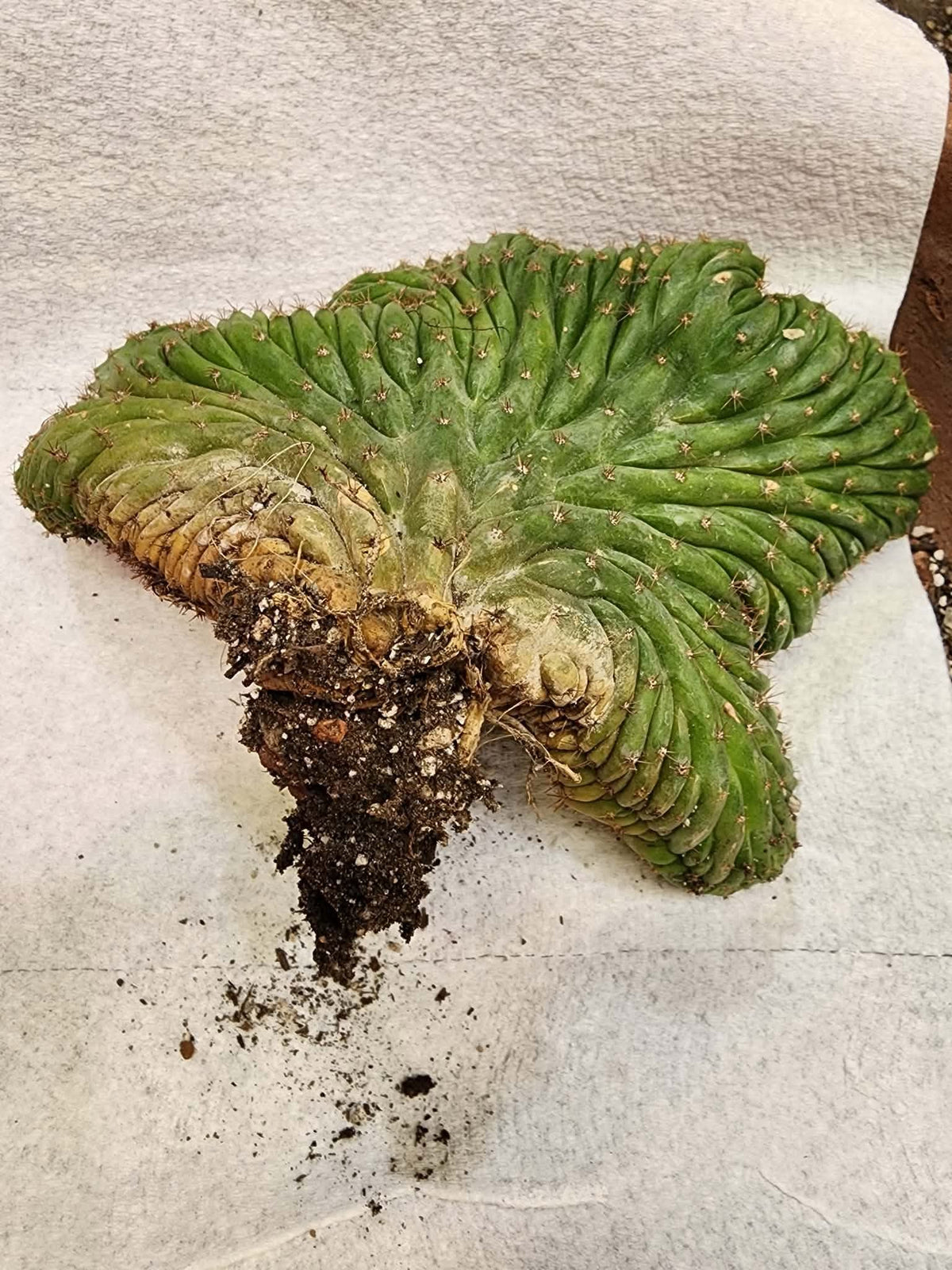
You will receive this exact, large, crested and variegated specimen.
Measures approximately 7" wide × 5" tall above the soil line.
Features dramatic crested growth with yellow, cream and green variegation throughout the folded, fan-shaped body.
Showcased here in Handmade Pottery – Volcanic Drift Basin No. 80 (sold separately).
Roots as shown.
Will be shipped bare root.

🌵

Trichocereus pachanoi, commonly known as the San Pedro cactus, is a columnar cactus native to the Andean regions of South America, particularly Peru and Ecuador. In its conventional form, it produces vigorous upright green stems with broad ribs and relatively short spines. It has been cultivated in the Andes for an extraordinarily long period and today is equally prized by cactus collectors for its handsome growth, adaptability and spectacular large white flowers.

This exact specimen bears little resemblance to the familiar columnar form. It combines two highly desirable mutations — cristate growth and variegation. Instead of developing around a single conventional growing point, its growth has broadened into an undulating crest, creating tightly folded ridges, valleys and fan-like projections. Across that already unusual architecture runs irregular green, yellow and creamy variegation, making the plant dramatically different from every angle.

At approximately 7 inches wide, this is already a substantial crest rather than a small starter plant. The combination of size, established roots, strong variegation and beautifully developed cristate growth makes it an exceptional individual collector specimen.

Care Instructions

☀️ Light: Bright light with several hours of direct sun is ideal. Because the pale variegated portions contain less chlorophyll and are more vulnerable to sunburn, introduce intense direct sun gradually, particularly after shipping.

💧 Water: Water thoroughly during active growth, then allow the soil to dry before watering again. Reduce watering significantly during cooler winter conditions. Never allow the root zone to remain continuously wet.

🪨 Soil: Requires a very fast-draining cactus mix with generous mineral content. Pumice, lava rock, coarse grit and similar inorganic materials provide excellent drainage and root aeration.

🌡️ Temperature: Prefers warmth during active growth. Established San Pedro cacti can tolerate cool conditions when dry, but a valuable variegated crest should be protected from frost and prolonged freezing temperatures.

💨 Humidity: Good air circulation is important, particularly around the numerous folds of a cristate specimen. Avoid prolonged combinations of cool temperatures, high humidity and wet soil.

🌱 Growth Habit: Normal T. pachanoi develops upright columnar stems. In the cristate form, the growing point becomes elongated rather than remaining singular, producing expanding fans, folds and convoluted ridges. As the crest develops, its shape can become increasingly elaborate and unpredictable.

⚠️ Special Note: The yellow and cream portions of a variegated cactus contain reduced chlorophyll. Strong light helps maintain compact growth and attractive coloration, but pale tissue can scorch more readily than green tissue. Gradual acclimation is especially important.

Why It Stands Out

  • Rare combination of cristate growth and variegation
  • Large, established specimen approximately 7" wide × 5" tall
  • Extraordinary folded and fan-shaped architecture
  • Dramatic green, yellow and cream coloration
  • Every new section of crest develops differently
  • Established rooted specimen
  • Highly collectible form of the iconic San Pedro cactus
  • You will receive this exact plant

Collector Notes

Cristation is one of the great accidents of cactus growth. In a conventional San Pedro, growth proceeds from a relatively small apical growing point and produces the familiar upright column. In a cristate plant, that growing region becomes elongated, causing the stem to grow laterally along a line rather than around a single point.

The result is the extraordinary fan-shaped growth seen here. As the growth line expands, it folds back upon itself, creating waves, ridges and increasingly complicated sculptural forms. No blueprint determines precisely where the next fold will develop, so an established crest becomes more individual with every growing season.

Then there is the variegation.

Areas containing reduced chlorophyll develop in shades of yellow, cream and yellow-green, while chlorophyll-rich tissue retains the deeper green characteristic of the species. Because the distribution of that tissue can change as the growing edge advances, the coloration is not simply a pattern sitting on the surface of the cactus — it is incorporated into the plant's growth itself.

Combining cristation and variegation in the same specimen multiplies that unpredictability. One mutation determines the extraordinary architecture while the other continually changes its color. New folds may emerge predominantly green, heavily variegated or somewhere between the two, and the relationship between those colors becomes increasingly complex as the crest expands.

At approximately 7 inches across, this specimen has already moved well beyond the tiny crested starts commonly encountered in cultivation. There is enough established growth to appreciate the mature folding of the crest and enough active growing edge for the plant to continue developing its own increasingly complicated form.

It is exactly what makes mutant cacti so addictive to collect: you can know the species, but you can never quite know what the plant is going to do next.

View full details