Skip to product information
1 of 10

Shangri-Ha Cactus Ranch

Trichocereus bridgesii f. Monstruosa – Penis Cactus

Trichocereus bridgesii f. Monstruosa – Penis Cactus

Regular price $71.25 USD
Regular price $95.00 USD Sale price $71.25 USD
Sale Sold out
Shipping calculated at checkout.

Trichocereus bridgesii f. monstruosa — Penis Cactus

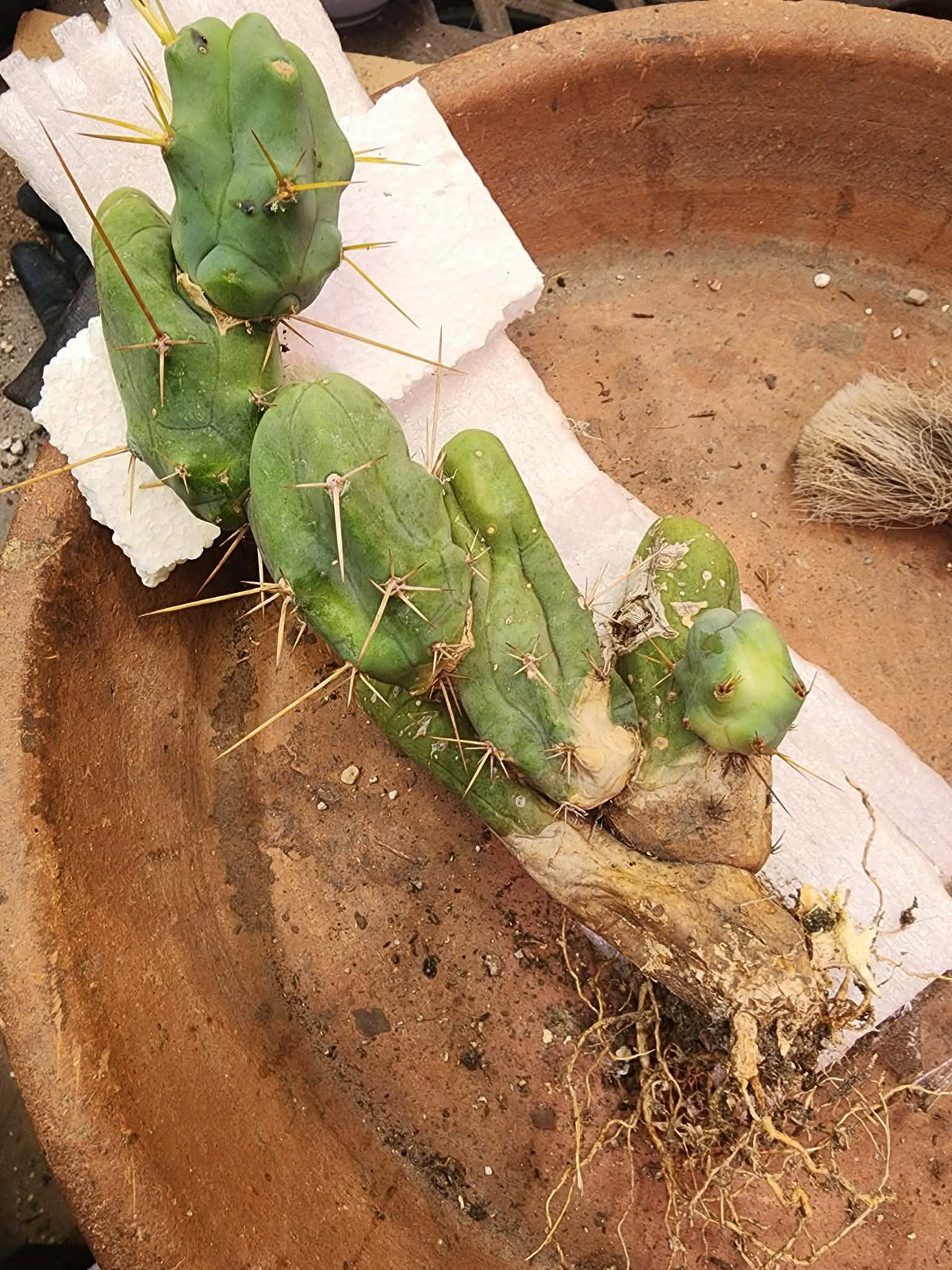
You will receive this exact specimen.
Measures approximately 9.5" tall above the soil line.
Showcased here in Handmade Pottery – Citron Coil Vessel No. 97 (sold separately).
Roots as shown.
Will be shipped bare root.

🌵

Trichocereus bridgesii f. monstruosa, commonly known as the Penis Cactus, is the extraordinary monstrose form of Trichocereus bridgesii, a columnar cactus native to Bolivia. Unlike the straight, regularly ribbed growth of the typical species, this unusual mutation produces irregular, swollen stem segments with reduced or nearly absent ribs. Each new section develops its own unpredictable shape, giving mature specimens the wonderfully strange, sculptural character that has made this one of the most recognizable monstrose cacti in cultivation.

This exact specimen has tremendous personality. At approximately 9.5 inches above the soil line, it has developed multiple irregular stems and offsets in dramatically different forms, from smooth rounded growth to elongated sections punctuated by formidable spines. The older growth at the base shows the scars and weathering accumulated over time, while newer blue-green growth above demonstrates the plant's continuing development. Rather than the uniform appearance of a young cutting, this is an established specimen whose wonderfully eccentric architecture has already begun to tell its own story.

Care Instructions

☀️ Light: Bright light to full sun. Strong light encourages compact, sturdy growth. Acclimate gradually to intense direct sun after shipping or periods in lower light.

💧 Water: Water thoroughly during active growth, then allow the soil to dry well before watering again. Reduce watering substantially during cooler or dormant periods.

🪨 Soil: Requires a fast-draining cactus mix with plenty of mineral material. Avoid heavy soils or conditions that keep the roots continually damp.

🌡️ Temperature: Prefers warm conditions during active growth. Protect from hard frost and prolonged cold, especially when the soil is wet.

💨 Humidity: Low humidity and good air circulation are ideal.

🌱 Growth Habit: Irregular, monstrose and highly variable. New growth develops as swollen, uneven stem sections and established plants may produce numerous basal and lateral offsets.

⚠️ Special Note: Some growth can develop significant spines. Handle carefully when repotting or moving the plant.

Why It Stands Out

  • Exceptional established monstrose specimen
  • Approximately 9.5" tall above the soil line
  • Multiple stems and offsets in dramatically different forms
  • Wonderful blue-green coloration in newer growth
  • Highly irregular, sculptural architecture
  • Native ancestry from Bolivia
  • Every specimen develops differently — no two mature plants are quite alike
  • One of the most instantly recognizable monstrose cacti in cultivation

Collector Notes

Monstrose cacti are fascinating because their unusual forms result from altered growth at the plant's growing points. Instead of following the orderly ribbed architecture typical of the species, the plant begins producing distorted and unpredictable growth. In Trichocereus bridgesii f. monstruosa, that mutation creates the distinctive swollen sections responsible for its unforgettable common name.

The ordinary Trichocereus bridgesii is native to the high, dry regions of Bolivia, where it develops into a tall columnar cactus. The monstrose form retains the toughness and vigor associated with its parent species but expresses that growth through a radically different architecture. Stems may be elongated or compact, smooth or spiny, and new offsets can emerge in unexpected places.

That unpredictability is a large part of its appeal to collectors. A young cutting may begin as a relatively simple segment, but established plants gradually become increasingly complex as new growth and offsets accumulate. The result can look less like a conventional cactus and more like a piece of living sculpture.

This exact specimen is already well along in that transformation. Its multiple growth points, varied stem shapes, mature basal growth and contrasting newer blue-green sections give it the kind of individuality that cannot be duplicated by another plant. The weathering and scars visible on the older portions are part of that history, while the vigorous growth above makes clear that the plant is continuing to build its wonderfully bizarre architecture.

View full details