Skip to product information
1 of 9

Shangri-Ha Cactus Ranch

Thelocactus setispinus variegata

Thelocactus setispinus variegata

Regular price $225.00 USD
Regular price $225.00 USD Sale price $225.00 USD
Sale Sold out
Shipping calculated at checkout.

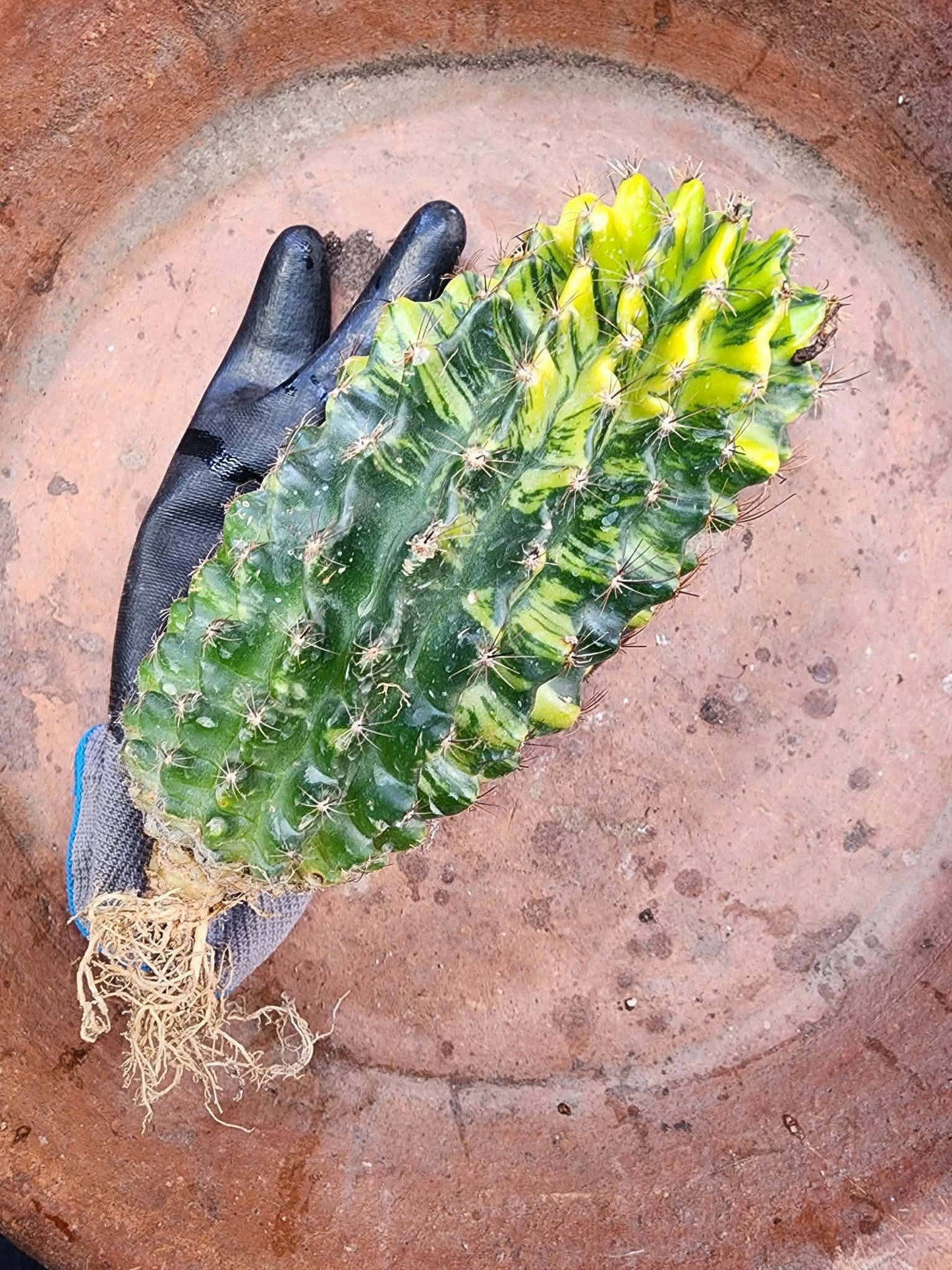
Thelocactus setispinus variegataRare Variegated Miniature Barrel Cactus

You will receive this exact specimen.
Measures approximately 7" tall above the soil line × 4" wide.
Features exceptional yellow and green variegation with wonderfully irregular growth.
Showcased here in Handmade Pottery – Bloodline No. 215 (sold separately).
Roots as shown.
Will be shipped bare root.

🌵

Thelocactus setispinus is a distinctive cactus native to southern Texas and northeastern Mexico, where it grows in hot, exposed habitats among rocky and gravelly soils. The species typically develops an upright, ribbed body armed with slender radial spines and longer central spines, eventually producing large, brilliant yellow flowers with contrasting reddish centers. Its combination of relatively slender growth, pronounced tubercles and spectacular flowering has made it a longtime favorite among collectors of North American cacti.

This exact specimen is dramatically different from the typical form. Across its approximately 7-inch-tall body, deep green tissue is interspersed with broad areas of vivid yellow and yellow-green variegation, producing an extraordinarily complex marbled pattern. Even more compelling is the plant's irregular, distorted growth, particularly toward the upper portion, where the normal rib structure breaks into swollen, asymmetrical projections. The combination of strong variegation, unusual architecture and substantial size gives this specimen tremendous individuality — there is nothing orderly or predictable about it.

Care Instructions

☀️ Light: Bright light with several hours of direct sun is ideal. Because variegated tissue contains less chlorophyll and is more susceptible to scorching, protect the yellow portions from sudden exposure to extremely intense afternoon sun. Acclimate gradually after shipping.

💧 Water: Water thoroughly during active growth, then allow the soil to dry completely before watering again. Reduce watering substantially during cooler winter months. Avoid allowing water to remain around the roots for prolonged periods.

🪨 Soil: Requires a very fast-draining, mineral-rich cactus mix. Pumice, lava rock, coarse grit and similar inorganic components provide excellent drainage and root aeration.

🌡️ Temperature: Prefers warmth during active growth and can tolerate cooler conditions when kept dry. Protect from hard frost and prolonged freezing temperatures.

💨 Humidity: Low humidity with excellent air circulation is preferred. Avoid prolonged combinations of cool temperatures and wet soil.

🌱 Growth Habit: The typical species develops upright, ribbed stems that may remain solitary or branch with age. This specimen displays pronounced irregular growth in addition to variegation, giving its ribs and upper growth a much more distorted and sculptural character than a typical T. setispinus.

⚠️ Special Note: Variegated areas contain reduced chlorophyll, making appropriate light especially important. Bright conditions help maintain compact growth and strong coloration, but intense sun should be introduced gradually to avoid scorching the yellow tissue.

Why It Stands Out

  • Exceptional yellow and deep green variegation
  • Approximately 7" tall × 4" wide
  • Highly irregular, sculptural growth
  • Dramatic marbled coloration
  • Strong contrast between variegation and spination
  • Substantial established specimen
  • Native species from Texas and northeastern Mexico
  • Capable of producing spectacular yellow flowers
  • A completely individual collector specimen

Collector Notes

Thelocactus setispinus has an interesting botanical history and has been moved among several genera over the years. Collectors may encounter it under older classifications, particularly Hamatocactus setispinus and Ferocactus setispinus. Whatever name appears on an old label, its combination of slender ribs, distinctive spination and disproportionately large flowers makes the species readily recognizable in its conventional form.

Its natural range extends from southern Texas into northeastern Mexico, placing it within the broader Chihuahuan Desert and Tamaulipan region. Plants endure intense sun, seasonal drought and highly draining soils — conditions reflected in their preference for strong light and careful watering in cultivation.

Variegation completely changes the visual character of the species. Portions of the plant that produce reduced amounts of chlorophyll appear yellow or yellow-green rather than the normal deep green. As the growing point continues to develop, those areas can shift, widen, narrow or disappear, meaning the pattern becomes a living record of the plant's growth rather than a static marking.

And this particular specimen has another surprise: its architecture is nearly as interesting as its color. Toward the upper portion especially, the normally recognizable rib structure becomes increasingly distorted, producing swollen projections and wonderfully peculiar forms among the variegated tissue. At approximately 7 inches tall, there is enough mature growth to see years of those changes layered one above another — dark green giving way to brilliant yellow, conventional ribs giving way to distortion, and then changing again farther up the plant.

It is precisely the unpredictability that makes a specimen like this so compelling. No second plant will grow through the same sequence of color and form.

View full details