Shangri-Ha Cactus Ranch
Pseudolithos Caput-Viperae - Snake Head - Viper Head
Pseudolithos Caput-Viperae - Snake Head - Viper Head
Regular price
$55.00 USD
Regular price
$55.00 USD
Sale price
$55.00 USD
Unit price
per
Shipping calculated at checkout.
Couldn't load pickup availability
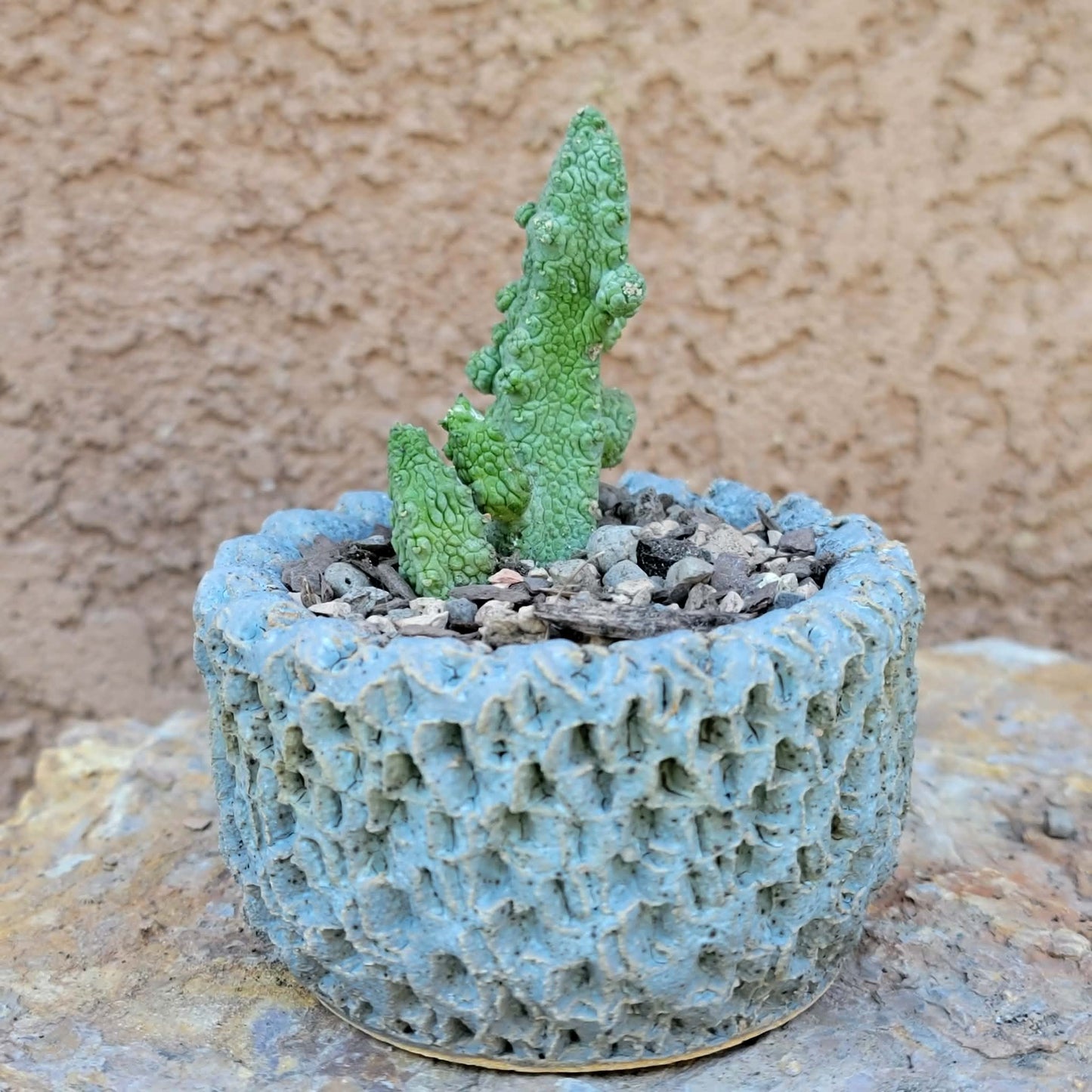
Pseudolithos Caput-Viperae – Viper’s Head – Snake Head
You will receive the exact specimen shown here.
Measures 2.5” tall.
Showcased here in one-of-a-kind handmade pottery (sold separately).
Roots as shown.
Will be shipped bare root.
Pseudolithos caput-viperae, commonly known as Viper's Head or Snake Head Pseudolithos, is an exceptionally rare succulent native to Somalia. Its name derives from its flattened, warty stem, which closely resembles the head of a viper resting in the sand.
DESCRIPTION and CHARACTERISTICS:
- Unique Growth: Unlike most Pseudolithos species that remain solitary, P. caput-viperae eventually branches into small clumps after about a year of growth.
- Appearance: Stems are oval and flattened, reaching up to 2 cm in height and 6 cm in length. Their color varies from light green to reddish-brown when exposed to full sun.
- Flowers: It produces small, urn-shaped clusters of up to 30 flowers that open simultaneously. These flowers are pollinated by flies and emit a scent of rotten meat.
- Difficulty: It is considered one of the most challenging succulents to cultivate, often requiring grafting to survive outside its native habitat.
CULTIVATION and CARE:
This plant is extremely sensitive to moisture and requires precise conditions to prevent sudden rot.
- Substrate: Use a 100% mineral soil mix (pumice, perlite, or lava rock) to ensure immediate drainage.
- Light: Prefers bright, filtered light or morning sun with afternoon shade. Direct afternoon sun can cause burns.
- Watering: Water sparingly and only when the soil is completely dry. Withdraw watering almost entirely during winter months unless kept in a heated environment.
- Temperature: Maintain a minimum temperature of 55°F (13°C); it has zero frost tolerance.
GROWING TIPS:
- Propagation: Can be done from offsets or seeds; dry cuttings for a week before planting.
- Feeding: Infrequent fertilization is sufficient.
- Pests: Watch for typical succulent pests like aphids, mealybugs, and spider mites.