Shangri-Ha Cactus Ranch
Pilosocereus Pachycladus
Pilosocereus Pachycladus
Couldn't load pickup availability
Pilosocereus pachycladus — Blue Torch Cactus
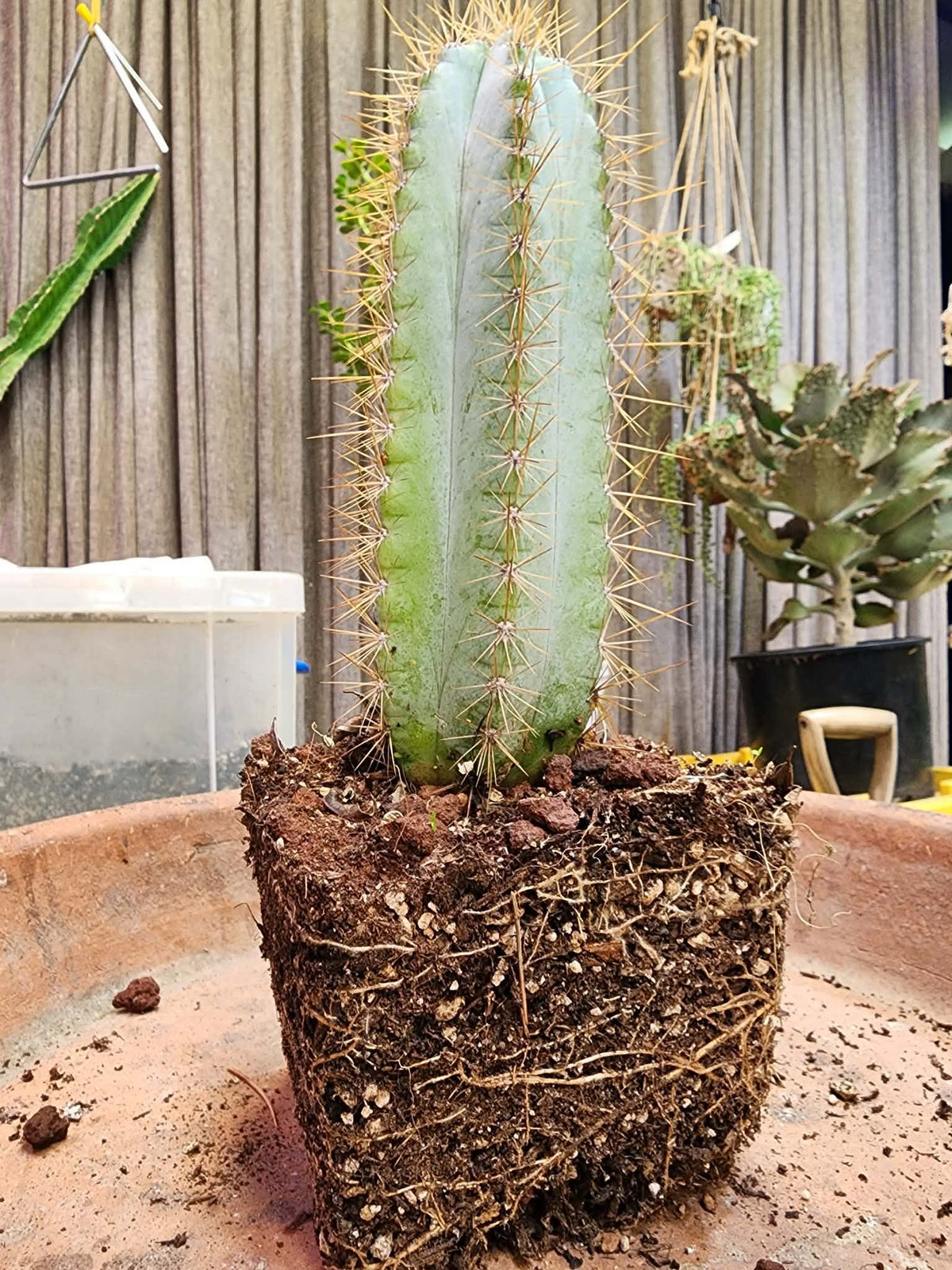
You will receive the exact large specimen shown here.
Measures approximately 7" tall above the soil line.
Showcased here in Handmade Planter – Sunbreak No. 215 (sold separately).
Roots as shown.
Will be shipped bare root.
🌵
Pilosocereus pachycladus, commonly known as the Blue Torch Cactus, is a spectacular columnar cactus native to Brazil and prized for the remarkable powdery blue coloration of its stems. The plant develops strong vertical columns divided by pronounced ribs, with golden to pale straw-colored spines creating a beautiful contrast against the intensely glaucous blue epidermis. In bright conditions, well-grown specimens can develop an almost electric blue appearance that makes the species immediately recognizable.
This exact specimen is a particularly beautiful example of the species. Measuring approximately 7 inches above the soil line, it has already developed a substantial, broad column with exceptionally strong blue coloration from base to tip. Its evenly defined ribs and orderly rows of pale radiating spines give it a wonderfully architectural appearance, while the rounded growing tip shows the characteristic form of healthy active growth. Compact enough to display easily but already substantial enough to make an immediate visual impact, this is a striking specimen for any collector of blue or columnar cacti.
Care Instructions
☀️ Light: Bright light to full sun. Strong light helps maintain the exceptional blue coloration for which the species is prized. Acclimate gradually to intense direct sun after shipping or periods in lower light.
💧 Water: Water thoroughly during active growth, then allow the soil to dry completely before watering again. Reduce watering substantially during cooler months.
🪨 Soil: Use a very fast-draining, mineral-rich cactus mix. Excellent drainage is essential, and the roots should never remain in persistently wet soil.
🌡️ Temperature: Prefers warm conditions and performs especially well with summer heat. Protect from frost and prolonged cold, particularly when wet.
💨 Humidity: Low to moderate humidity with excellent air circulation is preferred.
🌱 Growth Habit: Upright and columnar, eventually developing into a tall, imposing cactus and branching as mature plants develop.
⚠️ Special Note: The spines are sharp. Handle carefully and use appropriate protection when repotting or moving the plant.
Why It Stands Out
- Exceptional powder-blue coloration
- Approximately 7" tall above the soil line
- Thick, beautifully proportioned column
- Strong, evenly defined ribs
- Pale golden spines contrast dramatically with the blue epidermis
- Native to Brazil
- One of the most visually striking blue columnar cacti in cultivation
Collector Notes
The extraordinary color of Pilosocereus pachycladus is not simply ornamental. The blue appearance comes from a glaucous, waxy coating on the epidermis, an adaptation that helps protect the plant from the intense sunlight and demanding conditions of its native environment. The result is one of the most beautiful natural color combinations found among columnar cacti: cool blue stems punctuated by orderly clusters of warm, pale spines.
Native to eastern Brazil, the species occurs in seasonally dry landscapes where cacti and other drought-adapted plants have evolved to withstand powerful sun, heat and extended periods with limited rainfall. As it matures, P. pachycladus can become an imposing upright plant, making younger established specimens particularly rewarding for collectors who enjoy watching a columnar cactus develop over time.
This exact plant already possesses the characteristics collectors look for in the species. Its broad, straight column, pronounced ribs and especially vivid blue surface give it tremendous presence despite its manageable size. Viewed closely, the geometric arrangement of the areoles and spines against that nearly uninterrupted blue surface is every bit as interesting as the overall silhouette.
Blue cacti occupy a special place in many collections because very few plants produce coloration quite like this naturally. Pilosocereus pachycladus is one of the classics — unmistakably architectural, beautifully colored, and increasingly dramatic as it gains height and maturity.