Skip to product information
1 of 7

Shangri-Ha Cactus Ranch

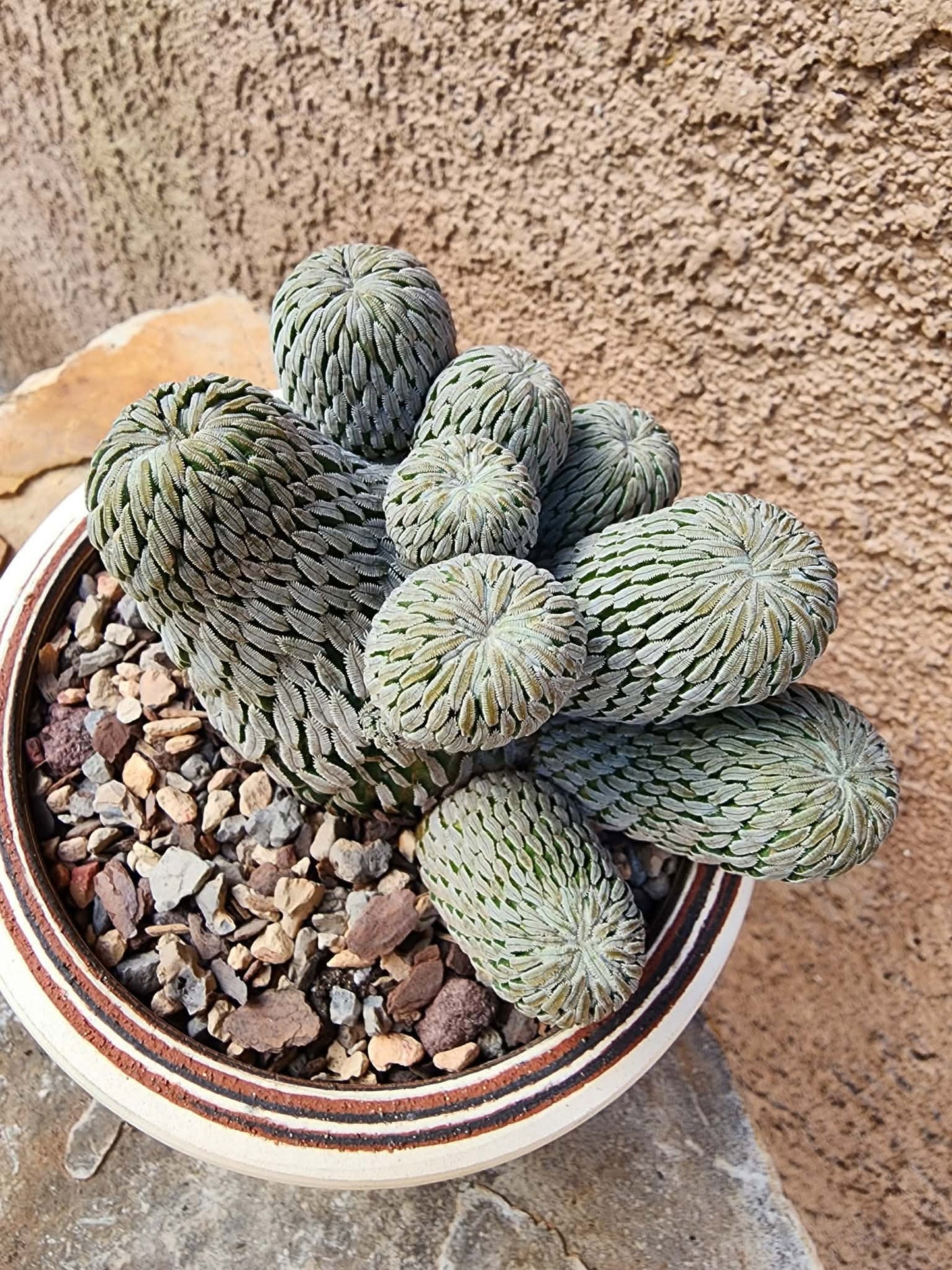
Pelecyphora aselliformis - Hatchet Cactus - 9 Heads

Pelecyphora aselliformis - Hatchet Cactus - 9 Heads

Regular price $265.00 USD
Regular price $265.00 USD Sale price $265.00 USD
Sale Sold out
Shipping calculated at checkout.

Pelecyphora aselliformisHatchet Cactus — 9 Heads

You will receive the exact specimen shown here.
Features 9 beautifully developed heads.
Measures approximately 4.25" wide × 3" tall.
Showcased here in Handmade Pottery – Horizon Stripe Bowl No. 47 (sold separately).
Roots as shown.
Will be shipped bare root.

🌵

Pelecyphora aselliformis is an extraordinary slow-growing cactus native to central Mexico, particularly the state of San Luis Potosí, where it occurs in dry, rocky limestone habitats. Its appearance is unlike almost any other cactus. Rather than conventional ribs or obvious spines, the surface is composed of tightly overlapping tubercles tipped with tiny flattened, comb-like spines. These distinctive structures have been compared to hatchet blades, woodlice and miniature scales, giving the species both its common name, Hatchet Cactus, and its remarkably intricate texture.

This exact specimen is especially impressive for its established 9-headed growth. Across approximately 4.25 inches, the individual heads rise together into a beautifully dense colony, each displaying the extraordinary silvery-white comb-like spination that makes P. aselliformis immediately recognizable. The contrast between those pale flattened spines and the deep green visible beneath them creates an almost woven or armored appearance. At approximately 3 inches tall, this is a substantial, mature-looking example of an exceptionally slow-growing species — compact, beautifully proportioned and increasingly remarkable the closer you look.

Care Instructions

☀️ Light: Bright light to full sun is ideal for maintaining compact growth and strong spination. Acclimate gradually to intense direct sunlight after shipping, particularly in very hot climates.

💧 Water: Water thoroughly during active growth, then allow the soil to dry completely before watering again. Keep very dry during winter dormancy. This slow-growing species is highly susceptible to rot if kept continually moist.

🪨 Soil: Requires an exceptionally fast-draining, mineral-rich cactus mix. Limestone, pumice, coarse grit and other inorganic components are particularly appropriate. Excellent drainage and root aeration are essential.

🌡️ Temperature: Prefers warm conditions during active growth and cool, dry conditions during winter dormancy. Protect from hard frost and prolonged freezing temperatures.

💨 Humidity: Low humidity and excellent air circulation are preferred. Avoid prolonged combinations of cool temperatures and damp soil.

🌱 Growth Habit: Extremely slow-growing and compact. Plants may remain solitary when young but can gradually produce offsets and develop into impressive multi-headed clusters over many years.

⚠️ Special Note: Pelecyphora aselliformis is an exceptionally slow-growing cactus with a substantial root system. After bare-root shipping or repotting, allow the plant time to settle before watering. Avoid unnecessarily disturbing established roots.

Why It Stands Out

  • Impressive 9-headed cluster
  • Approximately 4.25" wide × 3" tall
  • Extraordinary flattened, comb-like spination
  • Beautiful silvery-white and deep green coloration
  • Extremely slow-growing collector species
  • Mature, naturally clustered form
  • Native to central Mexico
  • One of the most unmistakable textures in the cactus world
  • A particularly substantial example of Pelecyphora aselliformis

Collector Notes

Pelecyphora aselliformis is one of those cacti that scarcely looks like a cactus at first glance. Its tubercles are arranged in tight spirals across the stem, and each carries a row of tiny flattened spines pressed closely against its surface. Seen together, these structures create the extraordinary overlapping pattern visible across the plant — somewhere between scales, feathers and meticulously laid pieces of armor.

The species is native to a relatively restricted region of San Luis Potosí in central Mexico, where it grows slowly among limestone and rocky soils. Its compact body and pale surface help it blend remarkably well into its surroundings. Growth is famously slow, and well-established specimens represent considerable time — particularly plants that have progressed beyond a single head and developed substantial colonies.

The botanical name itself points to the plant's unusual appearance. “Aselliformis” refers to the resemblance of its distinctive tubercles and spines to a woodlouse, while the common name Hatchet Cactus comes from another interpretation of those flattened, blade-like structures. Either way, the feature that defines the species is unmistakable: hundreds of tiny pale structures arranged with extraordinary precision across each head.

What really elevates this exact specimen is its nine-headed architecture. Rather than appreciating that remarkable surface on a single stem, here it repeats across an entire established cluster. Heads of different sizes press naturally against one another, giving the approximately 4.25-inch-wide specimen tremendous density and dimension. It is a beautiful example of what time can do with an already extraordinary species — intricate at a distance and absolutely fascinating up close.

View full details