Shangri-Ha Cactus Ranch
Pachypodium Brevicaule x Densiflorum
Pachypodium Brevicaule x Densiflorum
Couldn't load pickup availability
Pachypodium Brevicaule x Densiflorum
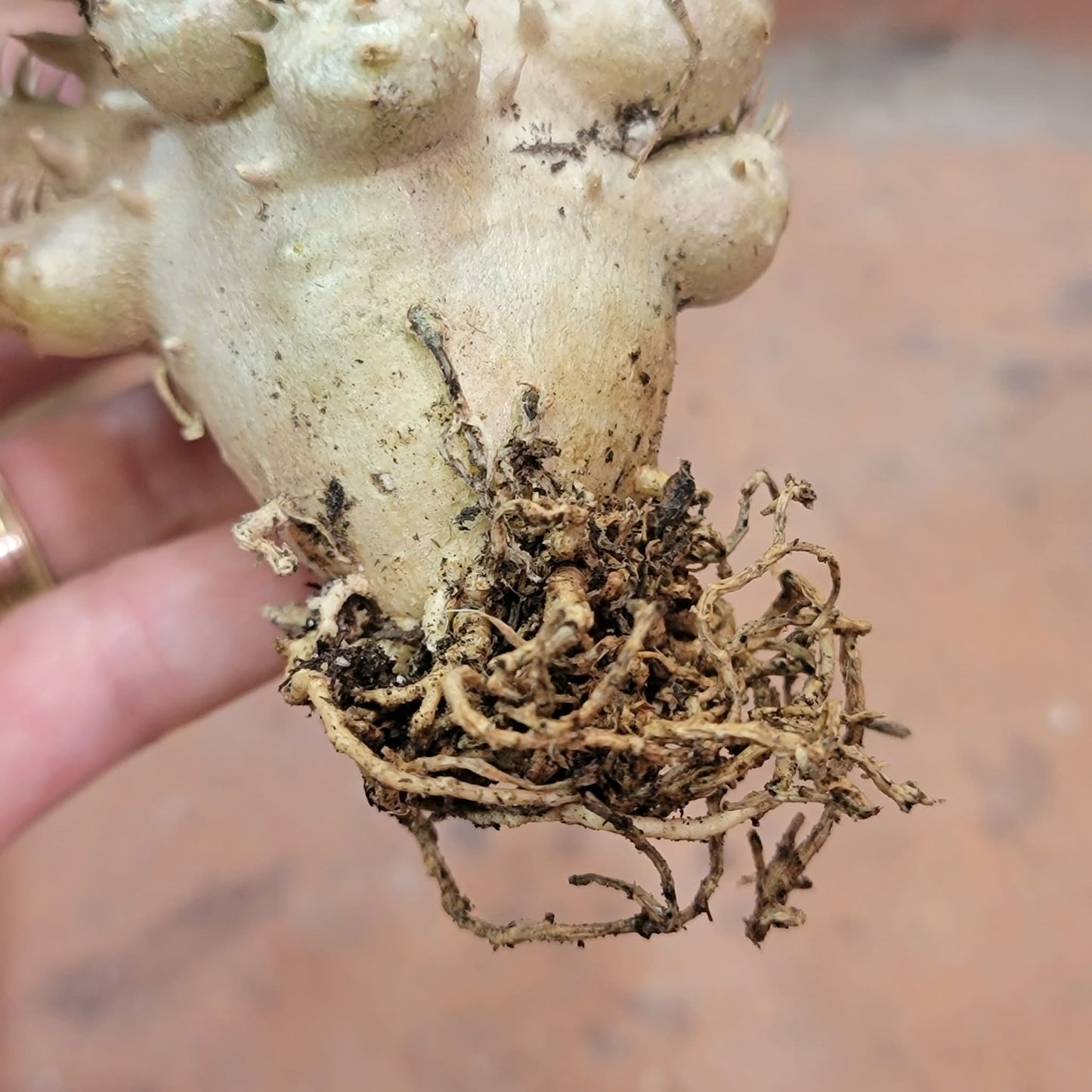
You will receive this exact, large specimen.
Measures 5" tall x 3.5” wide.
Roots as shown.
Showcased here in one-of-a-kind handmade pottery (sold separately).
Will be shipped bare root.
The Pachypodium brevicaule x densiflorum is a rare and striking hybrid succulent highly valued by collectors for its unique appearance, combining the features of its parent species. This plant features a distinctive, broad, and low-growing caudex (thickened base) with spiny stems and bright yellow flowers.
DESCRIPTION and CHARACTERISTICS:
- Appearance: The hybrid typically develops a stout, bulbous, or "blob-like" silvery caudex, similar to the P. brevicaule parent, but often grows slightly taller due to the influence of P. densiflorum. It produces thin, green leaves during the growing season which are deciduous in winter.
- Flowers: It blooms with bright yellow, trumpet-shaped flowers on long stalks, a characteristic inherited from both parent species.
- Origin: Like its parent plants, this hybrid is native to Madagascar.
- Growth Habit: It's a moderate, slow-growing succulent that is often grown in shallow, wide pots to accommodate its unique shape.
CULTIVATION and CARE:
To ensure the hybrid thrives, provide conditions that mimic its natural arid habitat while accommodating its seasonal growth changes.
- Light: Provide plenty of bright, indirect sunlight, such as a south-facing window, for at least 6-8 hours daily. Avoid harsh, direct sun during the hottest part of the day to prevent sunburn.
- Watering: Water sparingly and allow the soil to dry out completely between waterings. During the growing season (spring and summer), water thoroughly every 2-3 weeks. Reduce watering significantly during the dormant winter months to prevent rot.
- Soil: Use a well-draining cactus or succulent potting mix containing a high percentage (50-70%) of mineral grit like perlite, pumice, or coarse sand. Avoid moisture-retentive soils.
- Temperature & Frost Resistance: This plant is tender and not frost-hardy (USDA Hardiness zones 10-11). If there is a risk of freezing temperatures, bring it indoors.
- Fertilization: Fertilize sparingly with a diluted, balanced fertilizer once every 4-6 weeks during the growing season.
- Potting: Repot every 2-3 years in a shallow, wide pot. The plant has sharp spines, so use caution and wrap the trunk in newspaper when handling.