Shangri-Ha Cactus Ranch
Neobuxbaumia polylopha inermis - 26" Tall! Collector Specimen
Neobuxbaumia polylopha inermis - 26" Tall! Collector Specimen
Couldn't load pickup availability
Neobuxbaumia polylopha f. inermis — Huge Old Collector Specimen
You will receive this exact, huge specimen.
Measures 26" tall above the soil line × 5" wide!
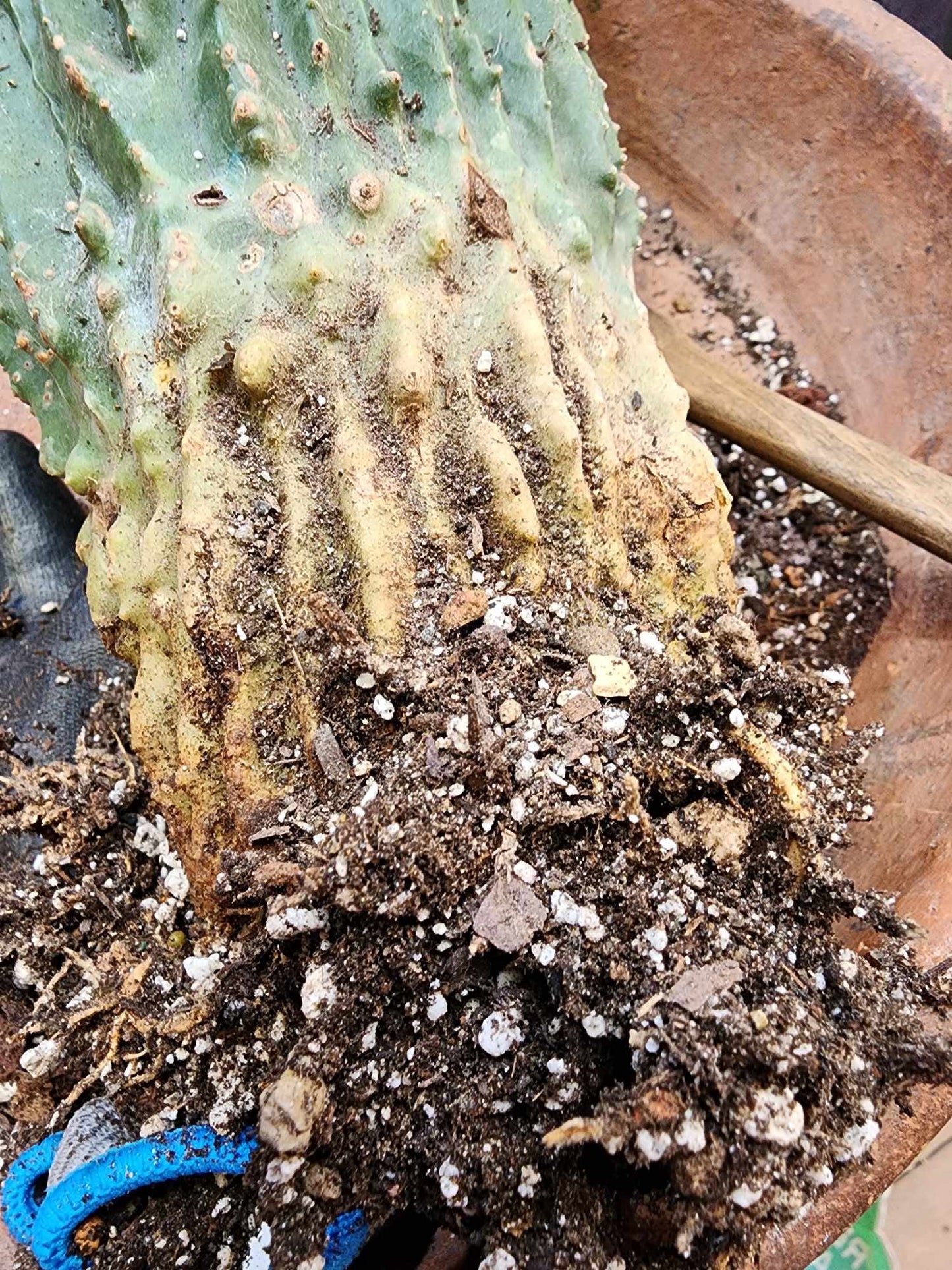
Roots as shown.
This is a huge and heavy specimen and will be a little expensive to ship.
Showcased here in Handmade Pottery — Volcanic Coil Vessel No. 201 (sold separately).
Will be shipped bare root.
🌵
Neobuxbaumia polylopha f. inermis is an extraordinary unarmed form of one of Mexico's great columnar cacti. The species is immediately recognizable for its remarkable number of narrow vertical ribs, which run tightly together along the stem and give mature plants an almost pleated or fluted appearance. In forma inermis, the already dramatic architecture becomes even more pronounced: with the formidable spination of the typical species greatly reduced or absent, the eye is drawn instead to the dense ribbing, blue-green epidermis, and uninterrupted geometry of the column itself.
This is an exceptionally large, old collector specimen, standing approximately 26" tall above the soil line and 5" wide. Its long column records years of growth in subtle changes of width, rib structure, surface texture, and old growth transitions. The result is not the perfectly uniform appearance of a young nursery-grown cactus, but something considerably more interesting: a mature plant whose history is plainly visible along its stem.
Care Instructions
☀️ Light
Very bright light to full sun. Strong light encourages sturdy, compact growth and maintains the characteristic blue-green coloration and pronounced rib structure. Acclimate gradually to intense direct sunlight after shipping or periods under filtered light.
💧 Water
Water deeply during active warm-season growth, then allow the soil to dry thoroughly before watering again. Reduce watering dramatically during cooler months. Mature columnar cacti store substantial reserves within their stems and tolerate drought far better than prolonged wet conditions.
🪨 Soil
Requires an exceptionally fast-draining cactus mix with substantial mineral content. Pumice, lava, coarse grit, and similar inorganic materials are ideal for maintaining excellent aeration around the roots. Avoid dense or moisture-retentive soil.
🌡️ Temperature
Thrives in warm, dry conditions. Protect from hard frost and prolonged cold, particularly when container grown. During cool weather, keeping the root system dry is especially important.
🌬️ Humidity
Prefers relatively dry conditions with excellent air circulation. Avoid prolonged cool humidity and stagnant moisture around the stem or root zone.
📈 Growth Habit
Develops as a massive upright column characterized by an unusually high number of narrow ribs. Typical Neobuxbaumia polylopha can eventually become a very large tree-like cactus in habitat, while container-grown specimens remain considerably more manageable. Growth is generally solitary or only sparingly branched, emphasizing the imposing vertical architecture of the species.
✍️ Special Note
The designation inermis means unarmed and is used botanically for forms exhibiting greatly reduced or absent spination. In this form of Neobuxbaumia polylopha, the lack of prominent spines exposes the extraordinary rib structure of the stem, producing a particularly clean and sculptural appearance.
As with any old collector cactus, mature surface marks, scars, corking, changes in rib development, and evidence of previous growing seasons are part of the specimen's history rather than imperfections. Please review all photographs carefully, as you will receive the exact plant shown.
Why It Stands Out
- Huge, old collector specimen
- Impressive 26" height above the soil line
- Substantial 5" wide mature column
- Rare unarmed inermis form
- Extraordinary number of tightly packed vertical ribs
- Beautiful blue-green coloration
- Deeply fluted, almost architectural surface
- Multiple visible stages of mature growth
- Virtually uninterrupted columnar silhouette
- Excellent established root system
- Mature character impossible to reproduce quickly
- The exact specimen shown here
Collector Notes
Neobuxbaumia polylopha is native to Mexico, where it inhabits hot, seasonally dry landscapes and can ultimately develop into an enormous columnar cactus. Its specific epithet is particularly descriptive: polylopha refers to the plant's many crests or ribs, and few columnar cacti demonstrate that characteristic as dramatically.
Instead of the relatively small number of broad ribs seen in many familiar columnar species, N. polylopha divides its circumference into a remarkable succession of narrow vertical folds. Seen from a distance, these ribs create strong parallel lines running the length of the plant; viewed closely, they produce an intricate corrugated surface of ridges, grooves, areoles, and changing shadows.
The inermis form strips that architecture down even further. With prominent spines greatly reduced or absent, very little interrupts the extraordinary vertical rhythm of the stem. The result can appear almost constructed rather than grown—a living column whose surface resembles pleated fabric, carved stone, or deeply fluted architectural ornament.
This particular specimen is especially compelling because its age is visible.
At 26" tall above the soil line, the column passes through several distinct chapters of development. Subtle transitions in diameter and rib formation mark changing periods of growth, while older surface scars and weathering record the years already behind it. Near the upper portion, another pronounced transition gives way to a narrower, beautifully ordered crown of fresh growth.
Those changes are precisely what distinguish an old collector plant from a newly produced specimen. A young cactus can possess the genetics; only time produces the record.
Tall, substantial, beautifully ribbed, virtually unarmed, and already carrying years of visible history, this Neobuxbaumia polylopha f. inermis has the presence of a plant that has been grown rather than manufactured—and at 26", it is a remarkable example of one of Mexico's most architectural columnar cacti.