Skip to product information
1 of 12

Shangri-Ha Cactus Ranch

Myrtillocactus geometrizans variegata monstrose cv. Fred Graft

Myrtillocactus geometrizans variegata monstrose cv. Fred Graft

Regular price $325.00 USD
Regular price $325.00 USD Sale price $325.00 USD
Sale Sold out
Shipping calculated at checkout.

Myrtillocactus geometrizans variegata monstrose cv. ‘Fred’One-of-a-Kind 6-Graft Collector Specimen

You will receive this exact, extraordinary one-of-a-kind grafted specimen.
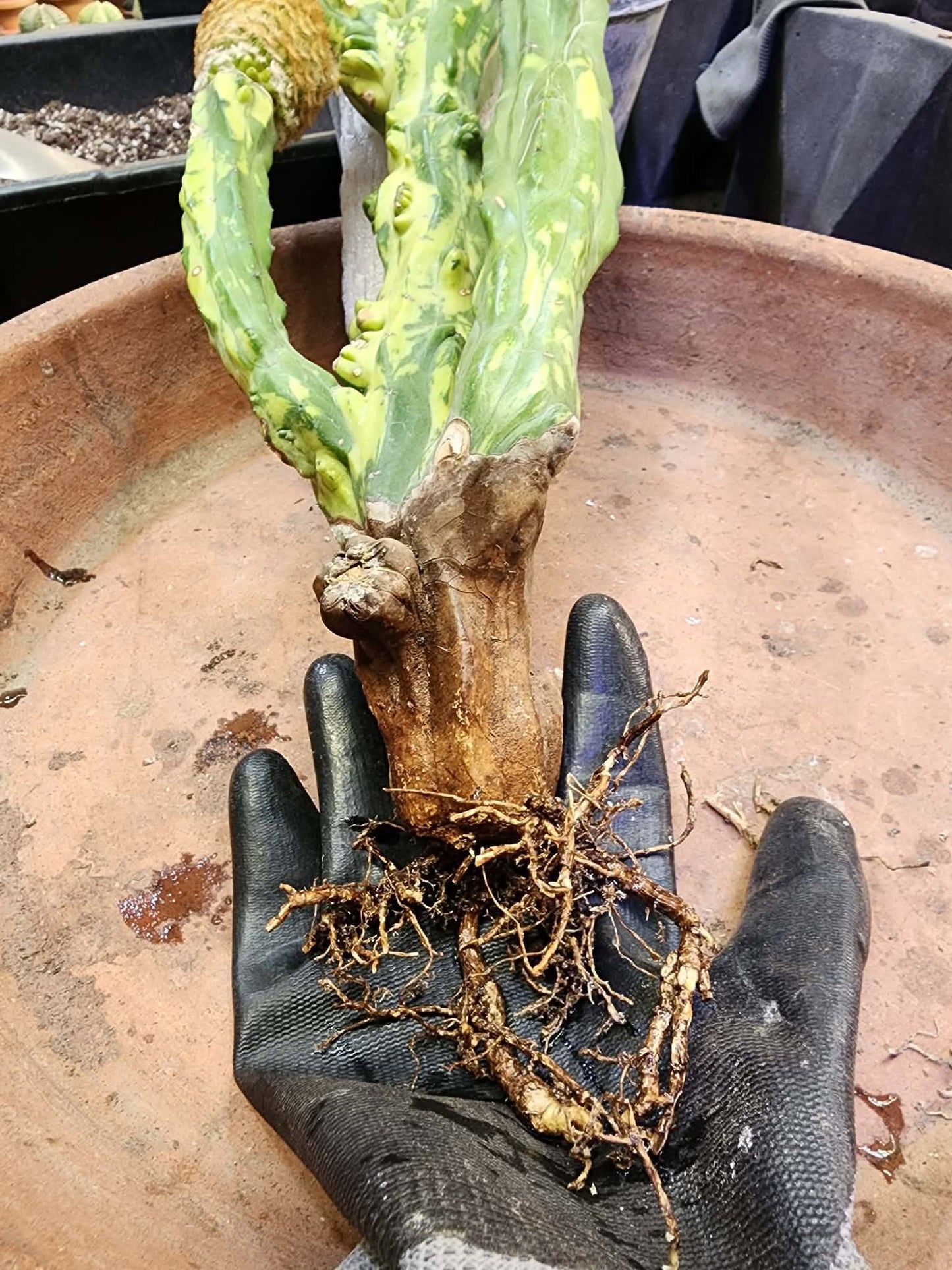
Features gorgeous green and yellow variegation throughout the massive ‘Fred’ rootstock.
This extraordinary 6-graft composition brings together Buiningia purpurea f. caespitosa, Mammillaria carmenae, Gymnocalycium buenekeri, Echinopsis subdenudata, a variegated Trichocereus hybrid, and a huge Myrtillocactus geometrizans variegata monstrose cv. ‘Fred’ in one spectacular specimen.
Very special collector showcase piece.
Measures approximately 17" tall above the soil line × 5.5" wide.
Showcased here in Handmade Pottery – Terracotta Atlas Vessel No. 49 (sold separately).
Roots as shown.
Will be shipped bare root.

🌵

Myrtillocactus geometrizans is a striking columnar cactus native to Mexico, ordinarily developing upright, branching blue-green stems with clean, geometric ribs. The monstrose cultivar widely known among collectors as ‘Fred’ abandons that orderly architecture almost completely. Its growth becomes irregular, swollen and unpredictable, producing distorted ribs, knobby projections and asymmetrical branches that can change character repeatedly as the plant develops. Add variegation, and an already eccentric cactus becomes something genuinely individual.

But this specimen goes considerably further. Its enormous variegated monstrose ‘Fred’ provides the living architecture for an extraordinary composition of six different grafts, positioned at varying heights across its approximately 17-inch form. Each contributes a completely different texture, shape and color to the whole: globular, clustered, woolly and spined scions appear almost like separate botanical discoveries growing from the same fantastically distorted plant. Rather than disguising the grafts, this specimen celebrates them. The result is less a conventional cactus than a wonderfully strange living collection assembled into a single plant.

Care Instructions

☀️ Light: Bright light with several hours of direct sun is ideal. Strong light helps maintain compact growth and vivid variegation. Because both the variegated rootstock and the individual grafted scions may have different sensitivities, protect from sudden exposure to extremely intense afternoon sun and acclimate gradually after shipping.

💧 Water: Water thoroughly during active growth, then allow the soil to dry well before watering again. Reduce watering considerably during cooler winter months. The established Myrtillocactus root system should never remain continuously wet.

🪨 Soil: Requires a very fast-draining, mineral-rich cactus mix. Pumice, lava rock, coarse grit and similar inorganic materials provide excellent drainage and root aeration.

🌡️ Temperature: Prefers warmth during active growth. Because this specimen combines several different cactus species through grafting, protect from frost and prolonged cold rather than relying on the cold tolerance of any individual component.

💨 Humidity: Low humidity with excellent air circulation is preferred. Avoid prolonged combinations of cool temperatures and wet soil.

🌱 Growth Habit: The variegated monstrose ‘Fred’ rootstock grows unpredictably, producing distorted stems, irregular projections and occasional more conventional growth. The six grafted scions may develop at different rates, making the overall composition increasingly complex with time.

⚠️ Special Note: This is an unusually elaborate multi-grafted living specimen. Take particular care when handling, repotting or unpacking so that pressure is not placed on the graft unions or individual scions. Each graft is a living component of the overall plant and may respond somewhat differently to seasonal conditions.

Why It Stands Out

  • Extraordinary one-of-a-kind 6-graft composition
  • Massive Myrtillocactus geometrizans variegata monstrose cv. ‘Fred’
  • Gorgeous green and yellow variegation
  • Approximately 17" tall above the soil line
  • Six distinct cactus grafts incorporated into one specimen
  • Includes Buiningia purpurea f. caespitosa
  • Includes Mammillaria carmenae
  • Includes Gymnocalycium buenekeri
  • Includes Echinopsis subdenudata
  • Includes a variegated Trichocereus hybrid
  • Spectacular combination of color, texture and growth forms
  • Mature, established collector showcase piece
  • Truly individual — there will never be another exactly like it

Collector Notes

The monstrose cactus commonly called ‘Fred’ has become a cult favorite among collectors precisely because it refuses to settle into a predictable shape. Typical Myrtillocactus geometrizans produces handsome but relatively orderly columnar growth. ‘Fred’ can produce swollen ribs, irregular knobs, distorted branches and sections that seem almost unrelated to what grew immediately before them.

Variegation makes that unpredictability even more dramatic. Across this specimen, yellow and yellow-green tissue interrupts the deeper green in broad streaks, patches and marbled sections. Because both monstrose growth and variegation continue to develop as the plant grows, neither the eventual architecture nor the future distribution of color can be completely predicted.

Then come the six grafts.

Grafting normally has a practical horticultural purpose: one cactus is joined to another capable of supporting its growth. But specimens like this transform that technique into something approaching living botanical assemblage. Different species have been deliberately positioned across the branching Myrtillocactus, allowing radically different cactus forms to coexist on one established root system.

Here, the differences are spectacular. The grafted scions range from tightly globular growth to clustered and densely spined forms, each appearing at a different point along the strange variegated architecture beneath it. As those individual plants continue developing, the relationships among them will continue changing as well.

And that is what makes this specimen particularly special. At approximately 17 inches tall above the soil line, it isn't simply a novelty graft or a collection of young scions attached to a small stock. The Myrtillocactus itself is already a huge, mature-looking, wonderfully distorted variegated specimen — and someone has used that remarkable plant as the foundation for five additional cactus forms.

It is difficult to decide where the rootstock ends and the collection begins. That's precisely the point. Six cacti, multiple genera, variegation, monstrose growth and grafting have all converged into one completely unrepeatable living object.

View full details