Shangri-Ha Cactus Ranch
Micranthocereus dolichospermaticus (Cutting) 48" Tall!
Micranthocereus dolichospermaticus (Cutting) 48" Tall!
Couldn't load pickup availability
Micranthocereus dolichospermaticus - Siccobaccatus dolichospermaticus
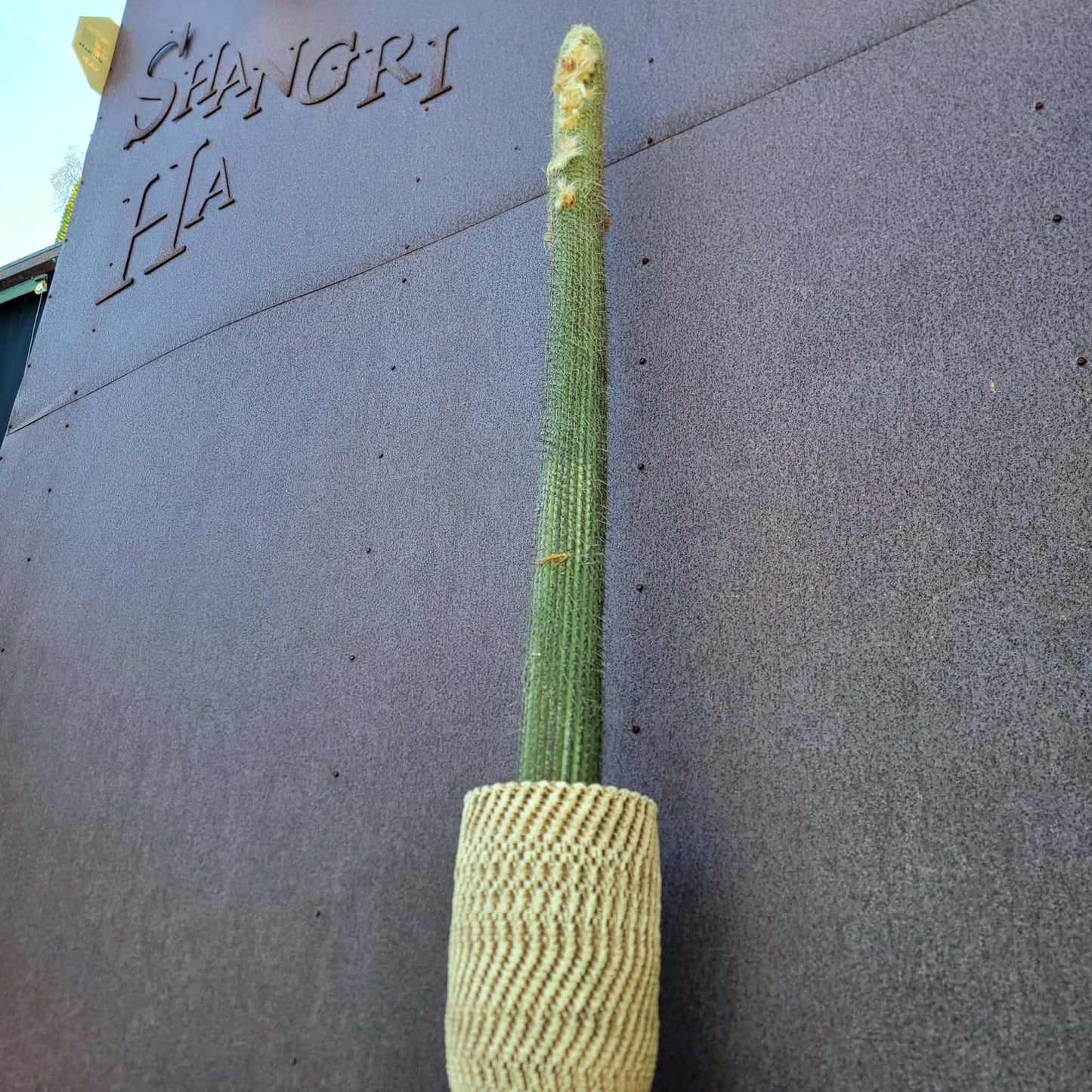
(Cutting) 48" Tall! Old!
You will receive this exact, insane specimen. This is a cutting from a VERY old specimen.
Measures 48” tall.
There are no roots as this is a cutting, so make sure you are comfortable with that.
This is a HUGE and heavy specimen and will be a little expensive to ship.
Showcased here in one-of-a-kind handmade pottery (sold separately).
Will be shipped bare root.
Micranthocereus dolichospermaticus is a rare, slow-growing, columnar cactus endemic to rocky areas of northeastern Brazil, prized for its blueish stems and rusty-red spines. It is considered a challenging plant to cultivate and is often grown by serious collectors or grafted onto other rootstocks to ensure success.
APPEARANCE & DESCRIPTION
Micranthocereus dolichospermaticus features distinctive, unbranched blueish columns that can grow up to 2 meters (about 6.5 feet) in height. The plant has approximately 30 ribs and is adorned with bright brown wool in its oval areoles, which become gray with age.
- Spines: It has 6 to 8 yellowish, straight central spines (up to 2.5 cm long) and numerous shorter radial spines.
- Flowers: The plant produces small, nocturnal, cylindrical flowers (up to 2.5 cm long) from a lateral cephalium (a specialized, woolly flowering zone on the side of the stem). Flower colors range from bright lilac to pink or orange-pink.
- Fruit and Seeds: It yields light pink, berry-like fruits that are about 1.8 cm long and contain long black seeds.
- Habitat: This species is endemic to the arid Caatinga region of Bahia and Minas Gerais, Brazil, where it grows in rocky areas, often on bambuí limestone outcrops or in white sand.
- Conservation Status: It is threatened by habitat loss due to quarrying, mining, and urbanization.
CULTIVATION and CARE:
- Light: Requires abundant bright, direct light or full sun to partial shade.
- Soil: A gritty, mineral-based substrate with excellent drainage is essential to prevent root rot. A specialized cactus mix amended with perlite or coarse sand is suitable.
- Watering: Water sparingly, allowing the soil to dry out completely between waterings. The plant needs less water during its winter dormancy period.
- Temperature: It thrives in heat and requires a warm environment, with a minimum winter temperature of around 10°C (50°F). It is hardy in USDA zones 10a-11b.
- Propagation: Propagation is typically done by seed. Grafting is a common technique used in cultivation to accelerate growth and improve long-term care, especially in cooler climates.
AVAILABILITY
Plants: Mature plants are generally found in the collections of serious cactus enthusiasts or specialized growers.