Shangri-Ha Cactus Ranch
Kalanchoe beharensis ‘Fang’
Kalanchoe beharensis ‘Fang’
Couldn't load pickup availability
Kalanchoe beharensis ‘Fang’
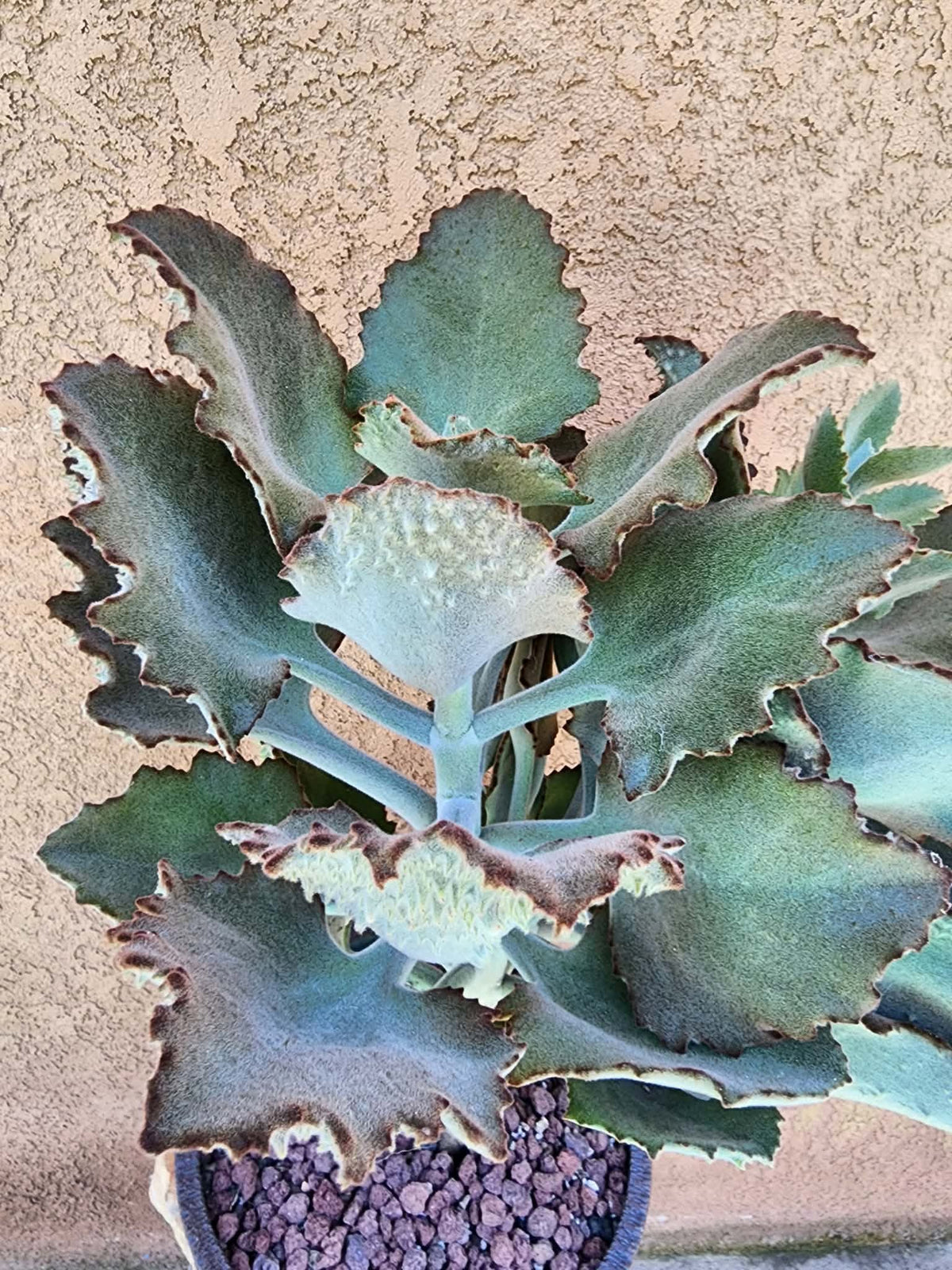
Fang Kalanchoe
You will receive this exact specimen.
Measures approximately 20" tall above the soil line × 17" wide.
An exceptional mature specimen with substantial branching and large, heavily textured blue-green foliage characteristic of the ‘Fang’ cultivar.
Showcased here in Handmade Pottery – Tidal Relic No. 155 (sold separately).
Roots as shown.
Will be shipped bare root.
🌵
Kalanchoe beharensis is a remarkable succulent species native to Madagascar, where it develops into a large, woody shrub or small tree in seasonally dry habitats. Often called Felt Bush or Elephant’s Ear Kalanchoe, the species is immediately recognizable for its imposing foliage: broad, thick leaves covered in a fine felt-like coating that gives the plant its distinctive silvery to blue-green appearance.
‘Fang’ takes that already unusual species considerably further.
The cultivar is particularly prized for the strange toothlike, tuberculate projections that develop along the undersides of its leaves. These irregular protuberances give the foliage an almost prehistoric texture and are the feature responsible for the wonderfully appropriate name ‘Fang’. The leaves are thick and sculptural, with strongly toothed and undulating margins that may develop contrasting brownish coloration as they mature.
This exact specimen has developed into an especially handsome architectural plant. At approximately 20 inches tall and 17 inches wide, it has moved well beyond the small juvenile plants in which the character of ‘Fang’ is only beginning to emerge. Its substantial foliage, branching structure and elevated crown give it the presence of a miniature succulent tree.
As the plant matures, older leaves may be shed from the lower portions of the stems while new foliage develops above, gradually revealing more of the woody framework beneath. The result is a plant that becomes increasingly architectural with age rather than simply growing larger.
Care Instructions
☀️ Light: Bright light to full or partial sun is ideal. Strong light encourages compact growth and helps maintain the characteristic coloration and texture of the foliage. Acclimate gradually when moving a plant from protected conditions into intense direct sun.
💧 Water: Water thoroughly during active growth, then allow the soil to dry substantially before watering again. Kalanchoe beharensis is drought tolerant once established and is considerably more vulnerable to prolonged wet soil than to short periods of dryness.
🪨 Soil: Requires a fast-draining succulent mix with generous mineral content. Pumice, lava rock, coarse grit and similar inorganic materials help provide the excellent drainage and root aeration this species prefers.
🌡️ Temperature: Prefers warm conditions and should be protected from frost. Growth may slow considerably during cool weather; reduce watering accordingly.
💨 Humidity: Good air circulation is beneficial. Avoid prolonged combinations of cool temperatures, high humidity and wet soil.
🌱 Growth Habit: Unlike many smaller kalanchoes, K. beharensis can eventually develop into a substantial woody shrub or small tree. ‘Fang’ develops thick upright stems carrying large leaves toward the growing tips, creating an increasingly sculptural, tree-like silhouette with age.
⚠️ Special Note: The felted surface of the leaves is part of the plant's natural character. Avoid unnecessary rubbing or repeated handling of the foliage, which can disturb its surface texture. Minor markings, scars and irregularities on older leaves are normal on a mature specimen.
Why It Stands Out
- Distinctive ‘Fang’ cultivar of Kalanchoe beharensis
- Large specimen approximately 20" tall × 17" wide
- Extraordinary toothlike projections on the undersides of the leaves
- Massive, felted blue-green foliage
- Dramatically toothed and undulating leaf margins
- Established branching, architectural growth
- Develops increasingly tree-like character with age
- Madagascar species with unmistakable presence
- You will receive this exact plant
Collector Notes
There are succulents whose appeal comes from flowers, others from color, and still others from rarity. Kalanchoe beharensis ‘Fang’ is fundamentally about texture and architecture.
The species itself begins with an extraordinary leaf. Thick, broad and covered in a fine felt-like indumentum, the foliage looks almost as though it has been cut from suede. Its irregular margins add another layer of texture, particularly as they mature and acquire darker contrasting edges.
Then ‘Fang’ adds the teeth.
Turn over a mature leaf and the reason for the cultivar's name becomes apparent. The lower surface develops irregular raised projections — strange little tubercles that resemble blunt teeth or fangs emerging from the leaf itself. They transform an already unusual Madagascar succulent into something considerably stranger.
Those features become more convincing as the plant matures.
Young specimens can remain relatively compact and leafy, but with age K. beharensis develops increasingly substantial stems. Older foliage is eventually shed, exposing portions of the woody structure while new leaves remain concentrated toward the growing ends. Over time, the plant begins to resemble a miniature tree assembled from oversized pieces of felt.
This specimen is already entering that architectural stage.
At approximately 20 inches tall and 17 inches across, it has enough age and structure for the branching habit to be clearly visible while retaining a substantial crown of mature foliage. The combination of its pale blue-green leaves, dark irregular margins, heavy texture and upright framework makes it a plant that reads almost as sculpture.
And then you turn over one of the leaves and discover the fangs.
That is when things get weird — which, around here, is generally when things get interesting.