Shangri-Ha Cactus Ranch
Euphorbia sp. nova Somalia hordio
Euphorbia sp. nova Somalia hordio
Couldn't load pickup availability
Euphorbia sp. nova Somalia ‘Hordio’ — Rare Seed-Grown Somali Euphorbia
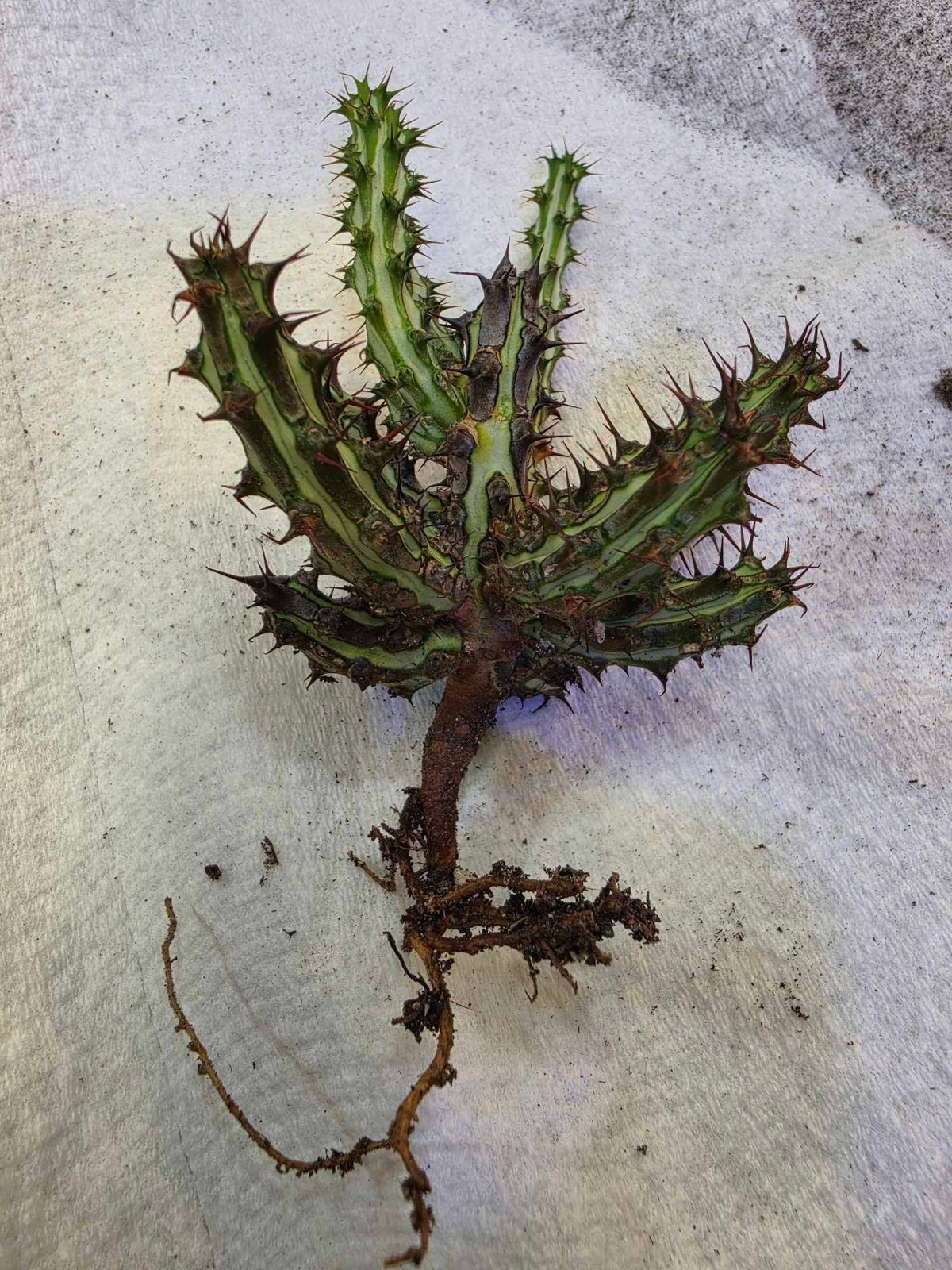
You will receive the exact rare, seed-grown specimen shown here.
Measures approximately 3" tall above the soil line × 3" wide.
Features a wonderfully architectural, multi-branched form with striking contrasting green coloration and dark spination.
Showcased here in Handmade Pottery — Oasis Weave Vessel No. 205 (sold separately).
Roots as shown.
Will be shipped bare root.
🌵
Euphorbia sp. nova Somalia ‘Hordio’ is an unusual and highly collectible succulent associated with the remarkable diversity of Euphorbias found in the arid landscapes of Somalia. The provisional designation sp. nova indicates a plant circulated under a name suggesting a potentially distinct species, rather than a formally established botanical name. Somalia is home to an extraordinary range of specialized succulent plants, many adapted to rocky terrain, sparse seasonal rainfall, and prolonged periods of drought. Among them are some of the most architecturally fascinating Euphorbias in cultivation, distinguished by angular stems, formidable spination, and highly individual growth habits.
This rare, seed-grown specimen is especially appealing for its intricate branching structure and striking contrast between vivid green growth and dark, almost blackened older surfaces. Measuring approximately 3 inches tall and 3 inches wide, it forms a compact, sculptural cluster of upright and outward-reaching stems. The photograph reveals several prominent vertical branches with sharply defined, angular ribs and bright green central surfaces bordered by darker ridges and spines. The lower growth displays a fascinating combination of green tissue, darkened surfaces, and densely arranged spination, creating considerable visual complexity within a remarkably small plant. Its tallest branches rise above a compact, irregular base, giving the specimen the appearance of a miniature thicket of thorny succulent columns.
The fact that this plant is seed-grown adds to its collector appeal. Unlike vegetatively propagated plants, seed-grown specimens develop as genetically individual plants, with natural variation in branching, coloration, proportions, and spination. This example possesses a particularly expressive growth habit, combining several upright stems with shorter, outward-reaching branches that create a beautifully balanced but distinctly unconventional silhouette. Presented here in Handmade Pottery — Oasis Weave Vessel No. 205, the plant's vivid green coloration and dark spines contrast attractively with the vessel's pale, textured surface. The pottery is available separately.
Care Instructions
☀️ Light
Provide very bright light with gentle direct morning sunlight or bright filtered exposure. Strong illumination encourages compact growth and well-developed spination, but intense afternoon sunlight may scorch plants that have not been properly acclimated. Introduce stronger light gradually after shipping, particularly when moving a specimen from greenhouse conditions.
💧 Water
Water carefully during active growth, allowing the substrate to dry thoroughly between waterings. Somali succulent Euphorbias are generally adapted to pronounced seasonal dryness and can be particularly sensitive to prolonged moisture around their roots. Reduce watering substantially during cooler periods or whenever growth slows. Avoid watering heavily in cold conditions.
🪨 Soil
Use an exceptionally fast-draining, mineral-rich succulent mix with excellent root aeration. Pumice, lava rock, coarse grit, and similar inorganic materials are suitable components. Avoid heavy, moisture-retentive soils, and choose a container with adequate drainage. A relatively compact pot is preferable to an oversized container that retains unnecessary moisture.
🌡️ Temperature
Prefers warm growing conditions and protection from prolonged cold. Because the precise botanical identity and natural distribution of plants circulated as ‘Hordio’ are not firmly established, conservative cultivation is advisable. Maintain warm temperatures during active growth, protect from frost, and avoid combining low temperatures with damp soil.
🌬️ Humidity
Relatively dry conditions and excellent ventilation are preferred. Good airflow is particularly important around the densely branched lower portions of the plant, where moisture may otherwise remain trapped. In humid climates, use a highly porous substrate and exercise additional caution with watering.
📈 Growth Habit
This specimen displays a compact, multi-branched succulent growth habit, with sharply angled, ribbed stems bearing prominent spines. Several upright branches rise from a densely developed base, while shorter lateral growth creates an irregular, architectural silhouette. Future branching and mature dimensions may vary, particularly because the ‘Hordio’ designation is not supported by a widely established formal species description.
✍️ Special Note
All Euphorbias contain a milky latex sap that can be irritating or toxic. Avoid contact with the eyes, skin, and mouth, and wear protective gloves and eye protection when handling damaged tissue or repotting. The spines also require careful handling.
The darkened surfaces visible on portions of this specimen contribute to its distinctive appearance, but coloration alone cannot establish whether individual areas represent natural aging, corking, previous environmental exposure, or old damage. Please examine the photographs carefully when evaluating the plant's condition.
The name ‘Hordio’ is retained here as a horticultural or collection designation. It should not be interpreted as confirmation that a formally published species with that name has been established.
Because this specimen will be shipped bare root, allow any disturbed or damaged roots to dry and recover before resuming watering. Handle the branching stems carefully during unpacking and repotting to avoid damage to their spines and growing tips.
Why It Stands Out
-
Rare, seed-grown Somali Euphorbia
-
Approximately 3" tall × 3" wide
-
Unusual multi-branched architectural form
-
Several prominent upright stems with shorter lateral growth
-
Striking bright green coloration contrasted with dark ridges and spination
-
Sharply angled, ribbed succulent stems
-
Intricate, densely developed lower branching
-
Compact specimen with exceptional sculptural character
-
Seed-grown individuality rather than vegetative duplication
-
Unusual horticultural designation ‘Hordio’
-
Particularly appealing to collectors of obscure African succulent Euphorbias
-
Showcased in Handmade Pottery — Oasis Weave Vessel No. 205, sold separately
-
The exact specimen shown here
Collector Notes
The succulent flora of Somalia has long fascinated specialist collectors because of its extraordinary diversity and the remarkable adaptations displayed by plants inhabiting some of eastern Africa's most demanding environments. Many Somali Euphorbias develop compact, heavily armed structures that bear little resemblance to the familiar ornamental plants of ordinary cultivation. Their beauty lies in the relationship between form and function: sharply angled stems, pronounced spines, intricate branching, and the ability to conserve moisture in environments where rainfall can be unpredictable. Plants circulated under provisional or locality-associated names are especially intriguing, although their botanical identities sometimes remain unresolved until further taxonomic study clarifies their relationships.
This particular seed-grown ‘Hordio’ is a beautifully individual example of that botanical complexity. Its vivid green upright branches rise from a compact arrangement of darker, thorn-covered growth, producing a striking contrast between the more prominent vertical stems and the densely developed lower structure. The irregular branching gives the plant an appearance that is both rugged and surprisingly refined, with considerable visual interest packed into a specimen measuring just three inches in either direction. For collectors drawn to unusual African Euphorbias, its appeal lies not in conventional symmetry or showy flowers, but in the extraordinary architecture of the plant itself. Small in scale yet remarkably elaborate, it is a fascinating example of the sculptural character that makes these lesser-known succulents so rewarding to collect.