Shangri-Ha Cactus Ranch
Euphorbia royleana f. inermis
Euphorbia royleana f. inermis
Couldn't load pickup availability
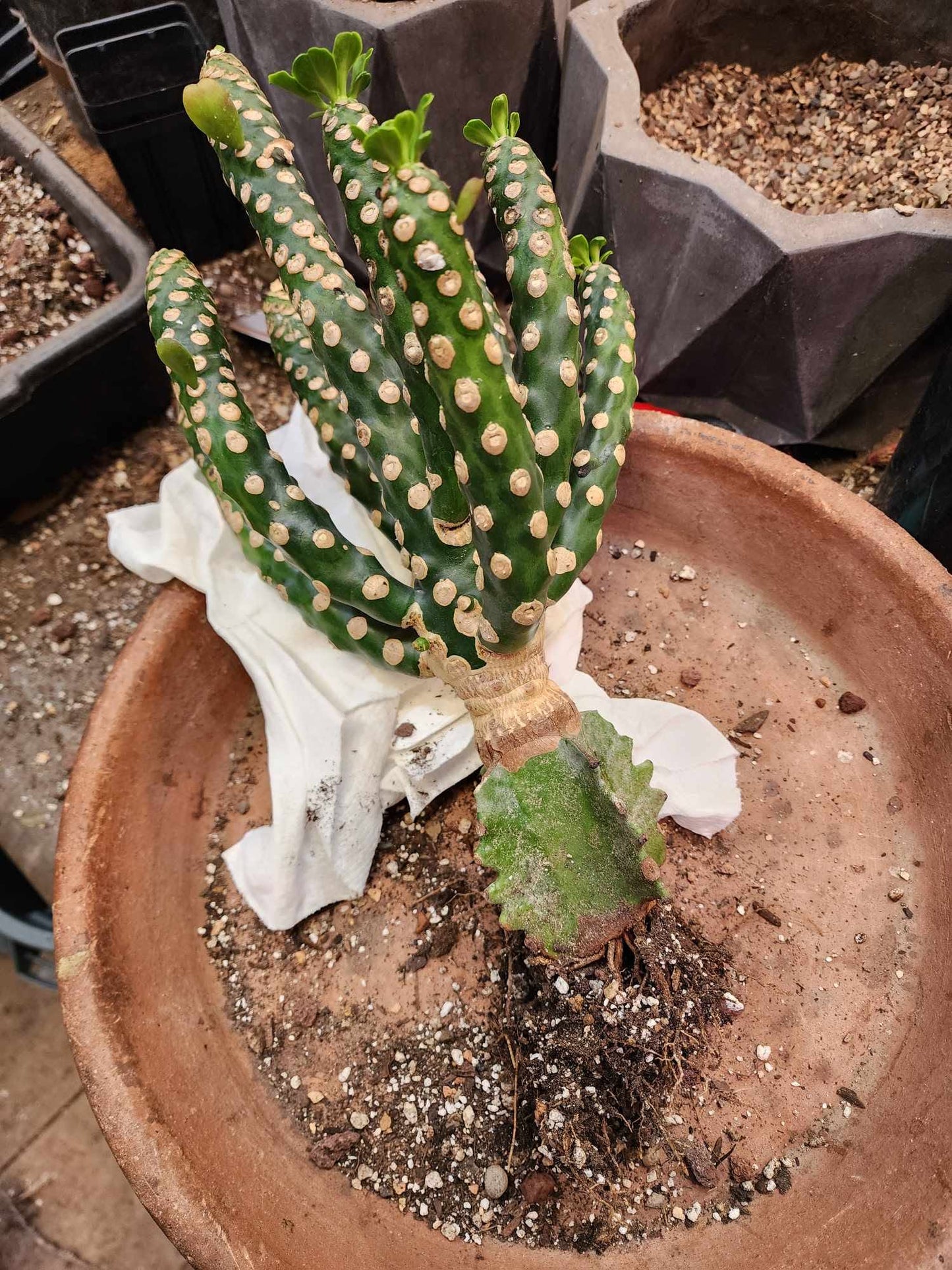
Euphorbia royleana f. inermis — Mature Grafted Specimen
You will receive this exact large, mature, grafted, well-rooted specimen.
Scion measures 10" tall × 9" wide.
Entire specimen measures 13" tall above the soil line.
Showcased here in Handmade Pottery — Turquoise Ledger Vessel No. 70 (sold separately).
Roots as shown.
Will be shipped bare root.
🌵
Euphorbia royleana f. inermis is a remarkable spineless form of the great columnar Euphorbia royleana, a species native to the Himalayan region of the Indian subcontinent. While the typical species develops formidable paired spines along the margins of its thick, angular stems, forma inermis is prized for greatly reduced or absent armature, allowing the extraordinary geometry of the plant itself to take center stage. This mature grafted specimen has developed a beautifully dense crown of multiple ascending branches, each patterned with pale circular leaf scars and terminating in fresh clusters of glossy green foliage. The result is wonderfully strange and architectural—part succulent tree, part candelabrum—with the mature scion carried above a substantial, well-established rootstock.
Care Instructions
☀️ Light
Very bright light to full sun. Strong light encourages sturdy, compact growth and maintains the characteristic architecture of the stems. Acclimate gradually to intense direct sunlight after shipping or periods under filtered light.
💧 Water
Water thoroughly during active warm-season growth, then allow the soil to dry substantially before watering again. Reduce watering considerably during cooler weather and periods of dormancy. Avoid prolonged wet conditions around both the roots and graft union.
🪨 Soil
Requires a fast-draining, highly aerated cactus and succulent mix with substantial mineral content. Excellent drainage is essential. A gritty mixture containing pumice, lava, coarse mineral aggregate, or similar materials is ideal for maintaining healthy roots.
🌡️ Temperature
Prefers warm conditions during active growth. Protect from frost and prolonged cold, particularly when the soil is moist. During cooler periods, keep the plant substantially drier.
🌬️ Humidity
Prefers relatively dry conditions with good air circulation. Avoid prolonged cool humidity or stagnant moisture, especially around the graft union and during periods of reduced growth.
📈 Growth Habit
The typical species develops thick, upright, candelabra-like stems that branch with maturity and may eventually form a substantial succulent shrub or small tree. This spineless form retains that strong architectural tendency while greatly reducing the formidable armature associated with ordinary E. royleana. Seasonal leaves emerge near the growing tips and may be shed in response to drought, cold, or dormancy.
✍️ Special Note
This specimen is grafted. The visible junction between the lower rootstock and upper Euphorbia royleana f. inermis scion is a normal and intentional part of the plant. Grafting is frequently used in the cultivation of unusual or slower-growing succulent forms, providing the selected scion with an established root system while preserving its distinctive characteristics.
The designation inermis derives from Latin terminology meaning unarmed, referring to the greatly reduced or absent spines that distinguish this form from typical Euphorbia royleana.
As with other members of the genus Euphorbia, cut or damaged tissue produces a white latex sap that is toxic and strongly irritating to skin and especially eyes. Wear gloves when pruning or handling damaged tissue and keep the plant away from children and pets who may ingest it.
Why It Stands Out
- Large, mature Euphorbia royleana f. inermis
- Rare spineless form
- Mature grafted specimen
- Scion measures an impressive 10" tall × 9" wide
- Entire specimen stands 13" above the soil line
- Dense, multi-branched candelabra-like crown
- Numerous established growing points
- Beautifully patterned mature stems
- Distinctive circular leaf scars throughout
- Fresh green foliage emerging at multiple tips
- Strong, established root system
- Exceptional sculptural architecture from every angle
Collector Notes
The word inermis is a small botanical clue to what makes this plant so special. Meaning essentially unarmed, it is used for forms that lack—or substantially reduce—the spines or other defensive structures ordinarily associated with their species. In Euphorbia royleana, that difference is dramatic.
Typical E. royleana is a formidable plant. Its thick, succulent stems rise and branch into an increasingly tree-like candelabrum, while the ridged margins are ordinarily protected by paired spines. Remove that armature, however, and the underlying architecture becomes extraordinarily visible. The stems appear smoother and almost surreal, their surfaces marked by repeated pale leaf scars that document successive seasons of growth.
This specimen demonstrates that architecture beautifully. The mature scion has divided repeatedly into a dense crown approximately 10" tall and 9" wide, with individual stems rising, curving, and separating from one another before terminating in clusters of fresh foliage. Across their deep green surfaces, the old leaf scars form an extraordinary pattern of pale discs—almost like markings deliberately applied to the plant.
Below that crown, the history of its cultivation remains plainly visible. The scion rises from a substantial graft union before meeting the established rootstock beneath it. Rather than disguising that transition, we find it fascinating: two plants deliberately joined years ago and subsequently growing together to create the mature specimen seen today.
At 13" tall above the soil line, this is no longer a young graft whose eventual form must be imagined. The branching, mature stem texture, old leaf scars, multiple growing tips, substantial scion, and established root system are already there. It is a beautifully strange example of what makes unusual Euphorbia forms so endlessly collectible.