Shangri-Ha Cactus Ranch
Euphorbia Resinifera - Moroccan Mound - 13 Heads!
Euphorbia Resinifera - Moroccan Mound - 13 Heads!
Couldn't load pickup availability
Euphorbia resinifera — Moroccan Mound
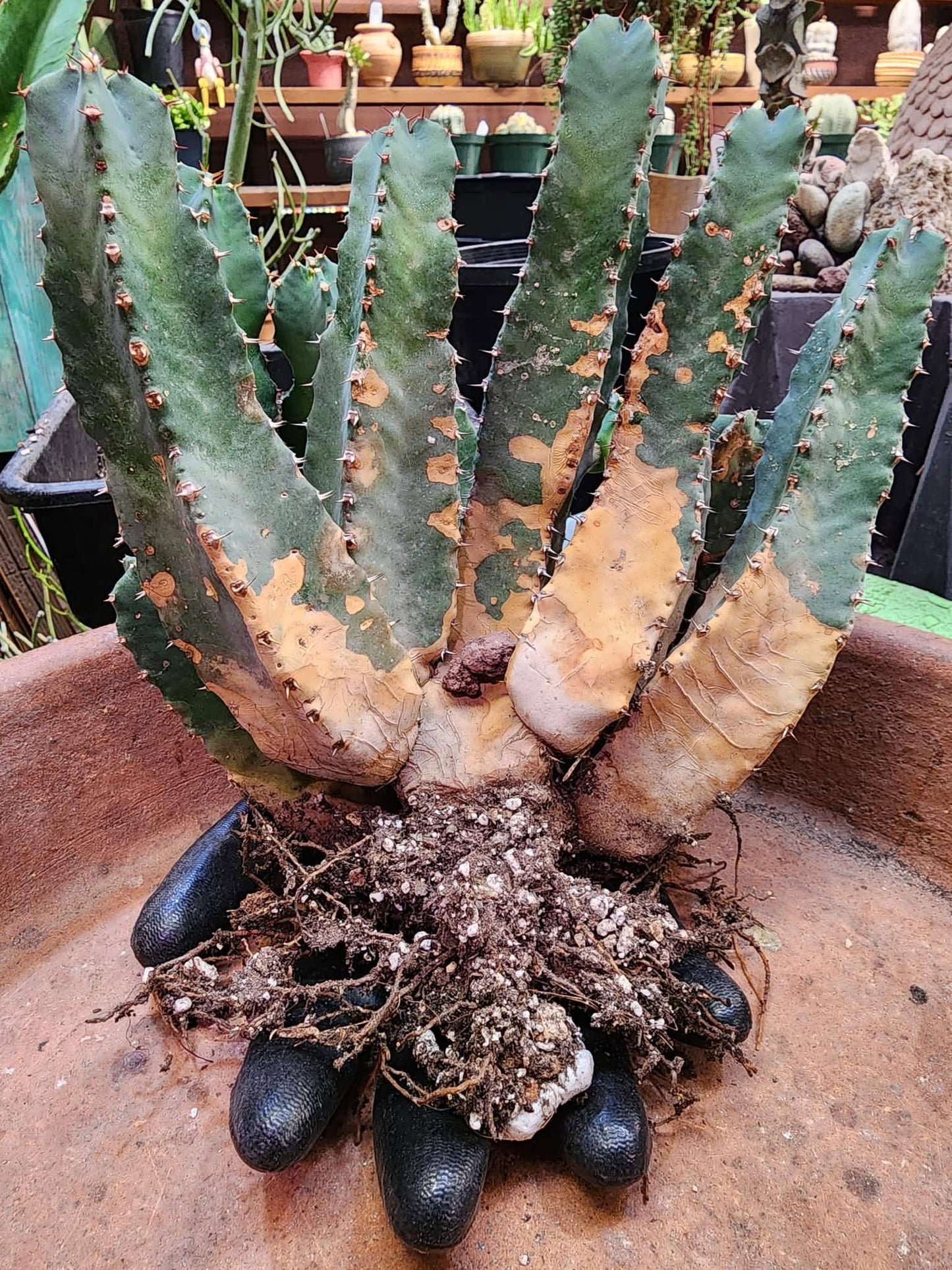
You will receive this exact specimen.
Features 13 heads.
Measures approximately 10" wide × 8" tall above the soil line.
Showcased here in Handmade Pottery – Sand Ledger Planter No. 127 (sold separately).
Will be shipped bare root.
🌵
Euphorbia resinifera is a remarkable mound-forming succulent native to Morocco, where it grows naturally on rocky slopes of the Atlas Mountains. Rather than developing the upright, branching architecture seen in many large euphorbias, E. resinifera spreads outward through repeated basal branching, gradually producing dense colonies of tightly packed, four-angled stems. Mature plants in habitat can form broad, low cushions composed of hundreds — and eventually thousands — of individual stems, creating one of the most distinctive growth forms in the genus.
This exact specimen beautifully demonstrates that characteristic architecture on a wonderfully manageable scale. With 13 established heads spreading across approximately 10 inches, it has already begun developing the dense, architectural mound that gives the species so much presence. The individual upright stems rise together from the established base, creating a compact mass of repeating geometric forms rather than a single dominant trunk. At approximately 8 inches tall above the soil line, it has substantial size without losing the low, clustered proportions that make Euphorbia resinifera so distinctive.
Care Instructions
☀️ Light: Bright light to full sun is ideal. Strong light encourages compact growth and sturdy stems. Acclimate gradually to intense direct sun after shipping, particularly if the plant has been grown under filtered conditions.
💧 Water: Water thoroughly during active growth, then allow the soil to dry completely before watering again. Reduce watering substantially during cooler winter months. Established plants are drought tolerant and should never remain in consistently damp soil.
🪨 Soil: Requires an exceptionally fast-draining succulent mix with a substantial mineral component. Pumice, lava rock, coarse grit or similar materials help provide the drainage and root aeration this species prefers.
🌡️ Temperature: Prefers warm, dry conditions during active growth. Established plants can tolerate surprisingly cool temperatures when completely dry, but protect from hard frost and prolonged freezing conditions.
💨 Humidity: Low humidity and good air circulation are ideal. Avoid prolonged combinations of cool temperatures, high humidity and wet soil.
🌱 Growth Habit: Naturally branching and colony-forming. New stems emerge around the base and gradually create increasingly broad, dense mounds. Given time and space, mature plants can develop into exceptionally impressive living sculptures.
⚠️ Special Note: Like other members of the genus, Euphorbia resinifera contains a milky latex sap that can cause significant skin and eye irritation and is toxic if ingested. Handle carefully, particularly when repotting or if stems are damaged, and keep the sap away from eyes, mouth, children and pets.
Why It Stands Out
- Impressive 13-headed specimen
- Approximately 10" wide × 8" tall above the soil line
- Beautiful established mound-forming growth
- Strong repeating geometric architecture
- Naturally develops into dense colonies with age
- Native to the Atlas Mountains of Morocco
- Excellent sculptural collector plant
- Showcased in Sand Ledger Planter No. 127
Collector Notes
Euphorbia resinifera has one of those growth habits that becomes more impressive with time. A young plant may begin as a relatively simple group of upright stems, but its real character emerges as repeated branching transforms it into an increasingly broad, tightly packed colony. In old habitat plants, that process can produce extraordinary living cushions spreading across rocky ground, with countless nearly vertical stems creating a remarkably uniform surface.
The species is native to Morocco, particularly the Atlas Mountain region, and its compact architecture is beautifully suited to an exposed, dry landscape. Each fleshy stem is typically four-angled, with small paired spines running along the margins. Seen individually, the stems are strongly geometric; seen together in a mature colony, those repeated forms create an almost architectural rhythm.
The species also has a fascinating place in botanical history. Euphorbia resinifera is the source of resiniferatoxin, an exceptionally potent naturally occurring compound found in its latex. That chemistry is one reason the plant's sap demands considerable respect despite the wonderfully restrained appearance of the plant itself.
What makes this exact specimen especially appealing is that the characteristic colony structure is already clearly established. Its 13 heads are not simply a collection of offsets around a central stem — together they are beginning to create the broad, dense mound that defines mature Euphorbia resinifera. At approximately 10 inches across, there is already enough repetition to appreciate the species' natural architecture, while continued basal growth should make the specimen increasingly complex and sculptural over time.