Shangri-Ha Cactus Ranch
Euphorbia pseudocactus
Euphorbia pseudocactus
Regular price
$165.00 USD
Regular price
$165.00 USD
Sale price
$165.00 USD
Unit price
per
Shipping calculated at checkout.
Couldn't load pickup availability
Euphorbia pseudocactus
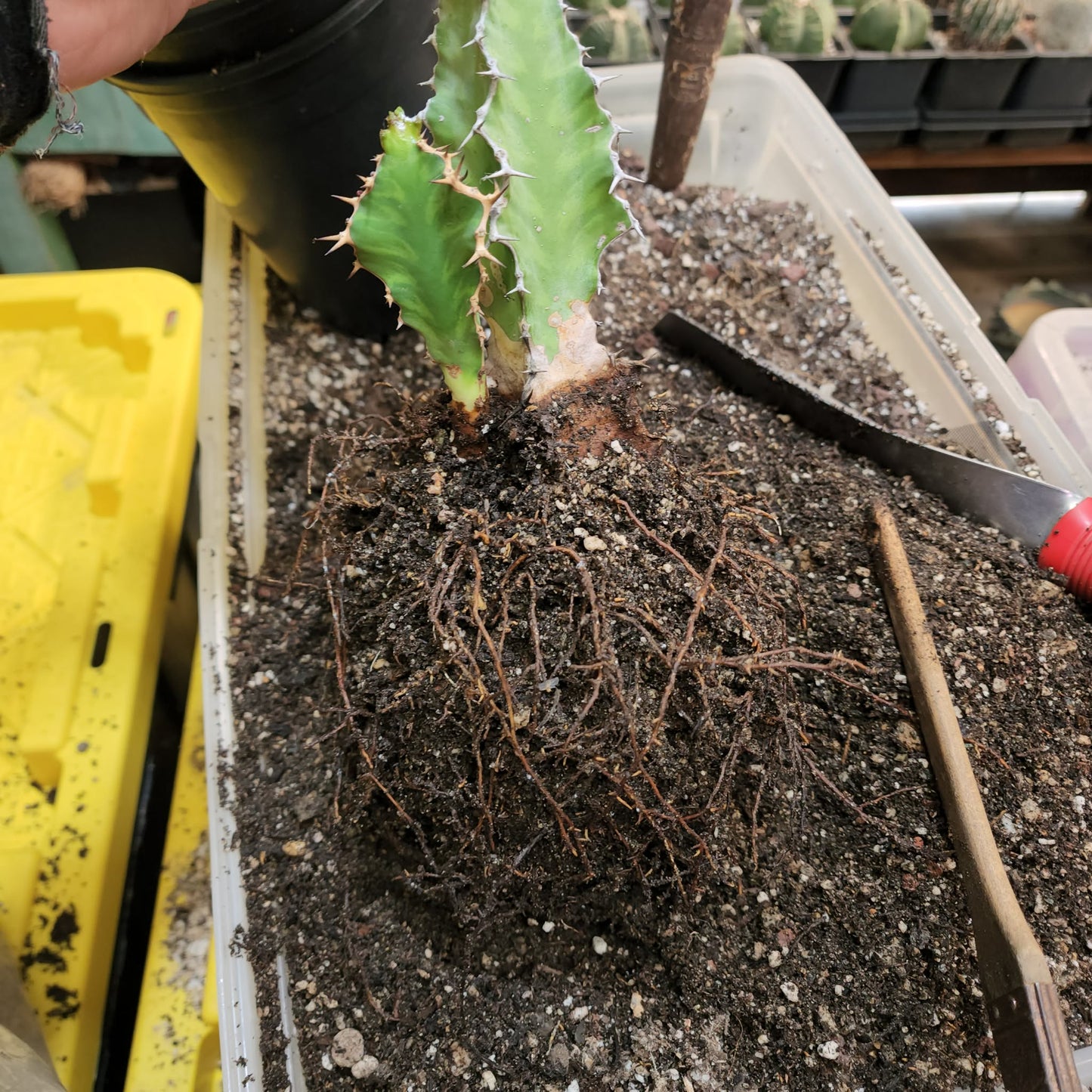
You will receive the exact, large specimen shown here.
Measures 18” tall x 13” wide.
Showcased here in one-of-a-kind handmade pottery (sold separately).
Roots as shown.
Will be shipped bare root.
Euphorbia pseudocactus, commonly known as the Candelabra Spurge or False Cactus, is a striking succulent shrub native to the subtropical coasts and thorn bush-lands of South Africa. Despite its name and appearance, it is not a true cactus but a member of the Euphorbiaceae family. It is widely prized by collectors for its architectural, "zig-zag" stems and distinctive V-shaped yellow markings.
APPEARANCES and CHARACTERISTICS
- Appearance: A multi-branched shrub that forms large mounded clumps . It can reach heights of 2 to 5 feet (approx. 0.6–1.5 meters)
- Stems: Upright, 4- to 5-angled stems that are segmented into triangular sections, giving them a "zig-zag" look .
- Markings: Distinctive horizontal or V-shaped yellow-green markings decorate the green stem segments
- Flowers: Small, bright yellow blooms (cyathia) appear along the ridges of the stems in late winter to summer.
- Sap: Like all Euphorbias, it contains a toxic milky white sap (latex) that can cause severe skin and eye irritation
CARE and GROWING CONDITIONS
- Light: Requires full sun to bright indirect light. Indoors, place it within one foot of a south-facing window to prevent leggy growth.
- Watering: Extremely drought-tolerant. Water thoroughly only when the soil is completely dry. Reduce watering significantly during winter dormancy.
- Soil: Needs highly porous, well-draining soil, such as a specialized cactus or succulent mix.
- Temperature: Not frost-tolerant; it thrives in USDA zones 9b–11. Keep indoors if temperatures drop below 40°F–50°F.
- Propagation: Easily grown from stem cuttings taken in spring or summer. Always wear gloves and allow cuttings to callous for several days before planting to prevent rot.