Shangri-Ha Cactus Ranch
Euphorbia piscidermis - Fish Skin Euphorbia
Euphorbia piscidermis - Fish Skin Euphorbia
Couldn't load pickup availability
Euphorbia piscidermis - Fish Skin Euphorbia
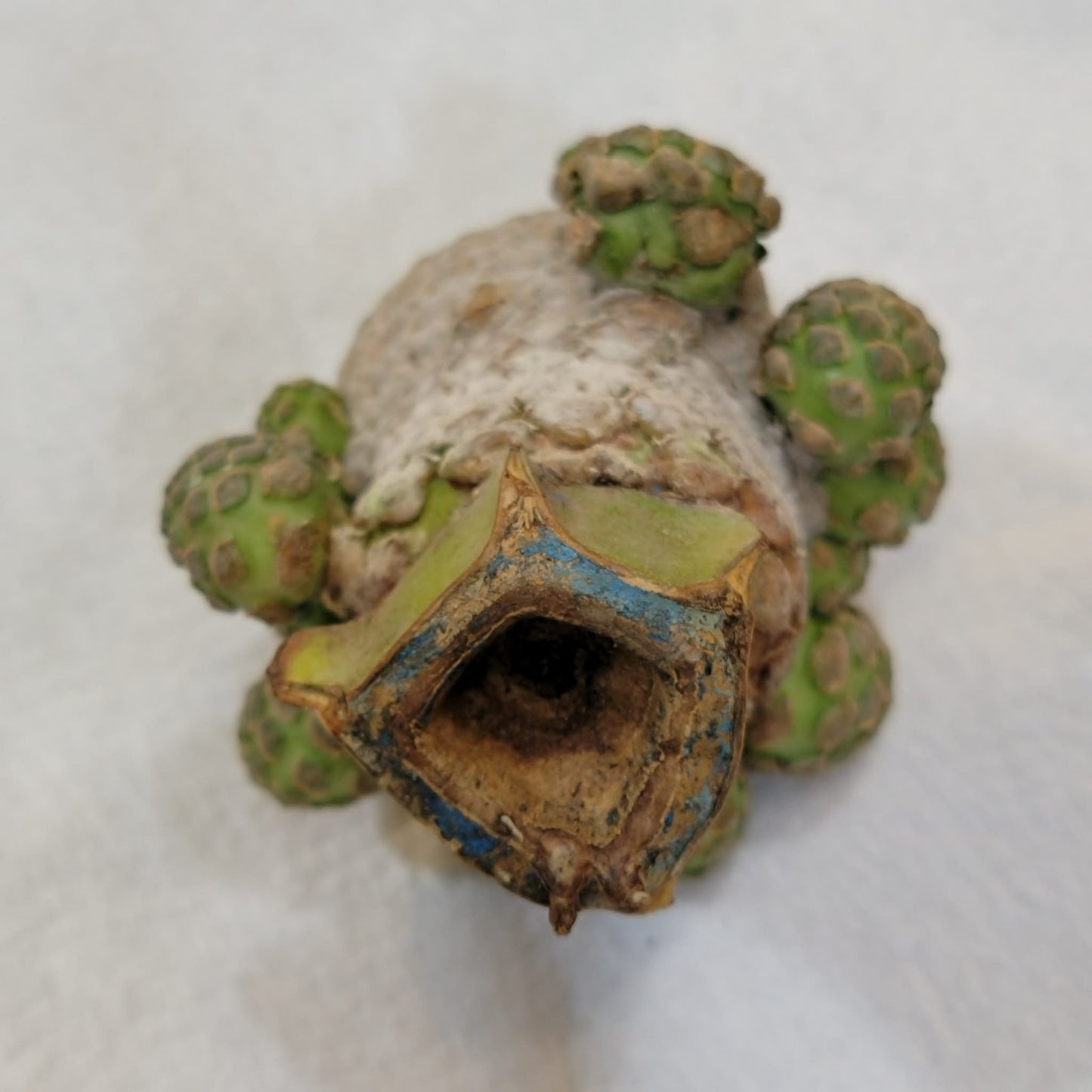
You will receive this exact, grafted specimen.
This one is loaded with babies!
Scion measures 3”w x 2.75”h.
Rootstock has no roots (see photo). You will need to grow them so be sure you are comfortable with this.
Showcased here in one-of-a-kind handmade pottery (sold separately).
Will be shipped bare root.
Euphorbia piscidermis, commonly known as the "Fish Skin Euphorbia," is a highly specialized and desirable succulent known for its unique appearance.
Key Characteristics:
- Appearance: It has a subspherical stem covered in distinctive, creamy-white, overlapping appendages that resemble fish scales, giving it its common name.
- Origin: Native to Ethiopia, specifically in the Ogaden region.
- Growth: Typically a dwarf succulent with a solitary stem that can reach about 5 inches (12.5 cm) tall and 3 inches (7.5 cm) in diameter. It is known for its slow growth, particularly on its own roots.
- Habitat: Found in open deciduous bushland on stony limestone ridges at altitudes of 1000-1050 meters. It's restricted to two very local patches in its native range.
- Flowers: Produces small flowers called cyathia in a ring near the top of the stem, often in the warmer months.
Growing Considerations:
- Difficulty: Considered a difficult species to grow on its own roots, so it's often grafted onto a more vigorous rootstock.
- Sunlight: Prefers bright light to sun, with protection from harsh midday sun.
- Watering: Requires well-draining soil and infrequent watering, allowing the soil to dry out completely between waterings. Overwatering can lead to root rot.
- Frost Tolerance: Needs protection from frost and should be kept above 12°C (55°F).
- Soil: A well-draining mineral potting substrate is recommended. A mixture of cactus potting soil and perlite is ideal for improving drainage.
- Propagation: Can be propagated from seeds or cuttings, but both methods can be challenging.
- Grafting: A common method for cultivating this plant, involving joining the scion (Euphorbia piscidermis) onto a rootstock of another Euphorbia species.
- Toxicity: Contains a toxic milky latex sap that can cause skin irritation, so handle with care.
Conservation Status:
- Rarity: It is rare in cultivation and its wild populations are threatened by habitat loss.
- Conservation Importance: Protecting its native habitat in Ethiopia is crucial for its survival.
Overall, the Fish Skin Euphorbia is a unique and sought-after succulent that requires careful attention to its specific growing needs, particularly regarding watering, light, and protection from frost.