Shangri-Ha Cactus Ranch
Euphorbia obesa
Euphorbia obesa
Couldn't load pickup availability
Euphorbia obesa
(Baseball Plant – South African Euphorbia)
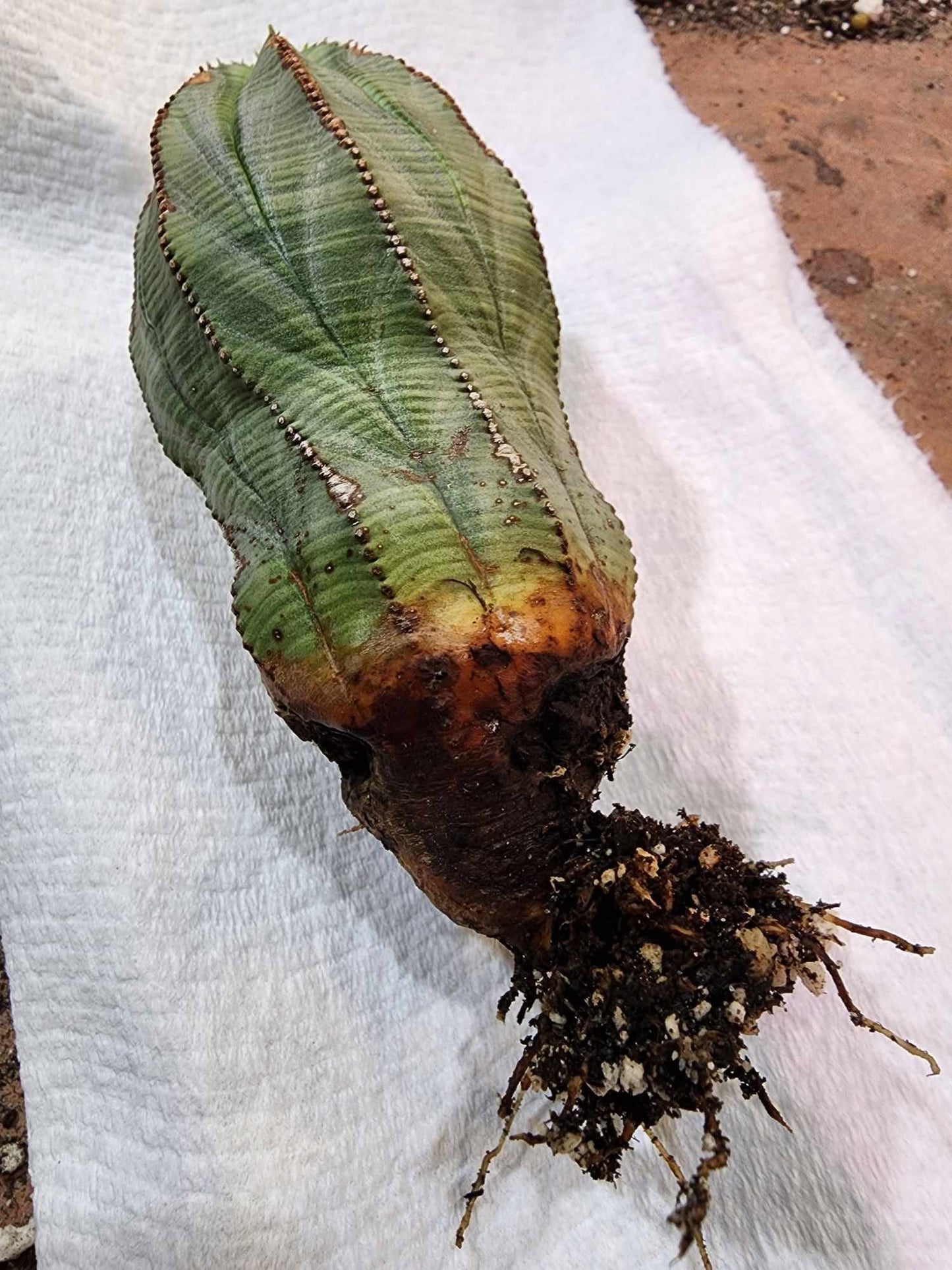
You will receive this exact specimen.
Measures approximately 4" tall above the soil line.
Showcased here in Handmade Pottery – Copper Oasis No. 210 (sold separately).
Roots as shown.
Will be shipped bare root.
🌵
Euphorbia obesa is one of the most iconic and instantly recognizable succulent Euphorbias, celebrated for its extraordinary geometric form and beautifully understated coloration. Native to South Africa, this remarkable species develops as a nearly spherical young plant before becoming more cylindrical with age, its typically eight broad ribs creating the wonderfully symmetrical form that earned it the familiar name “Baseball Plant.” Subtle bands and markings in shades of green, grey-green, and muted purple give every specimen its own individual character, while the absence of conventional leaves or spines makes its architecture all the more striking. This beautifully established 4" specimen displays the clean geometry and wonderfully restrained sculptural presence that have made E. obesa a cornerstone of serious succulent collections for generations.
Care Instructions
☀️ Light
Bright light to full sun. Strong light encourages compact growth and good coloration, but gradually acclimate plants to intense direct sunlight to prevent scorching.
💧 Water
Water thoroughly during active growth, allowing the soil to dry completely between waterings. Reduce water substantially during cooler months. Avoid prolonged moisture around the roots.
🪨 Soil
Requires a very fast-draining, mineral-rich succulent mix with excellent drainage.
🌡️ Temperature
Protect from hard or prolonged frost. Plants tolerate cooler conditions best when kept dry.
🌬️ Humidity
Low humidity and excellent air circulation are preferred.
📈 Growth Habit
Slow-growing and usually solitary, beginning with a beautifully globose form and gradually becoming more cylindrical with maturity. Its pronounced ribs and geometric symmetry become increasingly distinctive as the plant ages.
✍️ Special Note
Euphorbia obesa is a South African species with a long and important conservation history. Wild populations were severely affected by collection for the horticultural trade, making responsibly propagated cultivated specimens especially important. Like all Euphorbias, the plant contains a milky latex sap that can irritate skin and eyes and is toxic if ingested; handle carefully if damaged or when repotting.
Why It Stands Out
- Iconic South African Euphorbia
- Naturally extraordinary geometric form
- Beautifully pronounced rib structure
- Established 4" tall specimen
- Slow-growing and wonderfully sculptural
- Rare and threatened in its native habitat
- A cornerstone species for the serious Euphorbia collection
Collector Notes
Few succulent plants demonstrate the power of simple geometry quite like Euphorbia obesa. Native to the Great Karoo region of South Africa, the species became highly desirable soon after its discovery and suffered heavily from historic collection of plants from the wild. Today, although E. obesa remains rare in its natural habitat, successful propagation has made cultivated plants widely available—an important example of horticulture helping reduce pressure on wild populations. Its extraordinary symmetry, restrained coloration, and gradual transformation from a nearly spherical juvenile into a taller mature specimen have kept E. obesa among the most admired South African succulents for more than a century. An essential species whose apparent simplicity becomes increasingly beautiful with age.