Shangri-Ha Cactus Ranch
Euphorbia biselegans (Monadenium elegans) - 2 Feet Tall
Euphorbia biselegans (Monadenium elegans) - 2 Feet Tall
Couldn't load pickup availability
Euphorbia biselegans (Monadenium elegans)
Rare African Succulent — Exceptional Collector Specimen
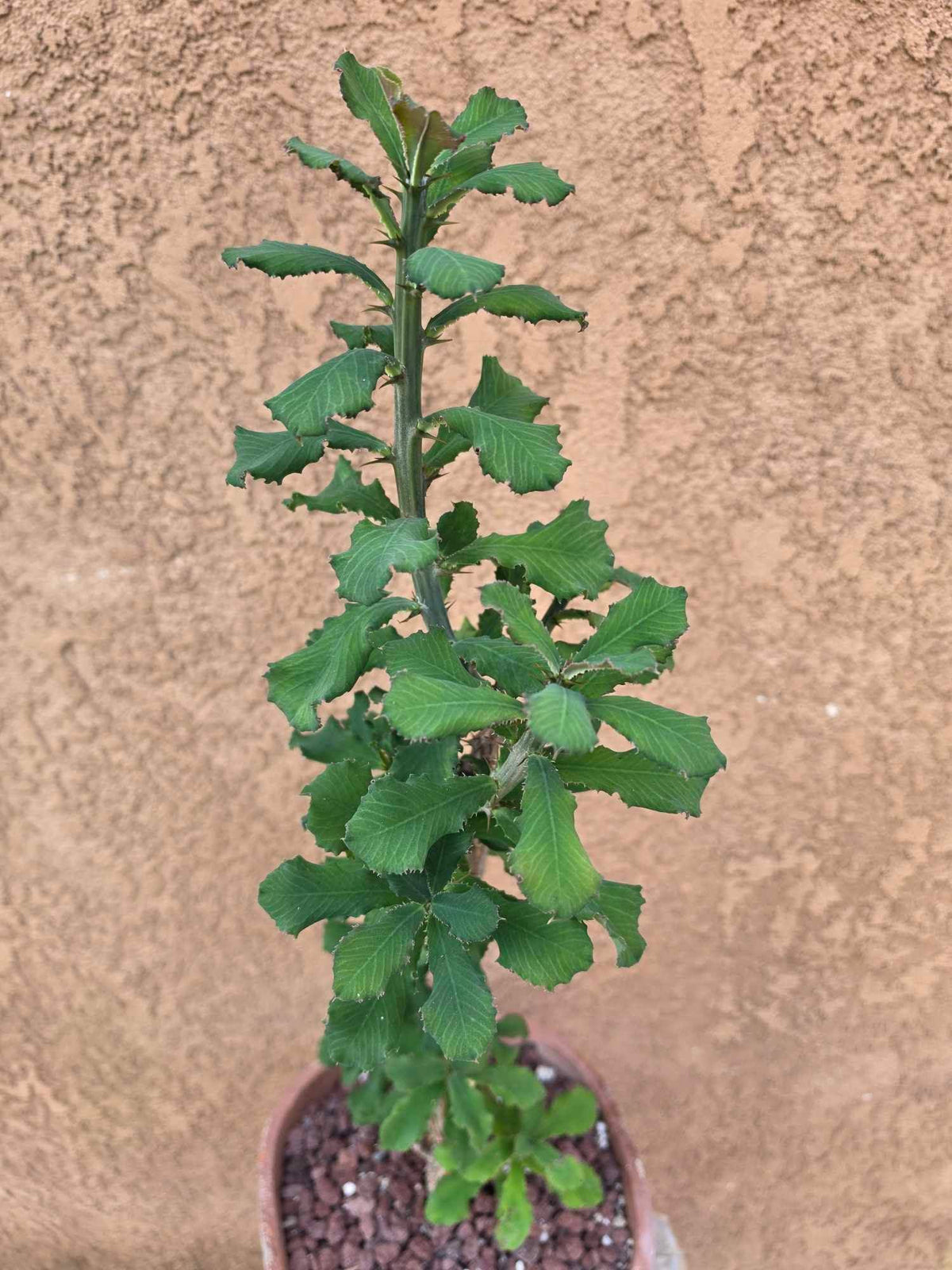
You will receive the exact specimen shown here.
Measures approximately 24" tall above the soil line.
An exceptionally rare offering—we have not encountered another specimen of this species available for sale, either online or in person.
Showcased here in handcrafted Tuscany Earthen Terra Cotta — Blue Ochre Vessel No. 240 (sold separately).
Roots as shown.
Will be shipped bare root.
🌵
Euphorbia biselegans, formerly known as Monadenium elegans, is an extraordinarily uncommon African succulent with a fascinating combination of woody, upright growth, irregularly shaped green foliage, and the distinctive stem architecture associated with the former genus Monadenium. Unlike the familiar geometric forms of many collectible Euphorbias, this species has a decidedly more arboreal character, developing an elongated, branching framework with leaves emerging along its growing stems. Its appearance is unusual even within a genus celebrated for its remarkable diversity, combining the rugged character of a miniature succulent tree with the unexpected delicacy of fresh green foliage.
This exact specimen is particularly compelling at approximately 24" tall above the soil line, with a mature-looking, textured central trunk supporting a narrow, upright arrangement of green stems and irregularly lobed leaves. The older woody growth provides a striking contrast to the fresher foliage, creating an architectural silhouette that is both spare and wonderfully eccentric. Its naturally irregular form gives it considerable presence without the conventional symmetry of a columnar cactus or the compact proportions of a typical caudiciform. We have not found another example of this species offered for sale anywhere, online or in person, making this an especially exciting opportunity for collectors seeking plants far outside the usual commercial selection.
Care Instructions
☀️ Light
Provide very bright light, with gentle morning sun or filtered direct sunlight. Strong light helps maintain sturdy, compact growth, but protect foliage from sudden exposure to intense afternoon sun, particularly after shipping. Acclimate gradually to brighter conditions.
💧 Water
Water thoroughly during active growth, allowing the growing medium to dry substantially between waterings. Reduce watering when growth slows or the plant becomes dormant. Because species-specific cultivation information is limited, a conservative approach is advisable, particularly during cool weather or periods of leaf loss.
🪨 Soil
Use a highly porous, fast-draining succulent medium with a generous mineral component. Pumice, lava rock, coarse grit, and other inorganic materials help maintain root aeration and prevent prolonged moisture retention. Avoid dense, water-retentive soils.
🌡️ Temperature
Maintain warm growing conditions and protect from frost. As a precaution, avoid prolonged exposure to temperatures below approximately 50°F (10°C), especially when the soil is damp. Warmth and excellent drainage are particularly important during establishment after shipping.
🌬️ Humidity
Moderate to low humidity is generally preferable, with good air circulation around the stems and foliage. Avoid prolonged combinations of stagnant air, cool temperatures, and wet growing medium.
📈 Growth Habit
An upright, branching succulent with a woody, textured framework and leafy green growing stems. This specimen already displays a distinctly tree-like structure, with older basal growth supporting newer vertical branches. Its eventual form in cultivation will depend on growing conditions, seasonal growth, and the natural branching tendencies of the individual plant.
✍️ Special Note
This is a highly unusual species for which detailed cultivation information is not widely available. Some members of the former genus Monadenium exhibit seasonal changes in foliage and growth activity, so watering should be adjusted to the plant's actual condition rather than a fixed schedule. As with other Euphorbias, damaged stems may release an irritating, potentially toxic milky latex. Wear gloves when handling damaged tissue and avoid contact with skin and eyes.
Why It Stands Out
- Exceptionally uncommon Euphorbia biselegans, formerly Monadenium elegans
- We have not located another specimen for sale, online or in person
- Approximately 24" tall above the soil line
- Distinctive upright, tree-like succulent architecture
- Beautifully textured, woody central trunk
- Irregularly lobed green foliage along the growing stems
- Fascinating contrast between older woody growth and fresh leafy branches
- Naturally eccentric, asymmetrical silhouette
- Unusual representative of the former genus Monadenium
- Particularly compelling for advanced Euphorbia and rare African succulent collections
Collector Notes
The enormous genus Euphorbia encompasses one of the most diverse collections of plant forms in the botanical world, ranging from tiny annual herbs to imposing succulent trees. Among its most intriguing members are the plants historically classified within Monadenium, a group particularly associated with tropical Africa and distinguished by unusual floral structures, diverse stem forms, and frequently striking seasonal foliage. Although molecular studies have led to the incorporation of Monadenium into the broader genus Euphorbia, the older name remains familiar to many specialist collectors and continues to appear in horticultural literature and collections.
Euphorbia biselegans, also known as Monadenium elegans, is a particularly elusive member of this fascinating group. Unlike the more familiar Monadenium species that occasionally appear in specialty nurseries, this plant has an exceptionally limited presence in the commercial succulent world. We have searched for other specimens offered for sale and have been unable to locate a single example, either online or through our in-person encounters. While this does not establish its conservation status or absolute rarity in cultivation, it certainly speaks to how seldom this particular species appears in the marketplace.
One of the most interesting qualities of this specimen is its departure from the conventional succulent aesthetic. There is no perfectly rounded caudex, no orderly arrangement of geometric ribs, and no densely clustered crown of spines. Instead, the plant has developed a narrow, upright framework of textured woody growth supporting irregular branches and fresh green foliage. The leaves themselves are particularly distinctive, with uneven, sometimes deeply indented margins that give the upper growth an almost sculptural quality. The overall impression is of a miniature tree shaped by an entirely different botanical vocabulary.
The relationship between woody structure and active leafy growth is central to its appeal. Older portions of the trunk display a weathered, rugged surface, while the newer stems remain greener and more flexible in appearance. This contrast gives the specimen an unusual sense of age and development, despite its relatively slender proportions. At approximately 24" tall above the soil line, it already possesses a strong vertical presence, with the kind of naturally unpredictable branching that makes individual specimens so visually interesting.
The former Monadenium group is also botanically noteworthy for its reproductive structures. Like other Euphorbias, these plants produce highly specialized inflorescences known as cyathia, rather than conventional flowers with the familiar arrangement of petals and sepals. Their unusual floral morphology was historically important in distinguishing Monadenium from other Euphorbia groups. For collectors interested in the evolutionary diversity of succulent plants, these botanical relationships are every bit as fascinating as the plants' outward appearances.
This exact Euphorbia biselegans represents something we particularly value at Shangri-Ha Cactus Ranch: a genuinely unusual plant that cannot simply be replaced by ordering another from a familiar supplier. Its textured trunk, eccentric leafy architecture, and extraordinary scarcity in our own searches make it a memorable specimen. For the dedicated Euphorbia collector, the enthusiast of obscure African succulents, or anyone drawn to plants with unconventional natural forms, it offers an opportunity to acquire a species we have rarely encountered—and have not found offered for sale elsewhere.