Shangri-Ha Cactus Ranch
Euphorbia ammak variegata - 4 Feet Tall!
Euphorbia ammak variegata - 4 Feet Tall!
Couldn't load pickup availability
Euphorbia ammak variegata
You will receive this exact specimen.
Measures 48" tall above the soil line.
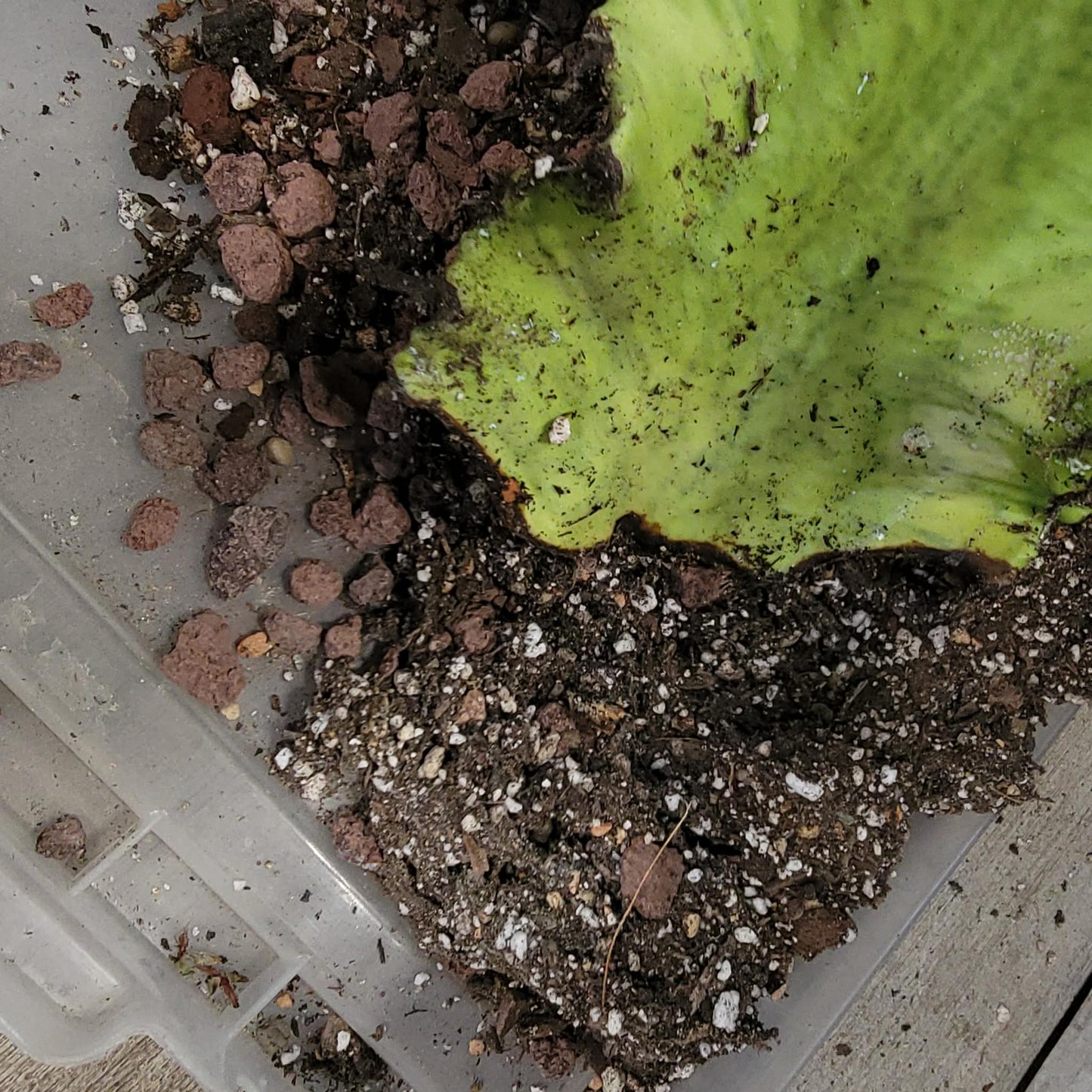
This is a cutting. Roots as shown.
This is a large specimen and will be a little expensive to ship.
Showcased here in one-of-a-kind handmade pottery (sold separately).
Will be shipped bare root.
Euphorbia ammak 'Variegata', also known as the Variegated African Candelabra or Desert Cactus, is a visually appealing and architectural succulent, prized for its unique form and coloration.
Appearance and characteristics
- This Euphorbia features tall, columnar, four-winged stems that exhibit a beautiful marbled pattern of green, cream, and sometimes yellow.
- It has thick, wavy ribs with contrasting dark brown spines.
- While often called a "cactus," it's important to note that Euphorbia ammak is not a true cactus but belongs to the Euphorbiaceae family.
- The plant's common name, African Candelabra, reflects its upright, branching growth habit.
- It can reach impressive heights of up to 15-20 feet in its natural habitat and around 8 feet indoors.
- Small, greenish-yellow flowers may appear in clusters at the top of the stems during summer, though they are not the plant's main attraction.
Care and growing conditions
- Light: Prefers full sun or bright, direct light for optimal growth and coloration. It can tolerate partial sun, but growth and vibrancy might be reduced. If grown indoors, a south-facing window is ideal.
- Watering: Drought-tolerant and prefers to dry out completely between waterings to prevent root rot. Water sparingly, especially during cooler months (once a month in winter vs. every two weeks in summer).
- Soil: Requires well-draining soil. A succulent or cactus mix, possibly with added perlite or pumice, is recommended.
- Temperature: Tolerates a range from 0°C (32°F) to 43°C (109°F), but protection is advised during extreme weather. Best kept away from temperatures below 12°C (53.6°F) to avoid yellowing foliage and stunted growth.
- Fertilizing: Fertilize sparingly (monthly with a diluted, balanced fertilizer) during the growing season (spring and summer).
- Propagation: Easily propagated from stem cuttings. Allow cuttings to callus (dry out) for a week or two before planting them in dry soil.
- Pests and diseases: Generally resilient, but watch out for mealybugs, spider mites, aphids, scale, thrips, whiteflies, and root mealybugs. Overwatering can lead to root rot.
Important considerations
- Toxicity: All parts of the plant are considered toxic if ingested, and the milky sap can cause skin and eye irritation. Handle with care, wearing gloves and goggles to avoid contact.
- Children and pets: Keep this plant away from children and pets due to its toxicity.
- Pruning: Can be pruned to manage size or shape, but exercise caution due to the toxic sap.
- Growth: This is a moderately fast-growing plant that becomes large and impressive with age.
In summary, Euphorbia ammak variegata is a stunning succulent that can be a showstopper indoors or out, with proper care and attention to its specific needs.