Shangri-Ha Cactus Ranch
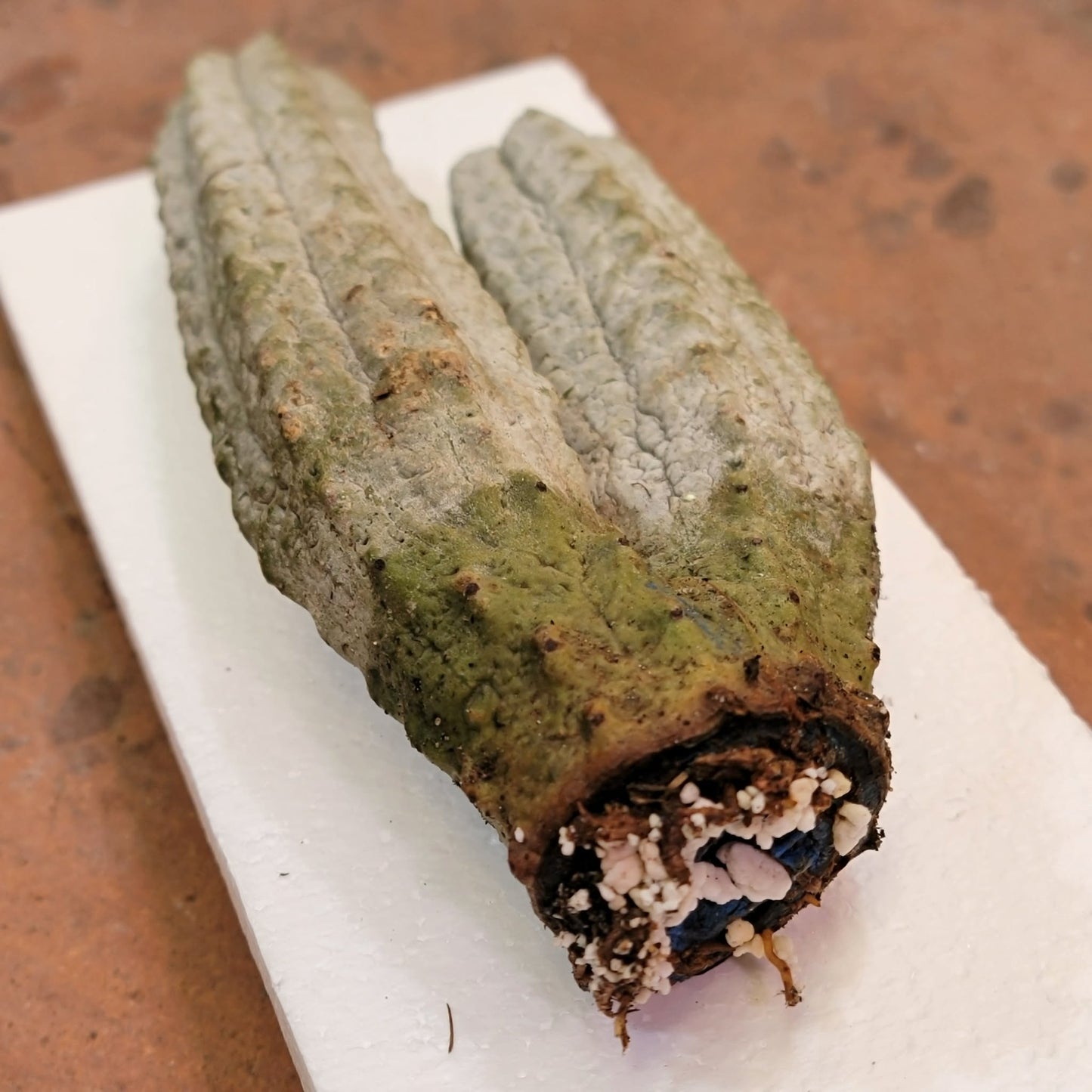
Euphorbia abdelkuri - Double Head
Euphorbia abdelkuri - Double Head
Couldn't load pickup availability
Euphorbia abdelkuri - Double Head
You will receive this exact specimen.
Measures 7" tall
Roots as shown.
Showcased here in one-of-a-kind handmade pottery (sold separately).
Will be shipped bare root.
A monstrous Euphorbia abdelkuri is a rare and highly sought-after form of the species, defined by its crested or "monstrose" growth. Instead of growing in its typical columnar, candelabra-like shape, the meristem (the growth tip) mutates and spreads out, creating a flattened, fan-like, or wildly contorted shape.
Standard vs. monstrous growth
|
Feature |
Standard Euphorbia abdelkuri |
Monstrous Euphorbia abdelkuri |
|
Growth form |
Upright, thick, smooth, grey-green columns that branch to form a candelabra. |
Flattened, folded, and irregular fan-like growth, which can create a unique, undulating sculpture-like appearance. |
|
Rarity |
Considered a rare and coveted succulent. |
Extremely rare and valuable, even more so than the standard form. |
|
Appearance |
Often compared to a grey, wax-like candle due to its smooth texture and lack of leaves or spines. |
The chaotic growth pattern and unique folds of the crested stems make every specimen truly one-of-a-kind. |
Key Characteristics:
- Appearance: It has a distinctive grey color, sometimes shining with iridescence in the sun, and forms densely branched, candelabra-like clumps.
- Size: It usually reaches about 3 feet (1 meter) in height, though some wild plants can grow larger.
- Unique Features: It lacks leaves and spines, giving it a peculiar wax-like appearance, like a grey candle with melted wax.
- Toxicity: Like other members of the Euphorbia genus, it contains a milky sap (latex) that is toxic and can be highly irritating, especially to the eyes and skin.
Origin and Habitat:
- Native Range: It is endemic to Abd al Kuri, an island in the Socotra Archipelago south of Yemen.
- Habitat: It grows in rocky, arid areas, typically at elevations of 150-270 meters (492-886 feet).
Cultivation Requirements:
- Light: Prefers full sun (6-8 hours of direct sunlight) but filtered light during the hottest part of the day can prevent bleaching.
- Temperature: Thrives in temperatures between 20°C and 30°C (68°F to 86°F), and must be protected from frost.
- Soil: Requires well-draining soil, such as a sandy or cactus mix, to prevent root rot. It should not hold excessive moisture.
- Watering: Water thoroughly in the summer, allowing the soil to dry out between waterings. In winter, water only when the soil is completely dry.
Uses:
- Ornamental: Popular as a houseplant or addition to succulent collections due to its unique appearance.
- Xeriscaping: Drought resistance makes it suitable for water-wise gardens.
- Ecological Role: Attracts pollinators like bees and butterflies, contributing to biodiversity.