Skip to product information
1 of 11

Shangri-Ha Cactus Ranch

Epithelantha Bokei f. cristata - Japan

Epithelantha Bokei f. cristata - Japan

Regular price $475.00 USD
Regular price $475.00 USD Sale price $475.00 USD
Sale Sold out
Shipping calculated at checkout.

Epithelantha bokei f. cristataRare Crested & Monstrose Grafted Specimen

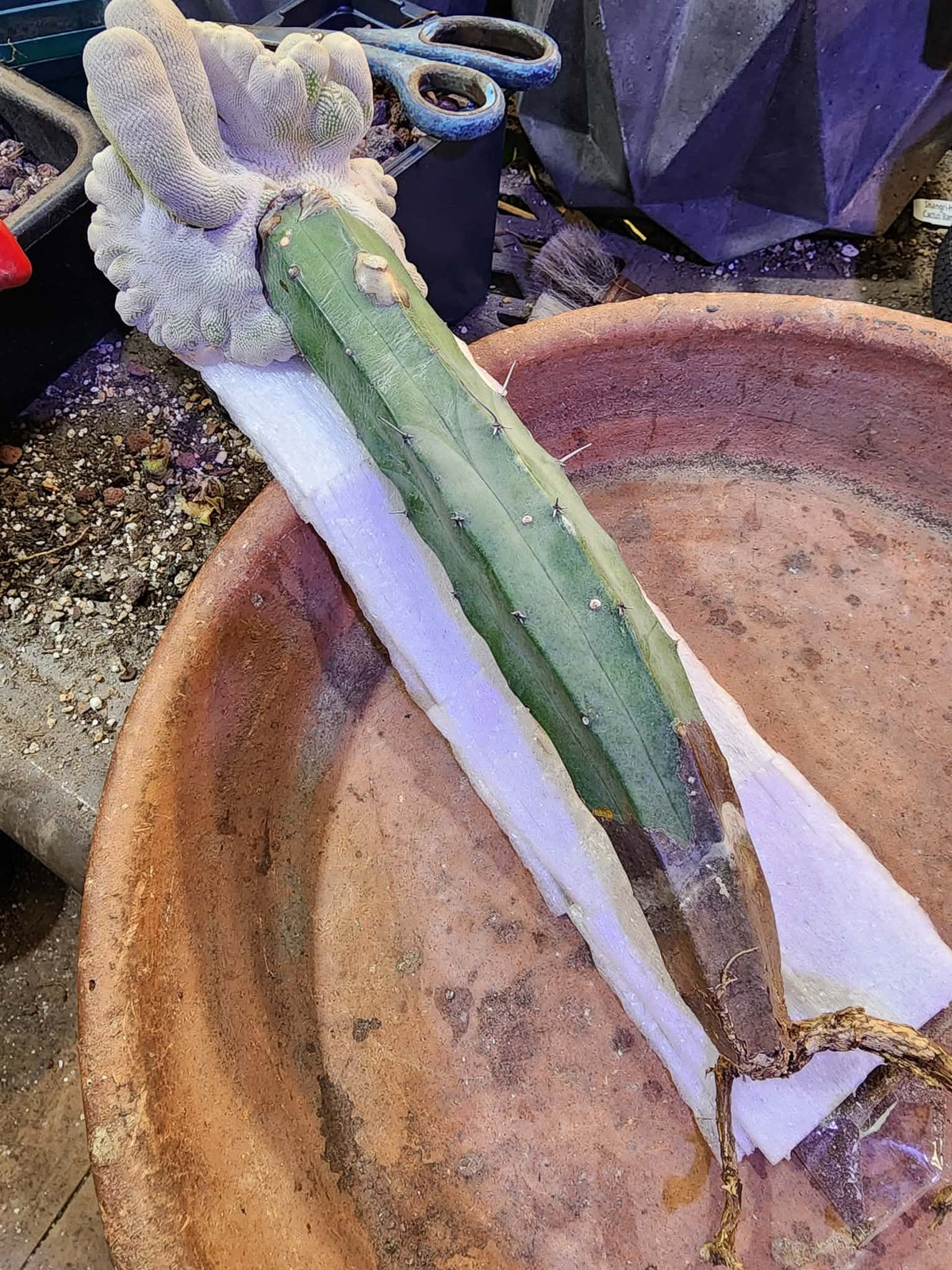
You will receive this exact, extraordinary grafted specimen.
Features numerous crested and monstrose heads.
Scion measures approximately 6" wide × 5" tall.
Entire specimen measures approximately 12" tall.
Showcased here in Handmade Pottery – Turquoise Ledger Vessel No. 70 (sold separately).
Roots as shown.
Only 1 available.
Will be shipped bare root.

🌵

Epithelantha bokei is a remarkable miniature cactus native to a limited region of West Texas and northern Mexico, where it grows among limestone and other rocky, mineral-rich terrain. The species is known for its small, tightly constructed stems covered almost completely by minute white radial spines, creating the pale, finely textured surface characteristic of Epithelantha. In its normal form, E. bokei remains extraordinarily compact and understated — a tiny cactus whose intricacy becomes apparent only when viewed closely.

This exact plant is anything but typical. Here, crested and monstrose growth have transformed the naturally compact species into an extraordinary mass of folds, lobes and irregular heads. The scion alone measures approximately 6 inches wide × 5 inches tall, an exceptional scale for a plant derived from such a diminutive species. Broad fan-shaped crests move into rounded monstrose growth and smaller emerging heads, while the characteristic fine white spination blankets the entire surface and emphasizes every fold and distortion. Grafted onto a substantial rootstock and standing approximately 12 inches tall overall, this is a wonderfully bizarre, mature collector specimen with tremendous sculptural presence.

Care Instructions

☀️ Light: Bright light with some direct sun is ideal. Strong light helps maintain compact growth and the dense white spination characteristic of the species. Protect from sudden exposure to extremely intense afternoon sun and acclimate gradually after shipping.

💧 Water: Water thoroughly during active growth, then allow the soil to dry completely before watering again. Keep considerably drier during the cooler winter dormancy period. Because this specimen is grafted, avoid prolonged drought during active growth, but never allow the rootstock to remain in wet soil.

🪨 Soil: Requires a very fast-draining, mineral-rich cactus mix. Pumice, coarse grit, lava rock and similar inorganic components provide the drainage and aeration necessary for healthy roots.

🌡️ Temperature: Prefers warm conditions during active growth. Protect this grafted specimen from frost and prolonged exposure to cold temperatures, particularly because the tolerances of the rootstock may differ from those of Epithelantha bokei itself.

💨 Humidity: Low humidity with excellent air circulation is preferred. Avoid prolonged combinations of cool temperatures and wet soil.

🌱 Growth Habit: The typical species remains small and compact, but cristate growth causes the growing point to elongate into fan-shaped crests, while monstrose growth produces irregular proliferation and distorted heads. This specimen displays an especially dramatic combination of both forms.

⚠️ Special Note: This is a grafted cactus, meaning the Epithelantha scion is growing on a separate cactus rootstock. When evaluating watering and cold tolerance, the needs of the rootstock must also be considered. Avoid damaging the graft union when handling or repotting.

Why It Stands Out

  • Exceptionally rare crested and monstrose growth
  • Numerous irregular heads and broad sculptural crests
  • Scion approximately 6" wide × 5" tall
  • Approximately 12" tall overall
  • Dramatic mature grafted specimen
  • Beautiful dense white spination
  • Extraordinary texture and architectural form
  • Derived from the naturally miniature Epithelantha bokei
  • Only 1 available
  • A true one-of-a-kind collector specimen

Collector Notes

Epithelantha bokei is fascinating even before anything unusual happens to its growth. It belongs to a small genus of highly specialized miniature cacti whose bodies are covered in tiny tubercles and remarkably dense arrangements of minute spines. In mature plants, those spines can obscure much of the green epidermis beneath them, producing the characteristic pale, almost chalky appearance seen across this specimen.

The species has a naturally restricted distribution in the Chihuahuan Desert region of West Texas and northern Mexico, where it is associated particularly with rocky, limestone-rich habitats. Ordinary plants remain remarkably small, which makes the sheer physical presence of this grafted specimen all the more striking.

Cristate and monstrose growth are separate developmental abnormalities, and seeing their characteristics expressed together can produce extraordinarily complex plants. Cristate growth replaces the conventional single growing point with an elongated growth line, producing fans, waves and folds. Monstrose growth disrupts the plant's normal symmetry in a different way, creating irregular, proliferating forms and unpredictable new heads. Neither follows an entirely predictable path as the plant develops.

That unpredictability is exactly what makes this specimen so compelling. Across its approximately 6-inch-wide scion, large crested fans sit beside bulbous monstrose sections, smaller lobes and emerging growth points. There is no simple repeating architecture — the plant appears to be continually inventing its next shape. The incredibly fine white surface texture visually unifies all of that distortion, producing something that looks almost coral-like at first glance.

For a species ordinarily celebrated for being tiny and restrained, this specimen has gone spectacularly in the opposite direction. It is strange, mature, beautifully developed and completely individual — exactly the kind of plant that makes abnormal-growth cacti so fascinating to collect.

View full details