Shangri-Ha Cactus Ranch
Didierea madagascariensis - Octopus Tree
Didierea madagascariensis - Octopus Tree
Couldn't load pickup availability
Didierea madagascariensis
Madagascar Octopus Tree
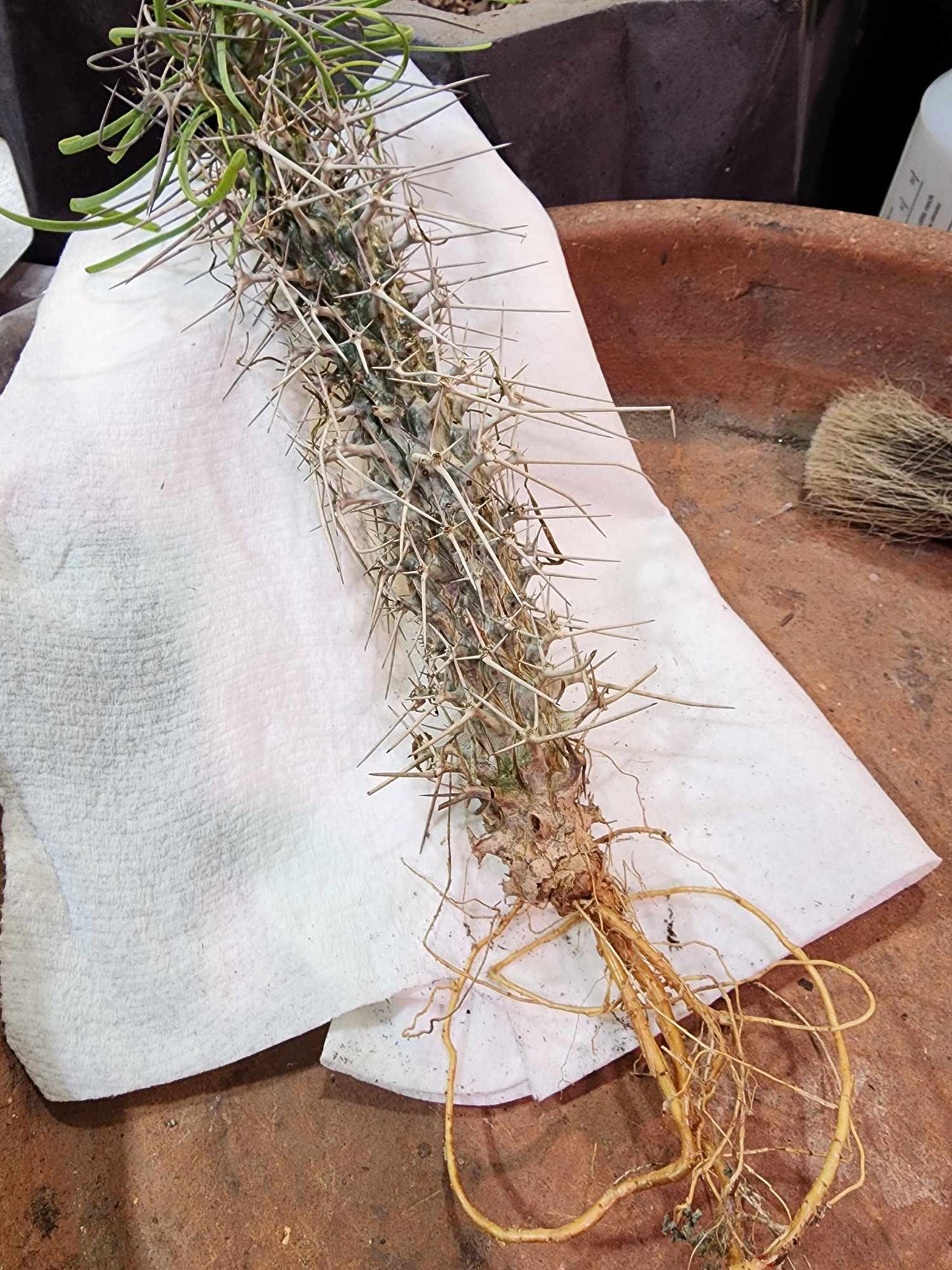
You will receive this exact specimen.
Measures 10" tall.
Extremely unusual collector specimen displaying the distinctive armored stems, geometric branching, and prehistoric appearance that make Didierea one of Madagascar’s most fascinating succulent genera.
This is our first time encountering this species and our first time offering it at Shangri-Ha Cactus Ranch.
Showcased here in Handmade Pottery – Ash Column Vessel No. 138 (sold separately).
Roots as shown.
Will be shipped bare root.
🌵
Didierea madagascariensis is a rare succulent tree species native to the extraordinary spiny forests of southern Madagascar — one of the most botanically unique ecosystems on Earth. This region is home to plants found nowhere else, many of which have evolved unusual forms to survive intense sunlight, long drought periods, and challenging environmental conditions.
A member of the Didiereaceae family, Didierea madagascariensis represents a lineage of plants unlike almost anything else in cultivation. Its upright stems develop dense clusters of protective spines and small seasonal leaves, creating an appearance that feels almost ancient — somewhere between a cactus, a tree, and a living sculpture.
Although it resembles desert cacti at first glance, Didierea evolved independently on Madagascar, making it a powerful example of convergent evolution. Over time, plants in this family developed their own solutions for surviving arid landscapes, resulting in the unmistakable forms that define Madagascar’s spiny forests.
This specimen displays the architectural qualities collectors value most: strong vertical structure, dramatic spination, unusual texture, and the unmistakable character of a plant shaped by one of the world’s most isolated environments.
Didierea madagascariensis is rarely encountered in cultivation, making it especially exciting for collectors interested in unusual caudiciforms, Madagascar succulents, and species with a strong connection to their native habitat.
A cherished species prized for its:
prehistoric architectural form
rare Madagascar origin
distinctive armored stems
unique evolutionary history
and sculptural collector presence
A fascinating species that captures the strange beauty and botanical imagination of Madagascar’s legendary spiny forests.
Care Instructions
☀️ Light
Bright light to full sun. Strong light encourages compact growth, healthy structure, and proper development. Acclimate gradually when moving into more intense outdoor sun.
💧 Water
Allow soil to dry completely between waterings. Water more regularly during active warm-season growth, then greatly reduce watering during cooler months or dormancy.
🪨 Soil
Requires a very fast-draining cactus or succulent mix with excellent mineral content. Pumice, lava rock, decomposed granite, and coarse amendments are ideal.
🌡️ Temperature
Protect from frost. Prefers warm conditions and should be protected from extended temperatures below approximately 45°F.
🌬️ Humidity
Low humidity with strong airflow is preferred. Avoid prolonged damp conditions, especially during cooler weather.
📈 Growth Habit
Slow-growing succulent tree with upright stems that become increasingly architectural over time. Mature plants can develop dramatic branching and the distinctive silhouette associated with Madagascar’s spiny forests.
✍️ Special Note
Didierea may naturally produce and shed small leaves depending on season and growing conditions. Leaf loss during periods of rest or environmental change is normal and part of its natural growth cycle.
Why It Stands Out
• First Didierea madagascariensis ever offered by Shangri-Ha Cactus Ranch
• Rare species from Madagascar’s legendary spiny forests
• Incredible prehistoric, architectural appearance
• Distinctive armored stems and unusual growth habit
• A true example of Madagascar’s isolated plant evolution
• Highly collectible for enthusiasts of rare succulents and botanical oddities