Shangri-Ha Cactus Ranch
Coryphantha elephantidens cv inermis - XL
Coryphantha elephantidens cv inermis - XL
Couldn't load pickup availability
Coryphantha elephantidens cv. ‘Inermis’ — Rare Spineless Elephant Tooth Cactus
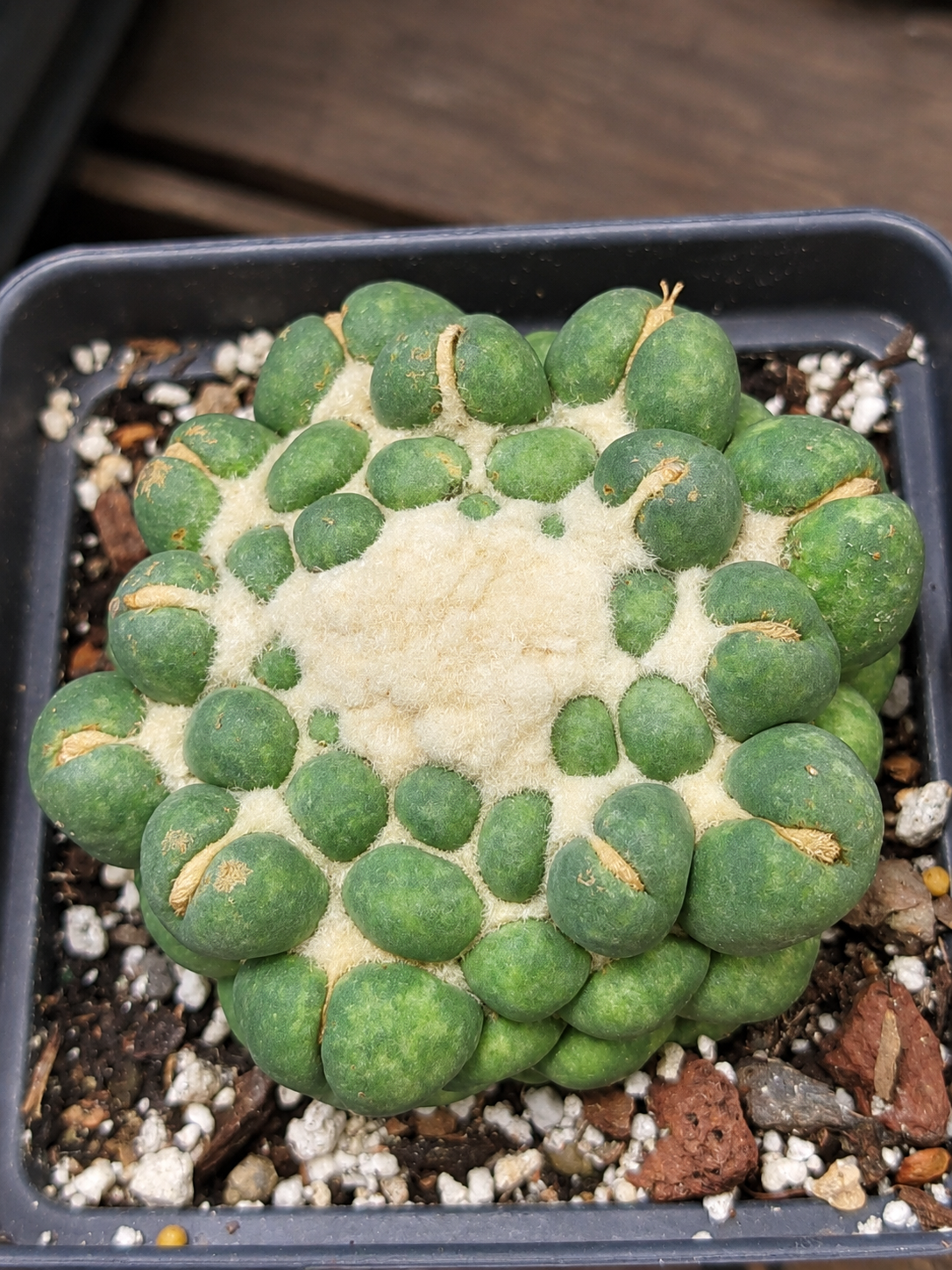
You will receive the exact specimen pictured, measuring approximately 3.25" wide.
PLEASE NOTE: We're making this specimen available now so collectors can take advantage of our Fall Collector Sale pricing, even though we haven't had time to complete our usual photography. Additional photographs may be added later.
Roots as shown.
Ships bare root. Nursery pot not included.
🌵
Coryphantha elephantidens cv. ‘Inermis’ is an extraordinary spineless selection of the Elephant Tooth Cactus, prized for its exaggerated, rounded tubercles and remarkably sculptural architecture. Without the usual prominent spines, the plant's geometry becomes the centerpiece: a densely packed arrangement of broad, swollen, blue-green tubercles separated by pale, woolly growth.
This particular specimen is especially appealing for its substantial, closely arranged tubercles surrounding a generous central area of creamy wool. The muted green coloration, softly rounded contours, and distinctive tan markings create a fascinating interplay of texture and form. At approximately 3.25 inches wide, it already has the presence of a mature miniature sculpture, with the individual tubercles forming an intricate, almost architectural composition.
Care Instructions
☀️ Light
Provide bright light with gentle morning sun or filtered afternoon sunlight. Acclimate gradually to stronger direct sun, especially in hot climates.
💧 Water
Water thoroughly during active growth, allowing the potting medium to dry completely between waterings. Reduce watering substantially during winter dormancy, particularly in cool conditions.
🪨 Soil
Use an exceptionally well-draining, mineral-rich cactus mix with generous amounts of pumice, perlite, or coarse grit. Avoid moisture-retentive soil.
🌡️ Temperature
Prefers warm growing conditions and protection from frost. Keep relatively dry during cooler periods.
🌬️ Humidity
Low to moderate humidity with excellent air circulation is ideal. Avoid prolonged moisture around the woolly crown.
📈 Growth Habit
A slow-growing, compact cactus developing large, rounded tubercles arranged into a distinctive sculptural body. The spineless cultivar emphasizes the plant's natural geometry.
✍️ Special Note
The tan markings visible on several tubercles are part of this exact specimen's current appearance. As with any collector cactus, careful acclimation and conservative watering are particularly important after shipping and repotting.
Why It Stands Out
-
Rare spineless cultivar of Coryphantha elephantidens
-
Distinctive, exaggerated elephant-tooth-like tubercles
-
Beautiful muted blue-green coloration
-
Prominent creamy-white woolly crown
-
Unusual sculptural appearance without prominent spines
-
Dense, rounded, architectural growth
-
Intriguing natural tan markings and surface textures
-
Compact specimen measuring approximately 3.25" wide
-
Particularly appealing to collectors of unusual cactus forms
-
The exact specimen pictured is the plant you will receive
Collector Notes
Coryphantha elephantidens belongs to the cactus family Cactaceae and is native to Mexico, where members of the genus inhabit environments ranging from rocky slopes to seasonally dry woodland habitats. The species is distinguished by its unusually broad, rounded tubercles, which give rise to its evocative common name, Elephant Tooth Cactus.
The genus Coryphantha is particularly interesting botanically because its tubercles develop characteristic grooves connecting the areoles toward the plant's growing center. These structures are associated with the genus's distinctive flowering morphology and help distinguish Coryphantha from several superficially similar mammilloid cacti.
In the cultivar ‘Inermis,’ the reduction or absence of prominent spines transforms the visual character of the species. Features normally partly obscured by spination become immediately apparent: the contours of the tubercles, the spacing between them, the pale wool, and the subtle variations in epidermal coloration.
This particular specimen illustrates those qualities beautifully. Its broad tubercles are arranged around an unusually conspicuous woolly center, creating a composition that looks almost deliberately assembled. The contrast between the soft central wool and the substantial, rounded green tubercles gives the plant a character unlike that of a conventional spiny cactus.
For collectors interested in unusual morphology rather than size alone, Coryphantha elephantidens cv. ‘Inermis’ offers an especially rewarding subject. Its slow development allows the plant's architecture to become more intricate over time, making each specimen a distinctive expression of this fascinating spineless form.