Shangri-Ha Cactus Ranch
Copiapoa cinerea
Copiapoa cinerea
Couldn't load pickup availability
Copiapoa cinerea
(Atacama Desert Copiapoa)
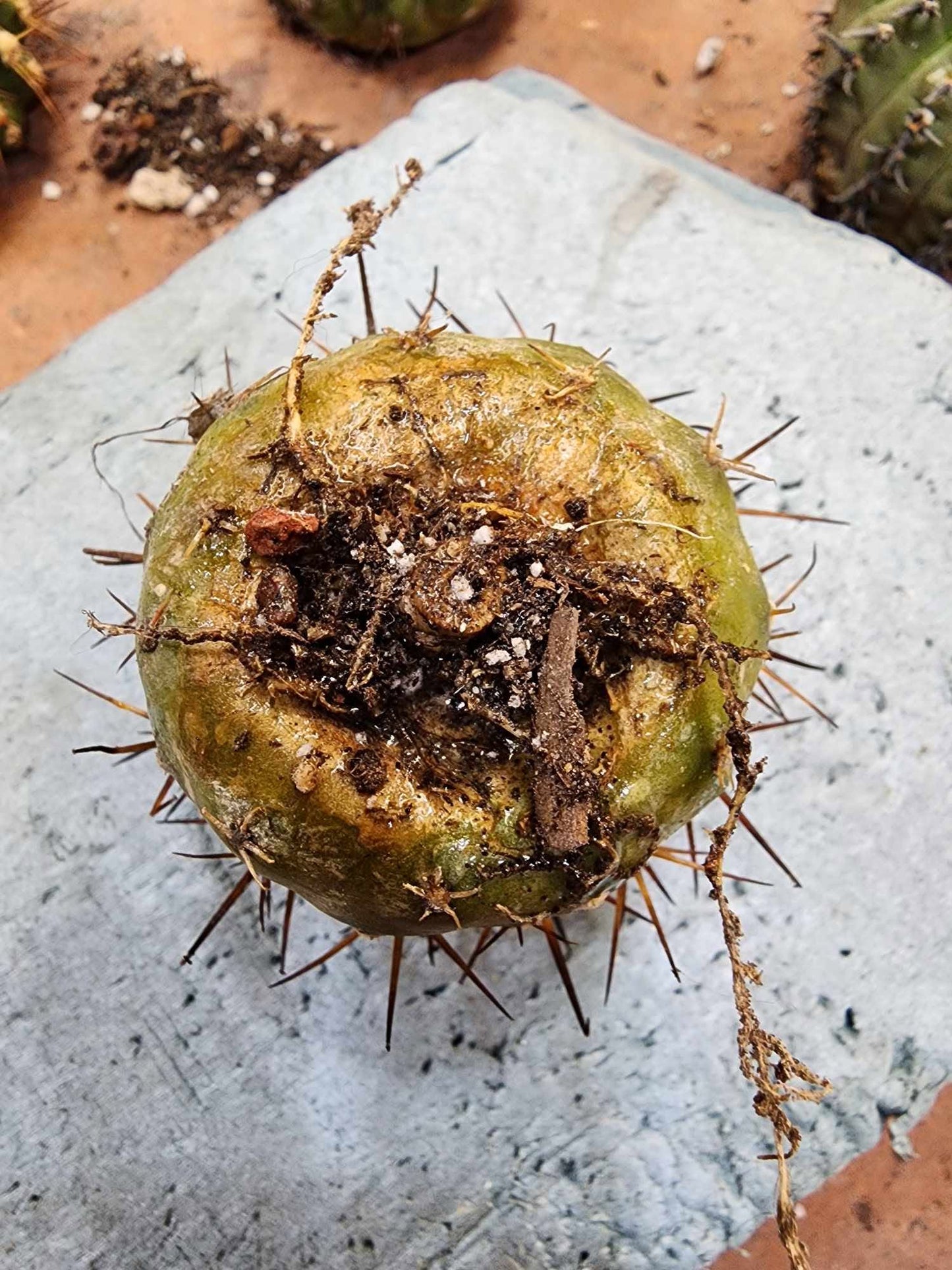
You will receive the exact specimen shown here.
Measures approximately 2.5" wide.
Showcased here in Handmade Pottery – Canyon Ember Basin No. 130 (sold separately).
Roots as shown.
Will be shipped bare root.
🌵
Copiapoa cinerea is one of the most celebrated and unmistakable cacti of Chile’s Atacama Desert, prized by collectors for its extraordinary adaptation to one of the driest environments on Earth. Native to the coastal desert of northern Chile, this exceptionally slow-growing species develops a compact body that matures toward the characteristic grey to ash-colored epidermis from which cinerea takes its name, punctuated by woolly areoles and dramatic dark spines. This beautiful young specimen already displays tremendous character: a compact, low body with strongly defined structure, creamy wool at the areoles, and an impressive crown of long spines ranging from warm amber on newer growth to deep brown-black. At approximately 2.5" wide, it is a wonderfully expressive young C. cinerea with the beginnings of the stark, ancient-looking beauty for which mature plants are legendary.
Care Instructions
☀️ Light
Very bright light to full sun. Strong light is important for compact growth and the development of the characteristic epidermal coloration. Acclimate gradually to intense direct sunlight to prevent scorching.
💧 Water
Water conservatively during active growth, allowing the soil to dry completely between waterings. Keep very dry during cool winter conditions. Copiapoa cinerea is adapted to an extremely arid environment and is particularly intolerant of prolonged moisture around the roots.
🪨 Soil
Requires an exceptionally fast-draining, highly mineral cactus mix with minimal organic matter and excellent aeration around the roots.
🌡️ Temperature
Protect from hard frost and prolonged freezing conditions. Cooler temperatures are best tolerated when the plant is completely dry.
🌬️ Humidity
Prefers dry conditions with excellent air circulation. In habitat, moisture from coastal fog plays an important ecological role, but cultivated plants should never be kept in persistently damp soil or stagnant humid conditions.
📈 Growth Habit
Exceptionally slow-growing, initially developing as a compact solitary plant. With great age, C. cinerea can become substantially larger and may eventually produce offsets, creating the remarkable old clusters for which habitat specimens are famous.
✍️ Special Note
The famous pale, waxy appearance of mature Copiapoa cinerea develops as the plant ages under appropriate growing conditions. Young plants can be considerably greener, gradually acquiring more of the characteristic grey-white epidermal bloom with maturity and strong light. Avoid rubbing or unnecessarily handling the body of the plant, as its natural surface should be preserved.
Why It Stands Out
- Iconic Chilean Copiapoa
- Native to the extraordinary Atacama Desert
- Exceptionally slow-growing
- Beautiful compact 2.5" specimen
- Dramatic long dark spines
- Creamy woolly areoles
- Characteristic grey coloration develops with maturity
- Highly prized collector species
Collector Notes
Few genera are as closely associated with extreme desert adaptation as Copiapoa, and Copiapoa cinerea has become one of the defining species of the genus. Its native landscape along the coast of northern Chile receives extraordinarily little rainfall, with the influence of Pacific coastal fog helping sustain plant communities in an otherwise profoundly arid environment. Mature C. cinerea can develop the ghostly grey-white epidermis, dark spination, and weathered architecture that make ancient habitat plants almost otherworldly in appearance—but that character is accumulated slowly, over many years. Young cultivated specimens provide the opportunity to watch that transformation unfold. This 2.5" plant already possesses excellent structure and formidable spination, with the wonderful promise of becoming increasingly stark, sculptural, and unmistakably cinerea as it matures.