Skip to product information
1 of 10

Shangri-Ha Cactus Ranch

Cleistocactus colademononis - Monkey Tail Cactus

Cleistocactus colademononis - Monkey Tail Cactus

Regular price $135.00 USD
Regular price $135.00 USD Sale price $135.00 USD
Sale Sold out
Shipping calculated at checkout.

Cleistocactus colademononisMonkey Tail Cactus — 7 Tails

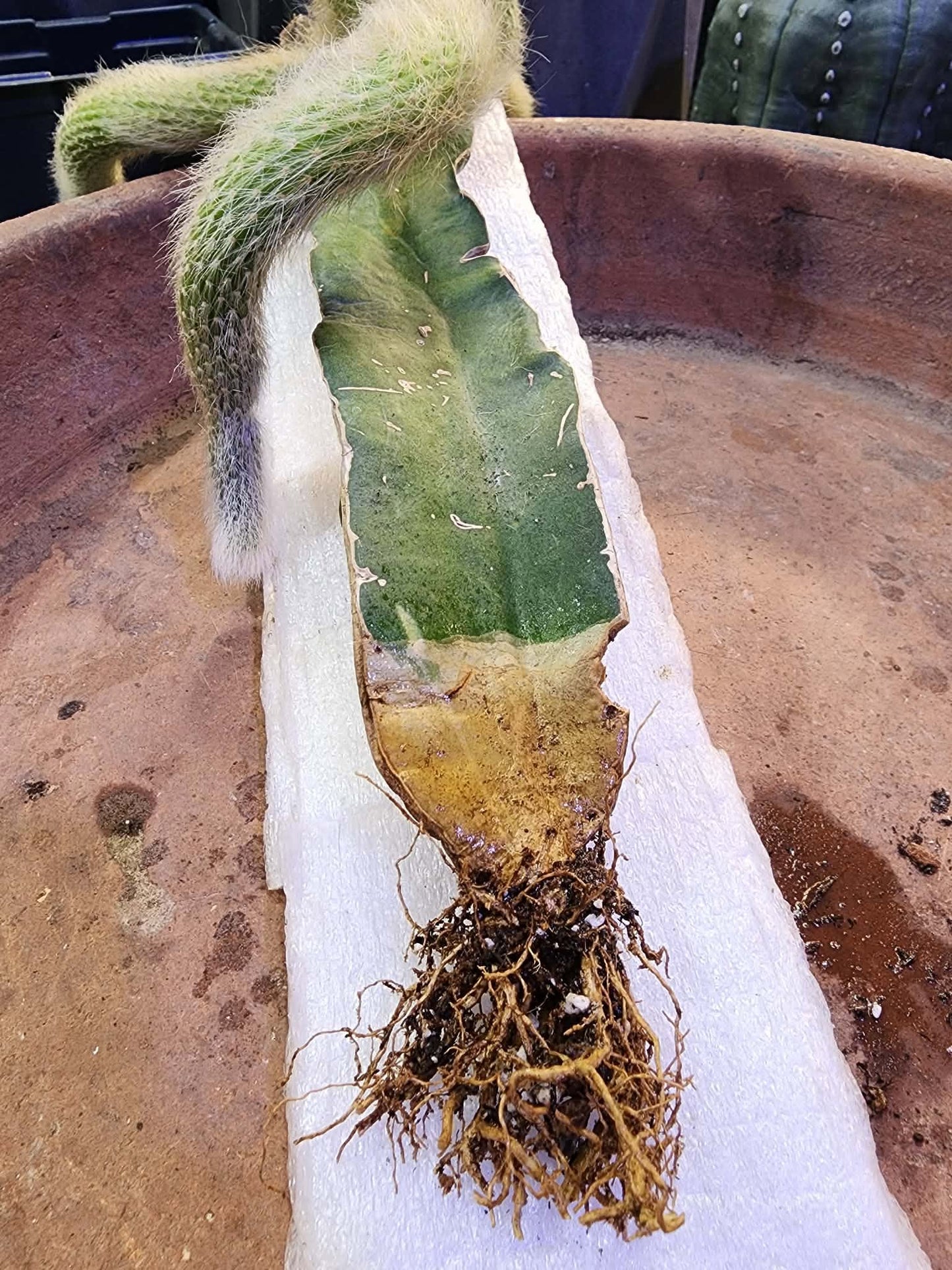
You will receive the exact large specimen shown here.
Features 7 spectacular tails, with the longest measuring approximately 9" long.
Entire specimen measures approximately 11" tall above the soil line.
Roots as shown.
Showcased here in Handmade Pottery – Ash Column Vessel No. 138 (sold separately).
Will be shipped bare root.

🌵

Cleistocactus colademononis is one of the most immediately recognizable trailing cacti, native to the rocky mountainous regions of Bolivia, where it grows from steep cliffs and rocky outcrops. Its long cylindrical stems are densely covered in soft, hairlike white spines, creating the extraordinary furry appearance responsible for its common name, Monkey Tail Cactus. Young stems may initially grow upward, but as they gain length and weight they naturally begin to arch and trail, eventually producing the dramatic cascading growth for which the species is prized.

This exact specimen has already developed seven individual tails, giving it a wonderfully animated, almost unruly form. The longest tail measures approximately 9 inches, while the remaining stems twist, curve and reach in different directions around the plant. Standing approximately 11 inches tall above the soil line, it has substantial presence and is well on its way toward the cascading architecture that makes mature specimens so spectacular. The contrast between the fresh green stems and their dense covering of fine pale hairs gives the entire plant a wonderfully tactile appearance — eccentric, sculptural and unmistakably Monkey Tail.

Care Instructions

☀️ Light: Bright light with several hours of direct sun is ideal. Strong light encourages compact, healthy growth and dense spination. In extremely hot climates, some protection from the harshest afternoon sun can be beneficial. Acclimate gradually after shipping.

💧 Water: Water thoroughly during active growth, then allow the soil to dry well before watering again. Reduce watering substantially during the cooler winter months. Mature trailing stems store considerable moisture and should never remain in consistently wet soil.

🪨 Soil: Requires a fast-draining cactus mix with plenty of mineral material such as pumice, lava rock or coarse grit. Excellent drainage and root aeration are essential.

🌡️ Temperature: Prefers warm conditions during active growth but, because of its mountainous origins, can tolerate cooler temperatures when kept dry. Protect from hard frost and prolonged freezing conditions.

💨 Humidity: Low to moderate humidity with good air circulation is preferred. Avoid prolonged combinations of cool temperatures and wet soil.

🌱 Growth Habit: Initially upright, becoming increasingly arching and pendant as the stems lengthen. Established plants branch from the base and can eventually produce numerous long trailing stems, making the species particularly well suited to elevated pots and hanging containers.

⚠️ Special Note: The long stems can become increasingly delicate and awkward to handle as they mature. Support the plant carefully when repotting and avoid unnecessary pressure on the stems or their growing tips.

Why It Stands Out

  • Impressive 7-tailed specimen
  • Longest tail approximately 9" long
  • Approximately 11" tall above the soil line
  • Beautiful established branching
  • Extraordinary soft, hairlike white spination
  • Naturally develops into dramatic cascading growth
  • Native to the mountainous regions of Bolivia
  • One of the most distinctive trailing cactus species
  • Large, wonderfully characterful exact specimen

Collector Notes

The common name Monkey Tail Cactus requires very little explanation once the plant begins producing mature stems. Each cylindrical branch becomes densely clothed in long, fine white hairs, and as those stems lengthen and begin to hang, the resemblance to a collection of furry tails becomes wonderfully convincing.

In habitat, Cleistocactus colademononis is associated with steep, rocky terrain in Bolivia. Its trailing growth habit makes perfect sense in that environment: stems can extend outward and downward from cliffs and rocky faces rather than having to support themselves as conventional upright columns. In cultivation, that same adaptation creates one of the cactus world's most dramatic natural hanging forms.

Mature plants are also capable of producing striking bright red flowers along their stems. Rather than opening into the broad, symmetrical blooms associated with many desert cacti, the flowers are elongated and tubular, creating a vivid contrast against the plant's dense covering of pale hairlike spines.

What makes this exact specimen particularly appealing is that the transition from young upright growth to mature trailing architecture is already happening across seven separate stems. Some reach upward, others arc outward, and the longest has already extended to approximately 9 inches. That irregularity gives the plant tremendous movement now, while leaving plenty of room for its form to become increasingly dramatic as those seven tails continue to lengthen, branch and cascade.

View full details