Shangri-Ha Cactus Ranch
Cipocereus bradei - Triple Head
Cipocereus bradei - Triple Head
Couldn't load pickup availability
Cipocereus bradei — Triple Head
Rare Brazilian Columnar Cactus
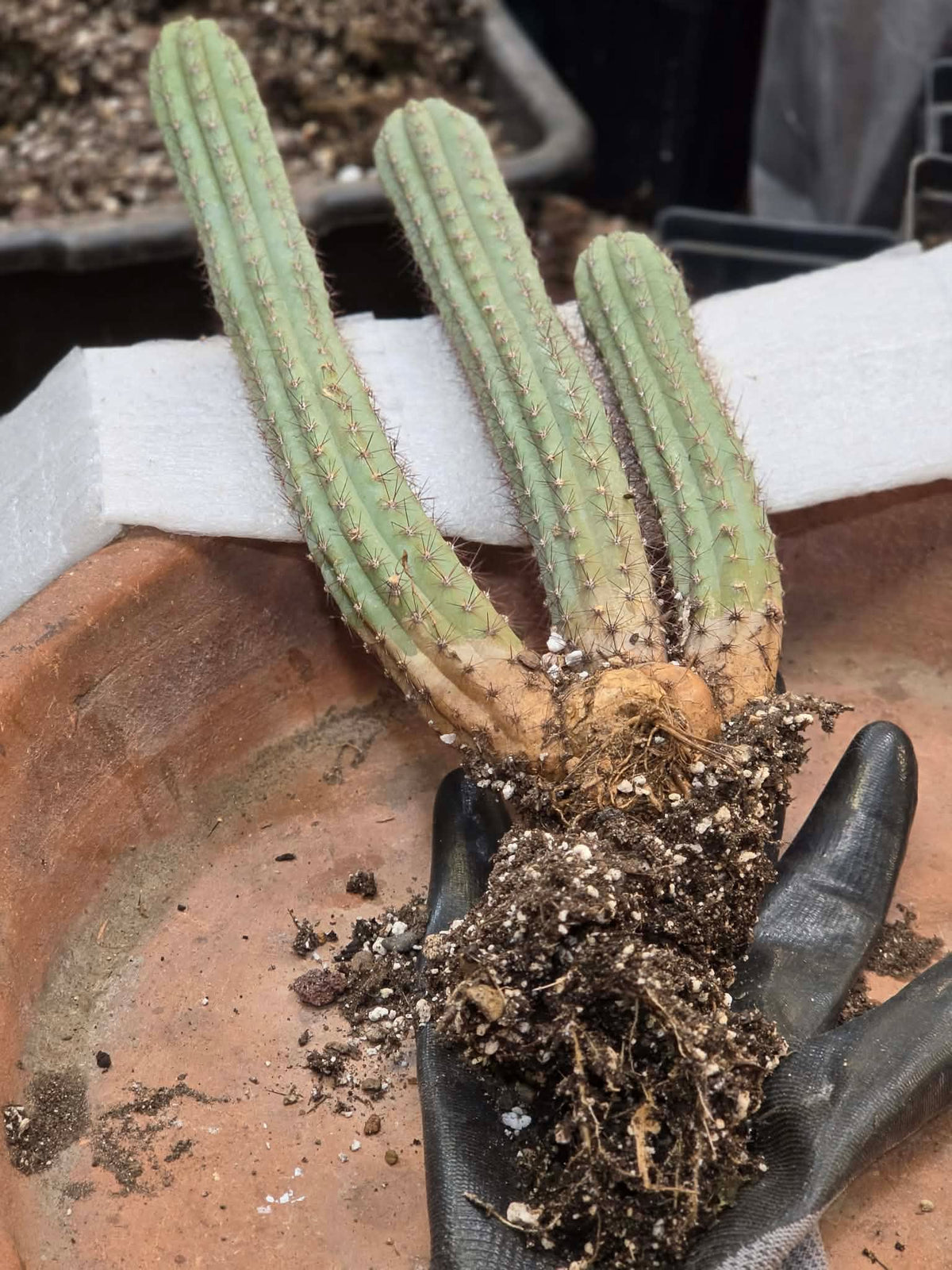
You will receive this exact, large specimen.
Measures approximately 10" tall at present.
Features an impressive triple-headed growth formation with three developing stems.
Showcased here in One-of-a-Kind Handmade Pottery — Canyon Bloom Vessel No. 151 (sold separately).
Roots as shown.
Will be shipped bare root.
🌵
Cipocereus bradei is a remarkable and highly collectible columnar cactus native to the mountainous landscapes of Minas Gerais, Brazil. Belonging to a small genus of Brazilian cacti associated with rocky upland habitats, this distinctive species is admired for its architectural growth, prominent ribs, and beautiful blue-green to glaucous stem coloration. In favorable conditions, the stems develop a powdery, wax-like surface bloom that lends the plant an unusually luminous appearance. Its combination of sculptural form, striking coloration, and relatively limited natural distribution has made it especially desirable among collectors of rare South American cacti.
This substantial, triple-headed specimen is particularly appealing for its multiple growing points. Rather than presenting the conventional silhouette of a single upright column, it features three developing heads that create a broader, more complex architectural composition. Measuring approximately 10 inches tall, it already possesses a substantial presence, with the potential for its three stems to develop increasingly individual proportions as the plant matures.
The triple-headed formation is especially interesting in a species normally appreciated for its strong vertical architecture. Each growing point contributes to the specimen's overall structure, creating opportunities for contrasting stem heights, changing relationships between the columns, and a more elaborate silhouette over time. For collectors who appreciate unusual growth configurations, this specimen offers both the distinctive botanical character of Cipocereus bradei and the additional visual interest of a multi-headed plant.
Care Instructions
☀️ Light
Provide abundant bright light, including several hours of direct sunlight once the plant has been properly acclimated. Strong illumination supports firm, compact growth and helps maintain the characteristic glaucous appearance of the stems. Morning sun is particularly beneficial, while some protection from intense afternoon heat may be advisable in extremely hot climates. Plants grown under greenhouse conditions or recently shipped should be introduced gradually to stronger sunlight to prevent scorching. Avoid prolonged low-light conditions, which can encourage weak or elongated growth.
💧 Water
Water thoroughly during the active growing season, allowing the growing medium to dry substantially between waterings. Although adapted to seasonally dry environments, Cipocereus bradei benefits from appropriate moisture during periods of active growth. Avoid keeping the roots continuously wet, particularly in cool weather. Reduce watering significantly as temperatures decline and growth slows. During winter dormancy, maintain predominantly dry conditions, providing only occasional moisture when temperatures and plant condition warrant it. Excessive moisture combined with low temperatures presents a serious risk of root and stem rot.
🪨 Soil
Requires an exceptionally well-draining, highly aerated cactus medium. A mineral-rich mixture containing pumice, lava rock, coarse grit, decomposed granite, or similar inorganic materials is recommended. A modest amount of organic material may be incorporated to support healthy root development, but the finished medium should drain rapidly and resist compaction. Avoid dense, moisture-retentive soils. A container with adequate drainage is essential, and the developing weight and architecture of this triple-headed specimen should be considered when selecting a stable pot.
🌡️ Temperature
Prefers warm growing conditions with good ventilation and protection from prolonged cold or dampness. As a conservative cultivation guideline, maintain temperatures above approximately 45–50°F (7–10°C), particularly when the growing medium contains moisture. Brief exposure to cooler temperatures may be tolerated by established, dry specimens, but frost and freezing conditions should be avoided. During winter, a bright, dry, protected location is preferable to prolonged exposure to cold, wet weather.
🌬️ Humidity
Prefers relatively dry atmospheric conditions with excellent air circulation. Although the species originates in a region with seasonal variation in moisture, cultivated plants should not be subjected to stagnant, persistently humid conditions. Good airflow is especially important around the bases of the stems and between closely positioned growing heads. Avoid allowing water to collect around growing tips or remain trapped in sheltered areas. Adequate ventilation helps reduce fungal problems and supports healthy stem development.
📈 Growth Habit
A columnar cactus characterized by upright, ribbed stems that can develop into substantial architectural structures with maturity. Growth is generally deliberate under cultivation, with the rate influenced by light, warmth, root development, nutrition, and seasonal moisture. This specimen displays a particularly attractive triple-headed formation, providing three growing points that may develop at different rates. As the stems lengthen, their relative heights and proportions may change, producing an increasingly complex vertical arrangement. The ultimate form cannot be predicted precisely, making the continued development of a multi-headed specimen especially interesting to observe.
✍️ Special Note
The attractive blue-green coloration associated with Cipocereus bradei is enhanced by a natural waxy surface bloom. This delicate coating can be disturbed by repeated handling, rubbing, or contact with packaging materials. Handle the stems carefully and avoid touching their surfaces unnecessarily. The three growing heads should also be protected from pressure during repotting and relocation. Following bare-root shipping, establish the specimen in an appropriately sized container with dry, well-draining medium and allow the roots time to settle before gradually resuming watering. Because this is the exact specimen offered, its existing root system and growth structure should guide initial aftercare.
Why It Stands Out
- Rare and highly collectible Cipocereus bradei from Brazil
- Impressive triple-headed specimen with three distinct growing points
- Substantial plant measuring approximately 10" tall at present
- Distinctive multi-headed architecture offering a more complex silhouette than a conventional single-stemmed specimen
- Species prized for its beautiful blue-green to glaucous coloration
- Characteristic upright, ribbed columnar growth
- Natural waxy stem coating associated with the species' distinctive appearance
- Native to the remarkable rocky upland environments of Minas Gerais, Brazil
- Member of a small and botanically distinctive South American cactus genus
- Three developing heads offer the potential for increasingly varied vertical architecture
- Particularly appealing to collectors of rare Brazilian columnar cacti
- Interesting example of multiple growing points within a single specimen
- Excellent architectural presence for a specialized cactus collection
- Showcased in One-of-a-Kind Handmade Pottery — Canyon Bloom Vessel No. 151 (sold separately)
- An exceptional addition to a collection emphasizing unusual growth formations, botanical diversity, and sculptural desert plants
Collector Notes
Cipocereus bradei belongs to the family Cactaceae and is native to southeastern Brazil, particularly the mountainous landscapes of Minas Gerais. The genus Cipocereus is associated with the extraordinary cactus diversity of the Espinhaço mountain system, a region characterized by rugged terrain, exposed rock formations, and highly specialized plant communities. These landscapes support numerous endemic species that have evolved in response to challenging combinations of intense sunlight, mineral-rich or nutrient-poor substrates, seasonal moisture, and limited rooting opportunities.
One of the most important botanical settings associated with this region is the campo rupestre, a distinctive complex of rocky montane vegetation found across portions of eastern