Shangri-Ha Cactus Ranch
Astrophytum Ornatum - Double Head
Astrophytum Ornatum - Double Head
Couldn't load pickup availability
Astrophytum ornatum — Large Double-Headed Collector Specimen
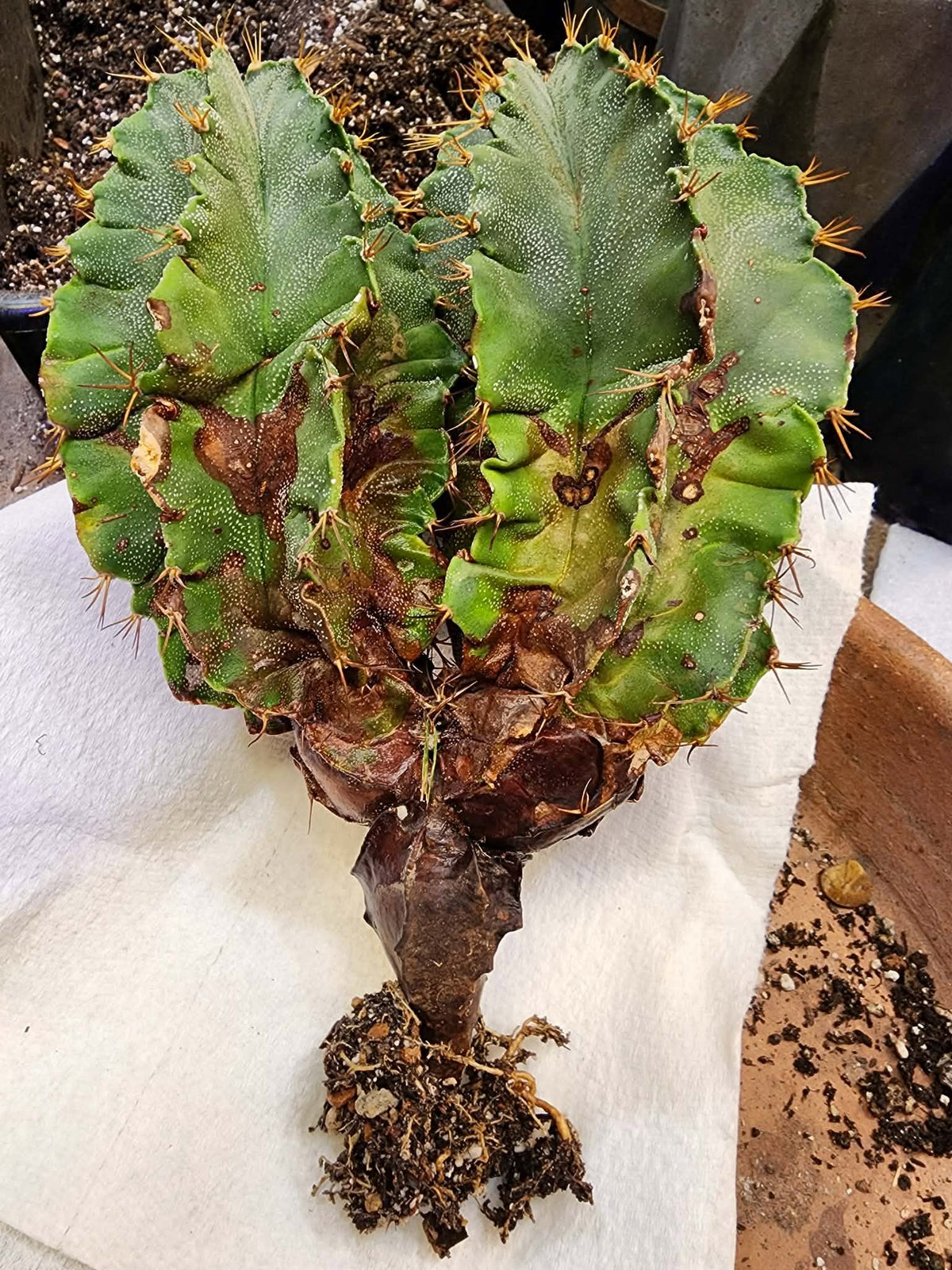
You will receive the exact, large, double-headed specimen shown here.
Measures 9" tall above the soil line × 8" wide.
Showcased here in Handmade Pottery — Cracked Ochre Vessel No. 45 (sold separately).
Roots as shown.
Will be shipped bare root.
🌵
Astrophytum ornatum is the largest and most imposing member of the genus, immediately recognizable by its sharply defined ribs, strong yellow to brownish spines, and characteristic pattern of white woolly flecking across the epidermis. Native to the dry limestone landscapes of central Mexico, the species develops from a compact juvenile into a substantial upright column, combining the unmistakable surface patterning of Astrophytum with a scale and architectural presence entirely its own.
This is an exceptionally large, double-headed collector specimen, measuring approximately 9" tall above the soil line and an impressive 8" wide. The two mature columns rise together from a shared base, creating a broad, powerful silhouette rarely encountered in ordinary nursery material. Both heads display beautifully developed rib structure, mature spination, and the distinctive white flecking that gives A. ornatum its extraordinary texture.
Care Instructions
☀️ Light
Very bright light to full sun. Strong light encourages compact growth, robust spination, and well-defined ribs. Acclimate gradually to intense direct sunlight after shipping or periods under filtered light to avoid scorching.
💧 Water
Water deeply during active warm-season growth, then allow the soil to dry thoroughly before watering again. Reduce watering dramatically during cooler months and keep nearly dry during winter dormancy. Mature Astrophytum tolerate drought considerably better than prolonged moisture around the roots.
🪨 Soil
Requires an exceptionally fast-draining cactus mix with substantial mineral content. Pumice, lava, coarse grit, and similar inorganic materials provide the excellent drainage and root aeration this species prefers. Avoid dense or moisture-retentive soil.
🌡️ Temperature
Thrives in warm, dry growing conditions. Protect from hard frost and prolonged cold, particularly when container grown. During cooler weather, maintaining a dry root system is especially important.
🌬️ Humidity
Prefers relatively dry conditions and excellent air circulation. Avoid prolonged cool humidity and stagnant moisture around the body or root zone.
📈 Growth Habit
Young Astrophytum ornatum begin globular to somewhat cylindrical and become increasingly columnar with age. Unlike the relatively low-growing A. asterias, mature A. ornatum can eventually become remarkably tall. Branching or multiple-headed development is considerably less characteristic than the species' usual solitary growth, making established specimens with this architecture particularly striking.
✍️ Special Note
The white markings across the epidermis are composed of minute trichomes characteristic of the genus Astrophytum. Their density and pattern can vary considerably between individual plants and may change as a specimen matures.
As with any large collector cactus, mature surface marks, scars, corking, changes in rib development, and evidence of previous growing seasons are part of the specimen's history rather than imperfections. Please review all photographs carefully, as you will receive the exact plant shown.
Why It Stands Out
- Exceptionally large collector specimen
- Impressive 9" height above the soil line
- Substantial 8" overall width
- Rare and dramatic double-headed growth
- Two substantial columns arising together
- Strong, deeply defined ribs
- Beautiful mature spination
- Characteristic white Astrophytum flecking
- Broad, highly architectural silhouette
- Mature character developed over many growing seasons
- Excellent established root system
- The exact specimen shown here
Collector Notes
Astrophytum ornatum is native to central Mexico, particularly areas of Hidalgo and Querétaro, where it grows among rocky slopes, canyons, and limestone terrain. Of the familiar Astrophytum species, it is the giant of the genus.
Its specific epithet, ornatum, means ornamented or decorated—an unusually appropriate name for a cactus whose surface combines sharply geometric ribs, woolly white markings, and prominent spines into one of the genus's most elaborate compositions.
Juvenile plants can initially resemble other members of Astrophytum, but age reveals a very different trajectory.
Rather than remaining flattened or globular, A. ornatum gradually stretches upward. The ribs become increasingly imposing, the valleys between them deepen, and the plant develops into a substantial column. Old habitat specimens can reach dimensions that seem almost improbable when compared with the small plants commonly encountered in cultivation.
The white flecking adds another layer to that architecture. Instead of forming a perfectly uniform covering, the trichomes create irregular bands, scales, and patterns against the green epidermis. As the ribs expand and the plant records successive seasons of growth, those markings contribute to a surface that becomes increasingly complex with age.
And then there is the defining feature of this particular plant: there are two of them.
The typical architecture of Astrophytum ornatum is strongly solitary. A single growing point builds a single ribbed column upward over many years. When a mature specimen develops two substantial heads, that familiar vertical architecture is transformed into something much broader and more sculptural.
At 9" tall above the soil line × 8" wide, this specimen has already reached the size at which that transformation becomes dramatic. The two heads do not read as tiny offsets attached to a larger parent plant; together they form the composition. Each carries its own mature ribs, areoles, spination, and surface patterning, while their proximity creates an extraordinary central division between the columns.
It is precisely the sort of characteristic that becomes more impressive with time. As both heads continue developing, each new season adds height, mass, and another layer to an architecture that cannot be quickly reproduced.
Large, beautifully ornamented, heavily ribbed, and carrying two substantial growing heads where one would normally be expected, this Astrophytum ornatum is a superb old collector specimen—and a striking example of what makes mature plants fundamentally different from simply buying them young and waiting.