Shangri-Ha Cactus Ranch
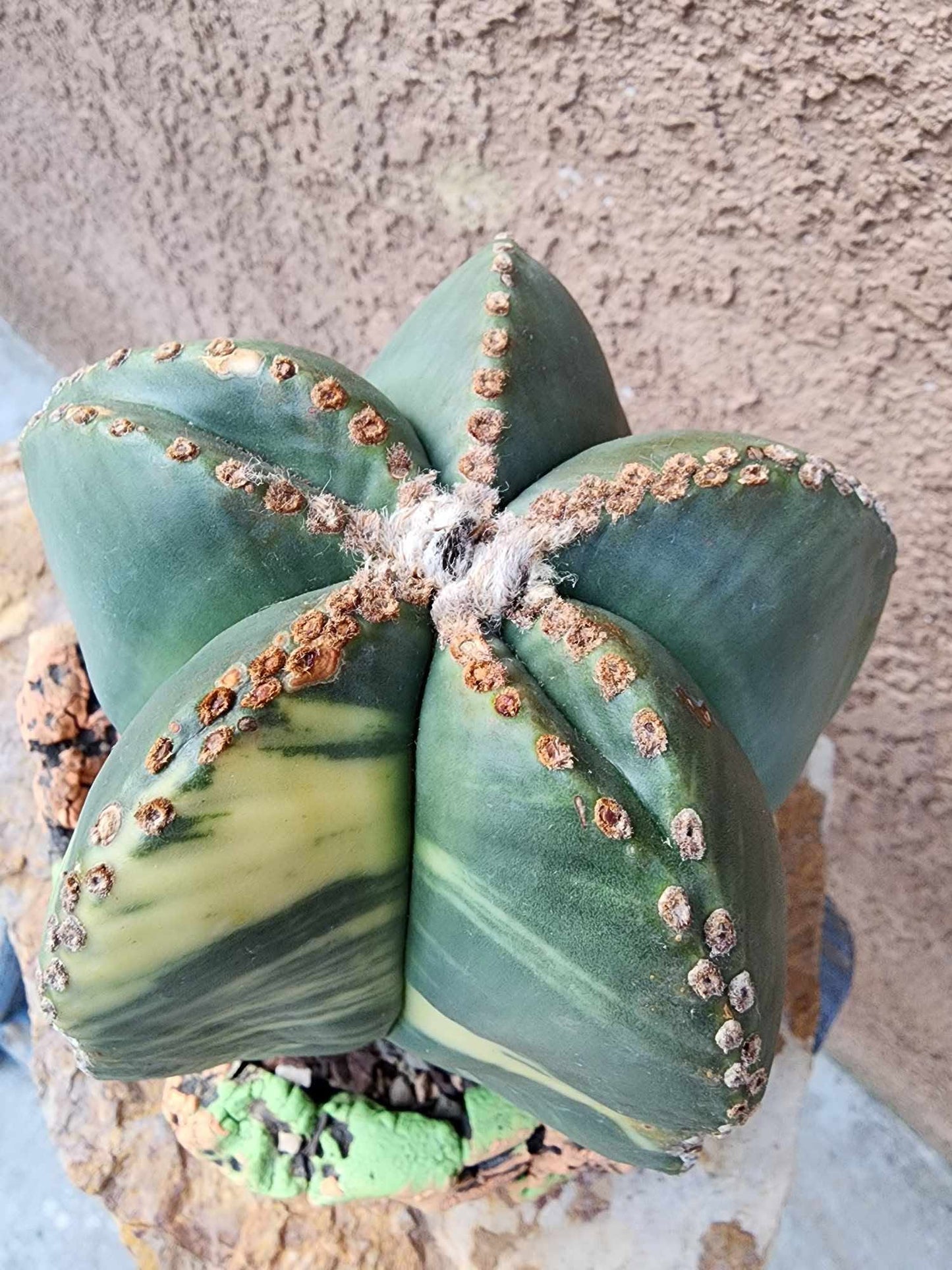
Astrophytum myriostigma v nudum f. variegata - Variegated Bishop's Cap - BIG!
Astrophytum myriostigma v nudum f. variegata - Variegated Bishop's Cap - BIG!
Couldn't load pickup availability
Astrophytum myriostigma v. nudum f. variegata — Variegated Bishop’s Cap
You will receive this exact, old, large specimen.
Measures 6" wide × 6" tall.
Showcased here in Handmade Pottery - Volcanic Drift Basin No. 80 (sold separately).
Roots as shown.
Will be shipped bare root.
🌵
Astrophytum myriostigma var. nudum f. variegata is an extraordinary expression of the classic Bishop’s Cap, combining the beautifully spare, spineless architecture of the nudum form with unpredictable natural variegation. Unlike typical A. myriostigma, whose epidermis is densely covered with characteristic white flecking, var. nudum reveals the smooth blue-green surface of the plant itself, allowing its sculptural ribs and coloration to take center stage. This exceptional old specimen takes that simplicity even further with remarkable cream-to-yellow variegation sweeping across the lower body in broad fields, narrow bands, and fine painterly striations. Against the mature blue-green epidermis, the effect is almost geological—layers of color appearing to flow through the plant rather than simply sit upon its surface. At an impressive 6" wide × 6" tall, this is a substantial, beautifully aged Astrophytum with the presence and individuality that only years of slow growth can produce.
Care Instructions
☀️ Light
Bright light with some direct sun. Strong light helps maintain compact growth and good coloration, but variegated tissue is more susceptible to sunburn than fully green tissue. Acclimate gradually to intense direct sunlight and provide protection from the harshest afternoon sun when necessary.
💧 Water
Water thoroughly during active growth, allowing the soil to dry completely between waterings. Keep substantially drier during winter dormancy. Avoid allowing water to remain around the crown or roots for prolonged periods.
🪨 Soil
Requires an exceptionally fast-draining, mineral-rich cactus mix with excellent drainage and minimal organic material.
🌡️ Temperature
Protect from hard frost and prolonged freezing temperatures. Mature plants tolerate cooler conditions best when kept completely dry.
🌬️ Humidity
Low humidity and excellent air circulation are preferred.
📈 Growth Habit
Slow-growing, spineless cactus with strongly defined ribs and a compact geometric form. Young plants are generally flattened to globose, becoming taller and more columnar with considerable age. Mature specimens of this size represent many seasons of accumulated growth.
✍️ Special Note
The cream and yellow areas of this specimen contain reduced chlorophyll and should be protected from sudden exposure to intense sunlight. The pattern of variegation is individual to the plant and becomes incorporated into its architecture as it continues to grow, making every variegated specimen unique.
Why It Stands Out
- Rare variegated nudum form
- Old, large, established specimen
- Impressive 6" × 6" size
- Extraordinary cream and yellow variegation
- Beautiful painterly bands and striations across the ribs
- Smooth blue-green nudum epidermis
- Classic spineless Bishop’s Cap geometry
- Exceptional mature collector specimen
Collector Notes
Astrophytum myriostigma has been cultivated and selected for generations, producing an extraordinary range of forms prized by specialist collectors. Var. nudum is particularly admired for stripping the species down to its essential architecture: without the dense white trichomes of typical Bishop’s Cap, the ribs, epidermis, and subtle coloration become the entire visual language of the plant. Add variegation and every specimen becomes singular. In this old plant, broad cream-colored fields are interrupted by narrow green lines and remarkable feathered striations, while other bands travel independently across adjoining ribs. The result cannot be duplicated—the pattern records this individual plant’s growth over time. Large, mature variegated nudum specimens with this degree of character are especially compelling: part botanical rarity, part living geometry, and entirely one of a kind.