Skip to product information
1 of 8

Shangri-Ha Cactus Ranch

Astrophytum myriostigma cv. Onzuka Kikko - Seed Grown - Japan - Very Rare

Astrophytum myriostigma cv. Onzuka Kikko - Seed Grown - Japan - Very Rare

Regular price $865.00 USD
Regular price $865.00 USD Sale price $865.00 USD
Sale Sold out
Shipping calculated at checkout.

Astrophytum myriostigma cv. ‘Onzuka Kikko’Very Rare Seed-Grown Japanese Cultivar

You will receive this exact, extraordinary seed-grown specimen.
Only 1 available.  This is only the second specimen of this cultivar we've ever been able to obtain.
Measures approximately 5.5" tall above the soil line × 6.5" wide.
Showcased here in one-of-a-kind handmade pottery (sold separately).
Roots as shown.
Will be shipped bare root.

🌵

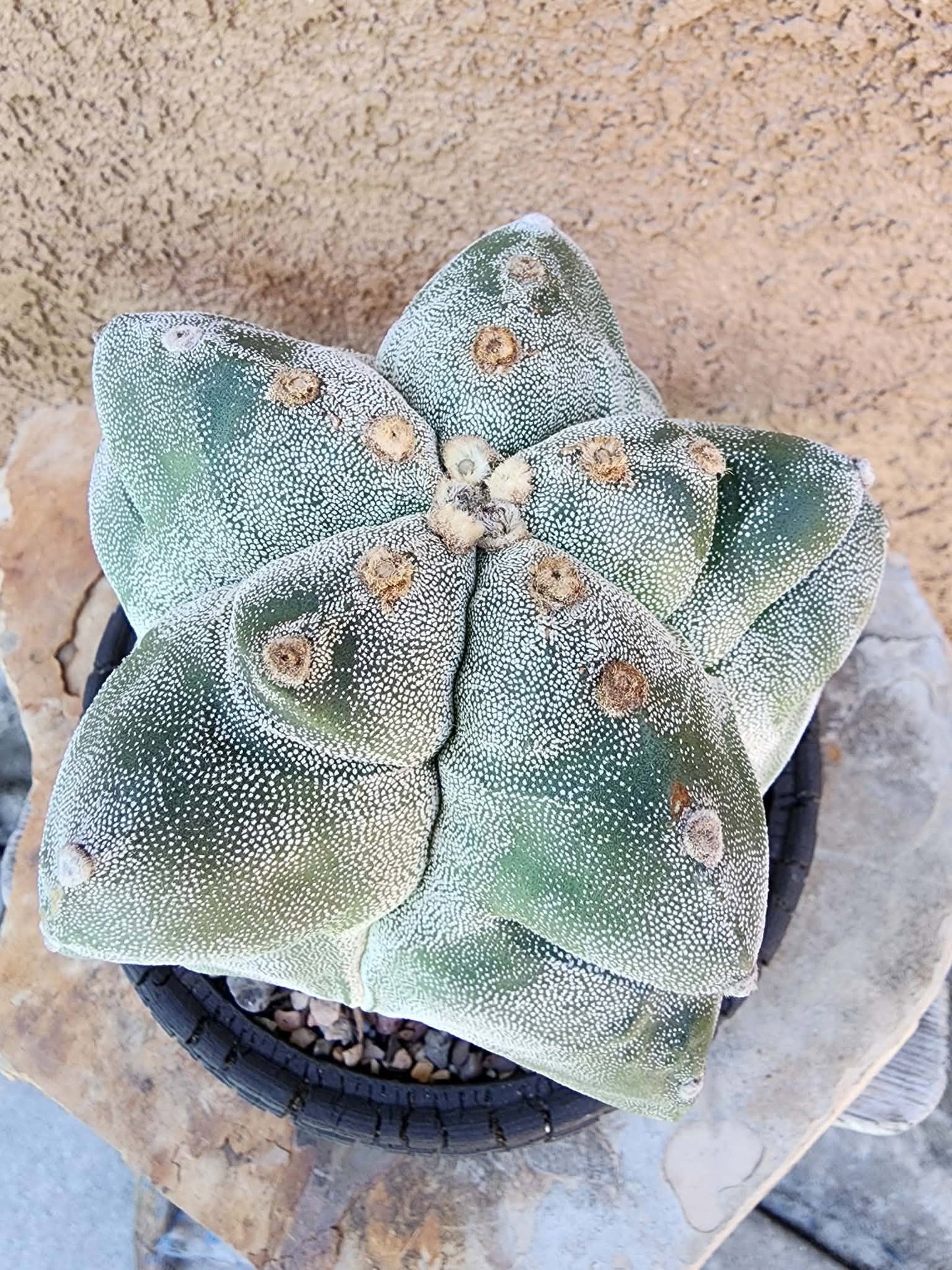
Astrophytum myriostigma cv. ‘Onzuka Kikko’ is an extraordinary Japanese-developed collector cactus combining two of the most distinctive cultivated forms of Astrophytum myriostigma. ‘Onzuka’ is prized for its exceptionally dense and elaborate white flecking, while ‘Kikko’ produces exaggerated angular tubercles along the ribs, creating the geometric, almost armored surface associated with a traditional tortoise-shell pattern. When both characteristics are strongly expressed in a single mature plant, the result bears remarkably little resemblance to an ordinary Bishop's Cap cactus.

This exact specimen is made even more remarkable by the fact that it is seed grown. At approximately 6.5 inches wide × 5.5 inches tall above the soil line, it represents years of slow, natural development on its own roots. Enormous, strongly pronounced Kikko tubercles project outward across the body, creating an almost sculpted appearance, while dense fields of tiny white Onzuka flecks cover the rich green epidermis and emphasize its extraordinary geometry. Its size, maturity, own-root development and powerful expression of both cultivar characteristics make this a particularly exceptional collector specimen.

Care Instructions

☀️ Light: Bright light with several hours of direct sun is ideal. Strong light helps maintain compact growth and pronounced coloration. Protect from abrupt exposure to extremely intense afternoon sun and acclimate gradually after shipping.

💧 Water: Water thoroughly during active growth, then allow the soil to dry completely before watering again. Keep considerably drier during winter dormancy. Mature Astrophytum should never remain in persistently damp soil.

🪨 Soil: Requires an exceptionally fast-draining, mineral-rich cactus mix. Pumice, lava rock, coarse grit and similar inorganic materials provide excellent drainage and root aeration.

🌡️ Temperature: Prefers warm conditions during active growth and can tolerate cooler temperatures when kept dry. Protect from hard frost and prolonged freezing conditions.

💨 Humidity: Low humidity with excellent air circulation is preferred. Avoid prolonged combinations of cool temperatures and wet soil.

🌱 Growth Habit: Naturally slow-growing and spineless. The Kikko form develops increasingly exaggerated tubercles as it matures, producing dramatically angular architecture compared with the relatively smooth ribs of typical A. myriostigma. Seed-grown plants develop this form gradually on their own roots, making large mature specimens particularly rewarding.

⚠️ Special Note: The distinctive white surface markings are part of the plant's natural epidermal flecking and should not be scrubbed or treated as residue. Handle mature specimens carefully to avoid cosmetic damage to the epidermis and pronounced tubercles.

Why It Stands Out

  • Very rare Astrophytum myriostigma cv. ‘Onzuka Kikko’
  • Seed grown and growing on its own roots
  • Exceptional combination of Onzuka and Kikko characteristics
  • HUGE mature specimen approximately 6.5" wide
  • Approximately 5.5" tall above the soil line
  • Dramatically developed tortoise-shell-like tubercles
  • Exceptional dense white Onzuka flecking
  • Completely spineless
  • Strong architectural form
  • Highly collectible Japanese-developed cultivar
  • Only 1 available

Collector Notes

Astrophytum myriostigma is already one of the most sculptural species in the cactus world. The typical plant develops a beautifully symmetrical, spineless body divided into broad ribs and scattered with minute white trichomes. Generations of selective cultivation — particularly among Japanese cactus growers — have pushed that relatively simple architecture into an extraordinary range of cultivated forms.

Onzuka and Kikko alter two very different aspects of the plant. Onzuka selection intensifies and reorganizes the characteristic white flecking of A. myriostigma, producing far denser and more elaborate surface markings than those generally seen on ordinary plants. Kikko affects the physical architecture instead: the ribs become broken into exaggerated angular projections or tubercles, producing the remarkable geometric surface for which the form is prized.

The name Kikko refers to a traditional Japanese tortoise-shell motif, and on a strongly developed specimen the comparison becomes immediately apparent. Instead of simple continuous ribs, the body appears divided into a succession of raised geometric sections. As the plant matures and those projections become increasingly pronounced, the architecture can become spectacularly exaggerated.

And seed-grown matters here. This specimen has developed its remarkable size and architecture naturally on its own root system rather than gaining accelerated growth through grafting. For an inherently slow-growing collector cactus, reaching approximately 6.5 inches wide this way represents substantial time and cultivation. The exposed-root photograph makes that history especially tangible: beneath all of that extraordinary cultivated geometry is a mature, established cactus that has grown from seed into the specimen you see today.

There are plants where the cultivar name is technically present but the defining characteristics require some imagination. This is not one of them. Pronounced Kikko architecture, extensive Onzuka flecking, exceptional size and seed-grown maturity are all present in one plant. It is an outstanding example of just how far selective cultivation can transform the already beautiful geometry of Astrophytum myriostigma.


View full details