Shangri-Ha Cactus Ranch
Astrophytum Myriostigma cv. Onzuka - Japan - OLD, BIG!
Astrophytum Myriostigma cv. Onzuka - Japan - OLD, BIG!
Couldn't load pickup availability
Astrophytum myriostigma cv. 'Onzuka' — Japanese Cultivar
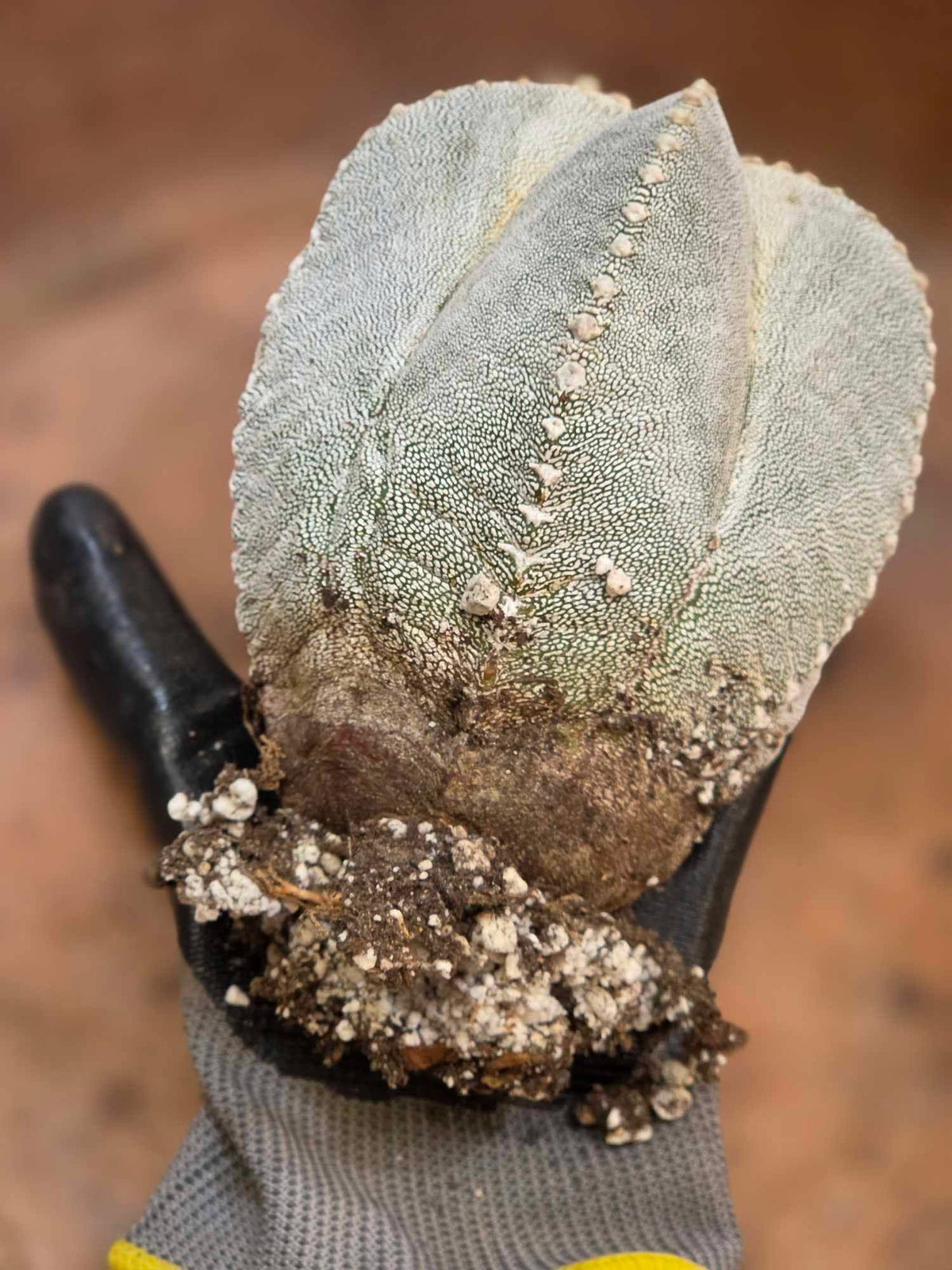
You will receive this exact specimen.
Measures approximately 5.5" tall above the soil line × 4.5" wide.
Features extraordinary dense white flecking, beautifully defined ribs, and a substantial, mature-looking body.
Showcased here in one-of-a-kind Handmade Pottery — Aqueduct Relic Bowl No. 174 (sold separately).
Roots as shown.
Will be shipped bare root.
🌵
Astrophytum myriostigma cv. 'Onzuka' is one of the most celebrated Japanese selections of the Bishop's Cap Cactus, distinguished by its extraordinary concentration of white epidermal flecking and beautifully geometric, spineless architecture. While the typical species is already admired for its symmetrical ribs and delicate covering of pale trichomes, the Onzuka cultivar elevates these characteristics to an entirely different level. Its surface is densely covered with intricate white markings that create a remarkable mosaic of pale flecks against the underlying green epidermis. The resulting appearance is almost mineral-like, as though the plant's surface were composed of thousands of tiny interlocking scales. Developed and refined through Japanese horticultural selection, Onzuka has become a highly recognizable and desirable form among collectors of unusual Astrophytum.
This exact specimen is especially impressive for its substantial size, beautifully defined five-ribbed structure, and exceptionally dense, finely textured white flecking. Measuring approximately 5.5" tall above the soil line × 4.5" wide, the plant has developed a broad, mature-looking body with an elegant upright silhouette. Its five prominent ribs rise toward a gently pointed crown, creating a beautifully balanced architectural form. The surface is covered in an extraordinary network of tiny white markings, so densely arranged that the green epidermis appears as a fine, dark pattern between them. A central row of pale, rounded areoles follows each rib, adding another layer of geometric precision. The lower portion displays natural corking and age-related coloration, contributing to the character of this established specimen. Its combination of size, symmetry, surface texture, and mature appearance makes it a particularly compelling example of this celebrated Japanese cultivar.
Care Instructions
☀️ Light
Provide abundant bright light with gentle direct morning sunlight or strong filtered sun. Adequate illumination helps maintain compact growth, strong rib definition, and healthy epidermal coloration. Although the dense white flecking provides some protection from intense sunlight, avoid sudden exposure to harsh afternoon sun, particularly during extreme heat. Gradually acclimate the plant to brighter conditions after shipping or relocation.
💧 Water
Water thoroughly during active warm-season growth, allowing the growing medium to dry completely or nearly completely between waterings. Reduce watering substantially as temperatures cool and growth slows. During winter dormancy, keep the plant predominantly dry, especially when temperatures are low. Established Astrophytum are particularly sensitive to prolonged moisture around the roots, and excessive watering can lead to rot. Resume regular watering gradually when warmer conditions and active growth return.
🪨 Soil
Requires a highly porous, fast-draining cactus medium with excellent root aeration. A predominantly mineral mixture containing pumice, lava rock, coarse grit, decomposed granite, or similar inorganic components is ideal. A modest amount of organic material may be included, but the finished medium should drain rapidly and never remain persistently wet. Avoid dense, moisture-retentive soils and containers without adequate drainage.
🌡️ Temperature
Prefers warm growing conditions with protection from prolonged cold and moisture. As a conservative cultivation precaution, maintain temperatures above approximately 45–50°F (7–10°C), particularly when the growing medium is damp. Established plants may tolerate brief exposure to somewhat lower temperatures when completely dry, but frost and freezing conditions should be avoided. Warm days, cooler nights, and good air circulation generally support healthy seasonal growth.
🌬️ Humidity
Prefers relatively dry atmospheric conditions with excellent air circulation. Avoid prolonged high humidity, particularly during cool weather or dormancy. The dense white flecking is a natural feature of the epidermis and should not be scrubbed or aggressively cleaned. Good airflow helps prevent moisture from remaining trapped around the crown and between the ribs.
📈 Growth Habit
A slow-growing, spineless cactus that develops a strongly ribbed, geometric body. Young plants are often more rounded, gradually becoming taller and more columnar with maturity. The Onzuka cultivar is distinguished by exceptionally dense white trichome markings that create intricate surface patterns. Rib number and proportions may vary among individual plants, but this specimen displays a beautifully defined five-ribbed structure. Mature plants may produce yellow flowers near the crown during the active growing season.
✍️ Special Note
This is a substantial, mature-looking specimen with natural corking and age-related coloration visible near the lower body. These characteristics are consistent with the development of older cactus tissue and contribute to the plant's individual appearance. The white markings are specialized epidermal structures, not dust or mineral residue, and should be preserved. Avoid unnecessary handling or abrasion of the surface. After bare-root shipping, allow the roots to settle into a dry, well-draining medium before gradually resuming watering. Protect from prolonged moisture and cold, particularly during winter dormancy.
Why It Stands Out
- Exceptional Astrophytum myriostigma cv. 'Onzuka' — celebrated Japanese cultivar
- Substantial specimen measuring approximately 5.5" tall × 4.5" wide
- Beautifully defined five-ribbed architectural structure
- Extraordinary concentration of dense, intricate white epidermal flecking
- Remarkable mosaic-like surface pattern with fine green interstitial markings
- Elegant upright form with a gently pointed crown
- Prominent rows of pale, rounded areoles following the rib margins
- Completely spineless growth habit
- Natural lower-body corking and mature-looking surface character
- Beautifully balanced proportions and strong geometric symmetry
- Distinguished Japanese horticultural selection of the Bishop's Cap Cactus
- Potential to produce attractive yellow flowers during the growing season
- Showcased in one-of-a-kind Handmade Pottery — Aqueduct Relic Bowl No. 174 (sold separately)
- Outstanding specimen for collectors of Japanese Astrophytum cultivars and mature architectural cacti
Collector Notes
Astrophytum myriostigma, commonly known as the Bishop's Cap Cactus, is one of the most recognizable species within the genus Astrophytum, a small group of highly distinctive cacti native to Mexico and parts of the southern United States. The species itself originates in northeastern and central Mexico, where it inhabits rocky, often limestone-rich environments characterized by excellent drainage and strong seasonal variations in moisture availability. Its name derives from Greek roots referring to a star-shaped plant with countless spots, an especially appropriate description of the pale flecking that covers much of its surface. Unlike many familiar cacti, Astrophytum myriostigma is essentially spineless, relying on its thick epidermis, specialized surface structures, and compact growth habit as part of its adaptation to exposed environments.
The celebrated Onzuka cultivar represents one of the most important developments in the horticultural selection of this species. Associated with Japanese cactus cultivation, Onzuka is distinguished by a dramatic increase in the density and complexity of the white epidermal markings that occur naturally in Astrophytum myriostigma. These markings are composed of specialized trichomes, tiny structures on the plant's surface that create the characteristic pale appearance. In conventional forms of the species, the flecking may be relatively sparse or evenly distributed, while selected Onzuka plants can display an extraordinarily dense and intricate arrangement of white markings. The effect is highly ornamental and has made the cultivar an enduring favorite among serious Astrophytum collectors.
Japanese cactus horticulture has played an important role in developing and refining unusual Astrophytum forms, with growers selecting plants for symmetry, rib structure, epidermal coloration, flecking density, and other distinctive characteristics. The Onzuka selection is particularly admired because its visual appeal arises from the plant's own epidermal architecture rather than from grafting, artificial coloration, or unusual environmental treatment. The dense white surface pattern is an inherent characteristic of the cultivar, although its precise expression can vary considerably among individual specimens. This variability has encouraged generations of growers to select and propagate especially attractive examples.
One of the most fascinating characteristics of Astrophytum myriostigma is the relationship between its geometric body and its specialized epidermal surface. The plant's ribs provide structural organization and allow the body to expand and contract as water availability changes. The pale trichomes, meanwhile, contribute to the distinctive appearance of the epidermis and are associated with the plant's adaptation to intense sunlight and exposed growing conditions. Together, these features create a cactus whose architecture is both functional and remarkably ornamental. The Onzuka cultivar exaggerates the visual complexity of the surface while preserving the elegant structural simplicity of the underlying species.
This exact specimen is particularly noteworthy for its beautifully developed five-ribbed form. The ribs rise in a symmetrical arrangement from the broad lower body toward a gently tapered apex, creating an elegant silhouette that is both substantial and refined. Each rib is strongly defined, with broad, gently convex surfaces separated by distinct vertical channels. The plant's overall proportions are especially attractive: at approximately 5.5" tall and 4.5" wide, it has developed a mature-looking upright form without losing the rounded fullness characteristic of the species. This balance between height and width gives the specimen considerable visual presence.
The surface flecking is arguably its most extraordinary feature. Thousands of tiny white markings cover the epidermis in a dense, intricately organized pattern. Rather than appearing as isolated spots, the flecks are packed so closely together that they create a nearly continuous pale surface, interrupted by fine dark green lines and spaces. The result resembles an elaborate mosaic or finely textured mineral formation. This intricate pattern follows the contours of the ribs, emphasizing their curvature and creating subtle variations in light and shadow across the plant's surface. The extraordinary density of the flecking is precisely the characteristic that makes exceptional Onzuka specimens so desirable.
The areoles introduce another important element of structure. Along the prominent rib margins, small, rounded, pale areoles form orderly vertical sequences extending toward the crown. Because the species is spineless, these areoles remain visible as discrete architectural details rather than being obscured by clusters of spines. Their regular spacing reinforces the plant's geometric character and provides a beautiful contrast to the extremely fine surface flecking. In this specimen, the areoles are particularly prominent along the central rib visible in the photograph, creating an almost ornamental line that leads the eye upward toward the apex.
The lower portion of the plant displays natural corking and warmer, earth-toned coloration, introducing an appealing contrast to the densely flecked upper body. Corking occurs as older epidermal tissue becomes firmer and develops a more woody or protective character. When gradual and localized near the base, this can be a normal feature of mature cactus development. In this specimen, the transition from the pale, intricately patterned upper body to the darker, more textured lower portion contributes to its established appearance. These natural variations are part of the individuality of the exact plant offered here.
As Astrophytum myriostigma matures, its growth habit often changes from a rounded, almost spherical form to a more elongated, columnar structure. This transformation can occur slowly over many years, depending on growing conditions, genetics, and the individual plant. The Onzuka cultivar follows the same general developmental pattern, although selected forms may differ in rib proportions, growth rate, and overall silhouette. The specimen offered here has already developed a substantial upright body, giving it a more mature architectural presence than the small, rounded examples frequently encountered in cultivation.
Flowering adds another dimension to the species' appeal. Mature Astrophytum myriostigma may produce beautiful yellow flowers near the apex during periods of active growth. These flowers emerge from the areoles close to the crown and provide a striking contrast to the plant's pale epidermal markings. Although flowering depends on maturity, environmental conditions, and seasonal activity, the possibility of observing these delicate blooms adds to the pleasure of cultivating an established specimen. The flowers are followed by seed-bearing fruits when successful pollination occurs.
The pairing with one-of-a-kind Handmade Pottery — Aqueduct Relic Bowl No. 174 is particularly successful because the vessel's surface echoes the intricate texture of the cactus itself. The bowl features a beautiful combination of pale turquoise, weathered ivory, and earthy dark markings, with horizontal bands and irregular vertical lines that suggest aged ceramic or mineral surfaces. These details complement the plant's extraordinary white flecking while providing a subtle contrast to its geometric ribs. The broad, rounded form of the bowl also balances the cactus's upright silhouette, creating a cohesive presentation that emphasizes both the specimen and the handmade character of the pottery.
For collectors of Japanese Astrophytum cultivars, this exact Astrophytum myriostigma cv. 'Onzuka' offers an especially compelling combination of substantial size, beautifully defined five-ribbed symmetry, exceptionally dense white flecking, and mature-looking architectural character. Its striking epidermal mosaic, prominent areole arrangement, and natural lower-body texture distinguish it from more ordinary examples of the cultivar. Measuring approximately 5.5" tall above the soil line × 4.5" wide, this is a handsome, established specimen whose extraordinary surface detail and sculptural form make it a beautiful addition to a serious collection of rare and unusual cacti.