Shangri-Ha Cactus Ranch
Astrophytum myriostigma cv. Kikko - Japan
Astrophytum myriostigma cv. Kikko - Japan
Regular price
$115.00 USD
Regular price
$115.00 USD
Sale price
$115.00 USD
Unit price
per
Shipping calculated at checkout.
Couldn't load pickup availability
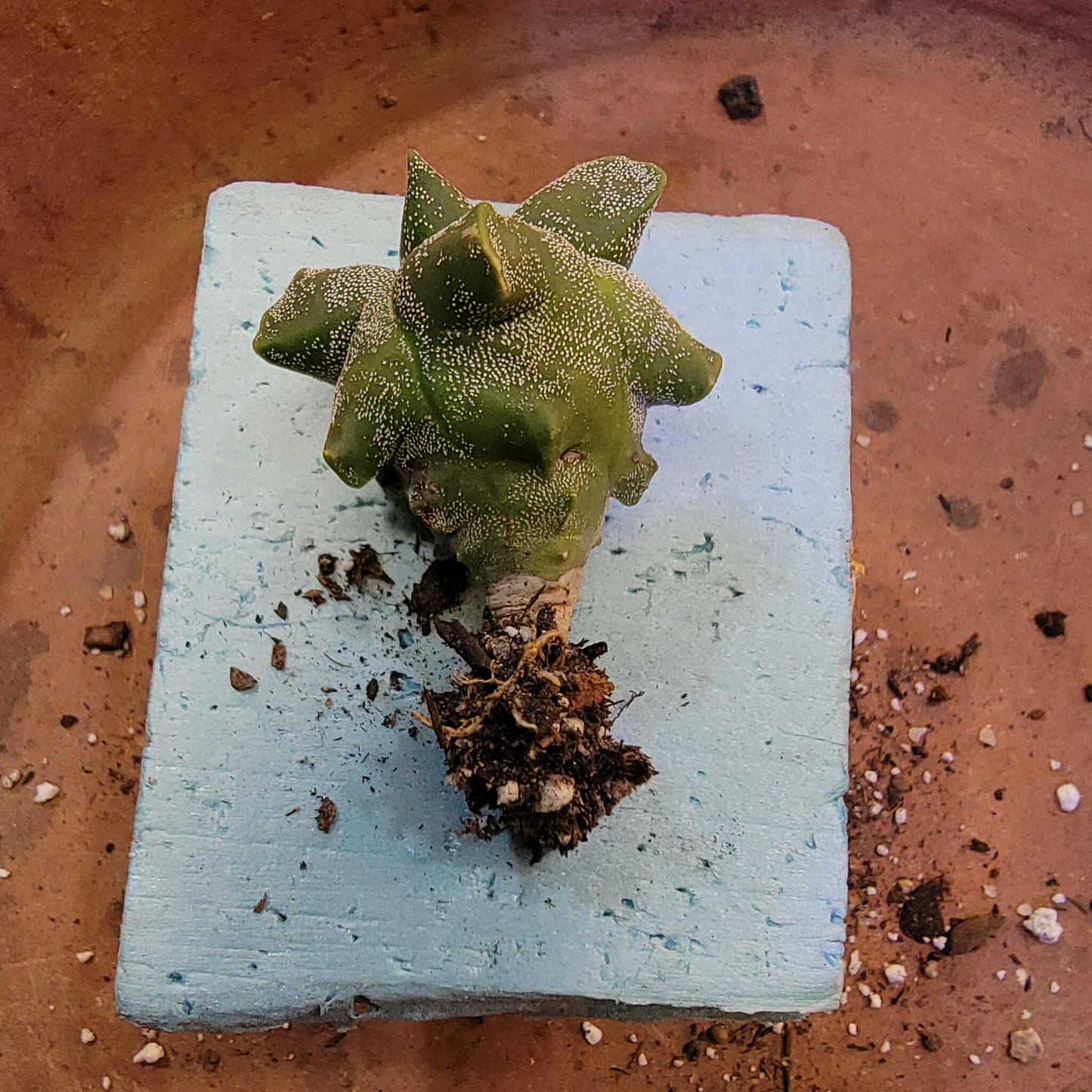
Astrophytum myriostigma cv. Kikko
You will receive this exact rare specimen.
Only 1 available.
Measures 2" wide x 1.5" tall.
Roots as shown.
Showcased here in one-of-a-kind handmade pottery (sold separately).
Will be shipped bare root.
Astrophytum myriostigma cv. Kikko (also known as the "Turtle Shell" or "Sawtooth" Bishop’s Cap) is a rare, Japanese-bred ornamental cultivar of the standard Astrophytum myriostigma cactus. It is highly prized by collectors for its unique sculptural ribs that resemble the geometric patterns of a tortoise shell.
DESCRIPTION and CHARACTERISTICS:
- Distinctive Ribs: Unlike the smooth ribs of the standard species, 'Kikko' features pointed tubercles and deep notches along the rib edges, creating a "sawtooth" or "raised geometric" appearance.
- Delayed Development: Young seedlings often look like standard myriostigma plants; the characteristic "Kikko" bumps typically only begin to appear once the plant is between 3 to 7 years old.
- Variations:
- Nudum: A common form that lacks the white flecks (trichomes) found on most Astrophytum, leaving a smooth, solid green or bluish-green body.
- Fukuryu: Features additional "extra" ribs or irregular growths between the primary ribs.
- Onzuka: Combines the 'Kikko' structure with the large, white, woolly flecks of the 'Onzuka' cultivar.
- Flowers: Produces pale yellow, silky flowers from the apex, typically during spring or early summer once the plant is mature
CULTIVATION and CARE:
- Light: Thrives in bright, indirect light. While it can tolerate full sun, it should be protected from intense afternoon heat to prevent sunburn.
- Watering: Extremely sensitive to overwatering. Water sparingly during the growing season (spring/summer) and keep perfectly dry during the winter dormancy period to prevent root rot.
- Soil: Requires a highly porous, mineral-based substrate. A mix of pumice, lava rock, and very little organic matter is ideal.
- Temperature: Prefers warm environments but can tolerate brief periods of cold down to -7°C (20°F) if kept completely dry
GROWING TIPS:
- Propagation: Can be done from offsets or seeds; dry cuttings for a week before planting.
- Feeding: Infrequent fertilization is sufficient.
- Pests: Watch for typical succulent pests like aphids, mealybugs, and spider mites.