Shangri-Ha Cactus Ranch
Astrophytum Myriostigma cv. Fukuryu Cluster - Seed Grown - 3 Heads
Astrophytum Myriostigma cv. Fukuryu Cluster - Seed Grown - 3 Heads
Couldn't load pickup availability
Astrophytum myriostigma cv. Fukuryu Cluster — Three-Headed Collector Cactus
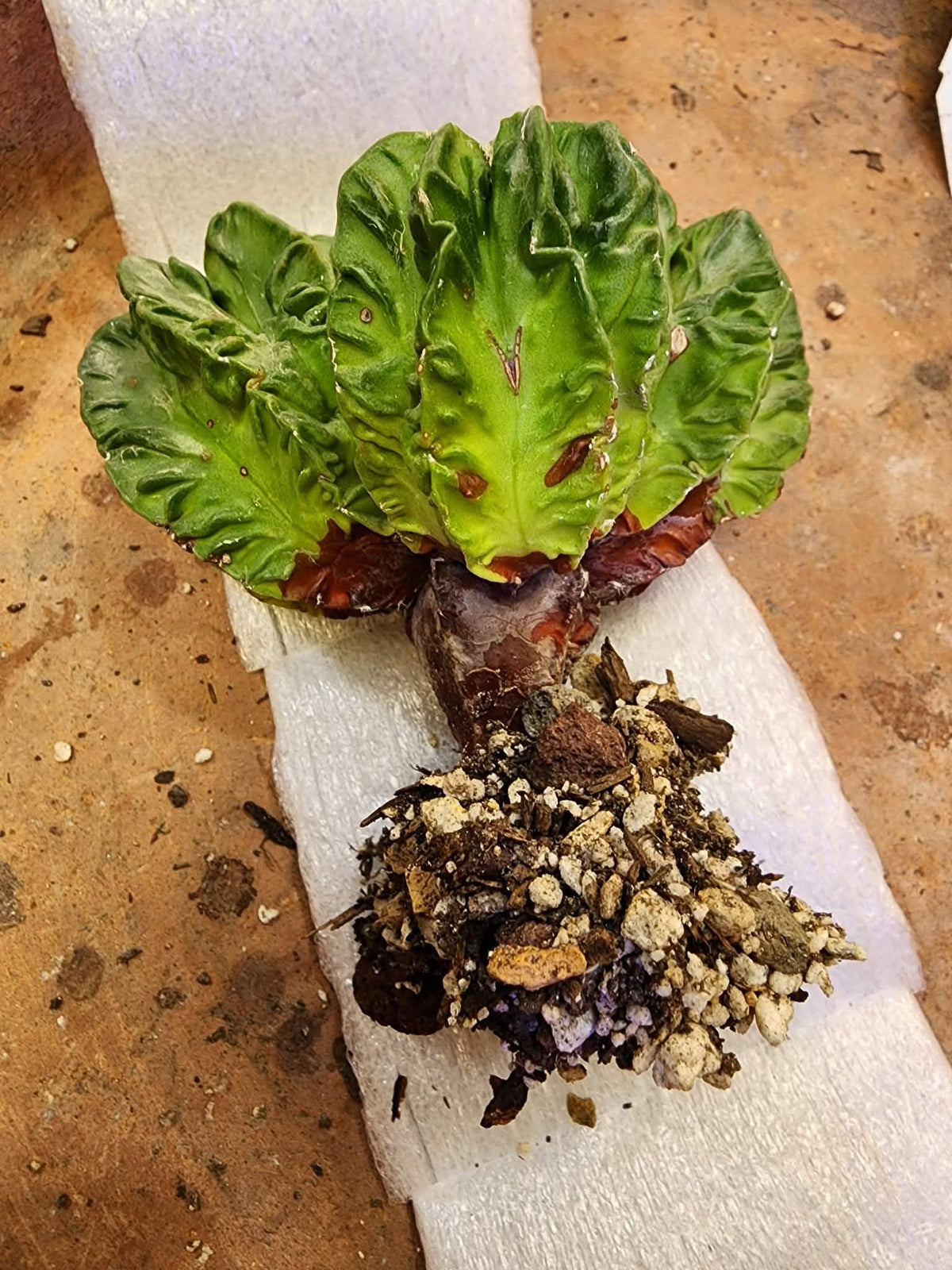
You will receive this exact specimen.
This one features 3 heads!
Measures approximately 4.5" wide.
Showcased here in Handmade Pottery — Midnight Bloom No. 133 (sold separately).
Roots as shown.
Will be shipped bare root.
🌵
Astrophytum myriostigma is one of the most recognizable and architecturally fascinating cactus species in cultivation. Commonly known as the Bishop's Cap cactus, it is celebrated for its geometric body, distinctive ribs, and extraordinary ability to achieve sculptural beauty without the dramatic spines associated with so many other cacti.
Native to Mexico, where it inhabits rocky slopes and dry, often limestone-rich environments, Astrophytum myriostigma has evolved to endure intense sunlight, limited rainfall, and the challenges of growing in mineral soils.
The species is especially admired for its distinctive surface, which may be covered with countless tiny white flecks. These are specialized epidermal structures known as trichomes, giving many plants a silvery, almost celestial appearance.
But the horticultural form known as Fukuryu takes the remarkable geometry of Astrophytum myriostigma in an entirely different direction.
Developed and selected in cultivation, Fukuryu forms are associated with unusual additional ribbing, raised ridges, and irregular surface structures that interrupt the comparatively smooth, orderly architecture of typical Bishop's Cap plants.
Rather than presenting the familiar, symmetrical silhouette of an ordinary Astrophytum myriostigma, these cultivated forms can develop intricate contours that appear folded, sculpted, and almost deliberately constructed.
Each plant develops its own architectural character.
And then there is this specimen.
Featuring three heads and measuring approximately 4.5 inches wide, this Fukuryu Cluster brings an additional dimension to an already unusual cultivated cactus.
The presence of three growing heads transforms the plant from a single geometric form into a more complex botanical composition.
Multiple heads create separate centers of growth, introducing changing relationships between the individual bodies as the plant develops. In a form already celebrated for its unusual ribs and surface contours, this clustered habit makes the overall architecture especially interesting.
The combination of Fukuryu characteristics and three-headed growth gives this specimen particular appeal for collectors who appreciate cultivated forms that depart from the conventional appearance of their parent species.
At approximately 4.5 inches wide, it is a substantial and distinctive specimen without requiring an enormous display space.
Showcased here in Handmade Pottery — Midnight Bloom No. 133, the plant is presented as a sculptural centerpiece, allowing its unusual structure and clustered arrangement to command attention.
The pottery is available separately.
Care Instructions
☀️ Light
Provide very bright light with several hours of gentle direct sunlight when properly acclimated. Morning sun is particularly beneficial. Protect from prolonged, intense afternoon sunlight during extreme heat, especially if the plant has been grown under filtered light. Introduce stronger sunlight gradually after shipping to avoid sunburn and permanent surface damage.
💧 Water
Water thoroughly during active growth, then allow the substrate to dry completely before watering again. Astrophytum myriostigma is adapted to dry conditions and is susceptible to root and stem rot when moisture remains around the roots for prolonged periods. Reduce watering significantly during cool weather and winter dormancy. Avoid watering when temperatures are consistently low.
🪨 Soil
Use a highly porous, fast-draining cactus mix with a substantial mineral component. Pumice, lava rock, coarse grit, and other inorganic materials can help maintain aeration and prevent prolonged moisture retention. Avoid dense, peat-heavy substrates that remain wet for extended periods. Choose a container with adequate drainage and sufficient space for healthy root development.
🌡️ Temperature
Prefers warm growing conditions, good ventilation, and protection from excessive moisture during cold periods. Although established plants may tolerate brief cool conditions when completely dry, valuable cultivated specimens should be protected from frost and prolonged cold. A warm, bright, sheltered location is preferable during winter.
🌬️ Humidity
Prefers relatively dry conditions with excellent airflow. In humid environments, careful watering and an especially porous growing medium are important. Avoid allowing moisture to remain trapped between closely positioned heads or within recessed surface structures.
📈 Growth Habit
Typical Astrophytum myriostigma develops a rounded to columnar, spineless body, commonly with five prominent ribs, although rib counts vary. Fukuryu forms are selected for unusual additional ridges, irregular rib development, and sculptural surface features.
This specimen exhibits three distinct heads, producing a clustered arrangement rather than the familiar single-bodied silhouette. The heads may develop at different rates, and their relative proportions can change as the plant matures.
Growth is generally slow to moderate under suitable cultivation conditions, with considerable variation among individual plants.
✍️ Special Note
Multi-headed cultivated cacti deserve particular attention to airflow and moisture management.
Where the individual heads meet, narrow spaces may retain water longer than exposed surfaces. Avoid leaving standing moisture in these areas, particularly during cool weather.
When repotting, handle the root system carefully and avoid unnecessary disturbance. If roots are damaged, allow the affected tissue to dry and heal before resuming watering.
Natural corking, minor scarring, and changes in surface coloration may develop with age. These are not necessarily signs of poor health.
Fukuryu is a horticultural designation used for unusual ribbed and sculptural forms in cultivation. The precise expression of these characteristics can vary from specimen to specimen.
Likewise, clustered growth may arise through different developmental pathways. Without documented propagation history, the presence of three heads alone does not establish whether the plant developed them naturally or through cultivation techniques.
Please review all photographs carefully, as you will receive the exact specimen shown.
Why It Stands Out
• Astrophytum myriostigma cv. Fukuryu Cluster, an unusual cultivated cactus form
• Features 3 heads
• Measures approximately 4.5" wide
• Parent species originates from Mexico
• Distinctive Fukuryu-type additional ribbing and sculptural surface development
• Multi-headed architecture creates exceptional visual interest
• Spineless cactus with striking geometric character
• Collectible cultivated form of the celebrated Bishop's Cap cactus
• Fascinating contrast between natural symmetry and horticultural variation
• Slow-growing, long-lived cactus under appropriate care
• Particularly appealing to collectors of unusual Astrophytum forms
• Showcased in Handmade Pottery — Midnight Bloom No. 133, sold separately
• The exact specimen shown here
Collector Notes
There is something wonderfully mathematical about Astrophytum myriostigma.
Its ribs seem almost measured.
Its silhouette suggests an object designed rather than grown.
Even the name Astrophytum, meaning star plant, acknowledges the extraordinary geometry that has made this genus so recognizable.
And then the Fukuryu forms arrive and begin rearranging the rules.
The orderly ribs become more elaborate. Additional ridges appear. Familiar surfaces develop unexpected folds and contours.
What was once an exercise in botanical symmetry becomes something far more individual.
Now imagine that unusual architecture expressed through three separate heads.
Instead of one sculptural body, there is a small gathering of them, each contributing to the composition and each possessing its own growing point.
It is this combination of repetition and variation that makes clustered cultivated cacti so fascinating.
They are not simply larger versions of ordinary plants.
They offer an entirely different visual experience.
For collectors of unusual Astrophytum, a three-headed Fukuryu is an opportunity to appreciate both the extraordinary natural geometry of the species and the unexpected forms that careful horticultural selection can reveal.
And at approximately 4.5 inches wide, this specimen already possesses a presence that extends well beyond its measurements.
Three heads.
One remarkable little piece of botanical architecture.
And very much its own individual.