Shangri-Ha Cactus Ranch
Astrophytum asterias cv Star Type - Old, BIG! 6 inches! Collector Specimen
Astrophytum asterias cv Star Type - Old, BIG! 6 inches! Collector Specimen
Couldn't load pickup availability
Astrophytum asterias cv. 'Star Type' — Large Japanese Collector Cactus
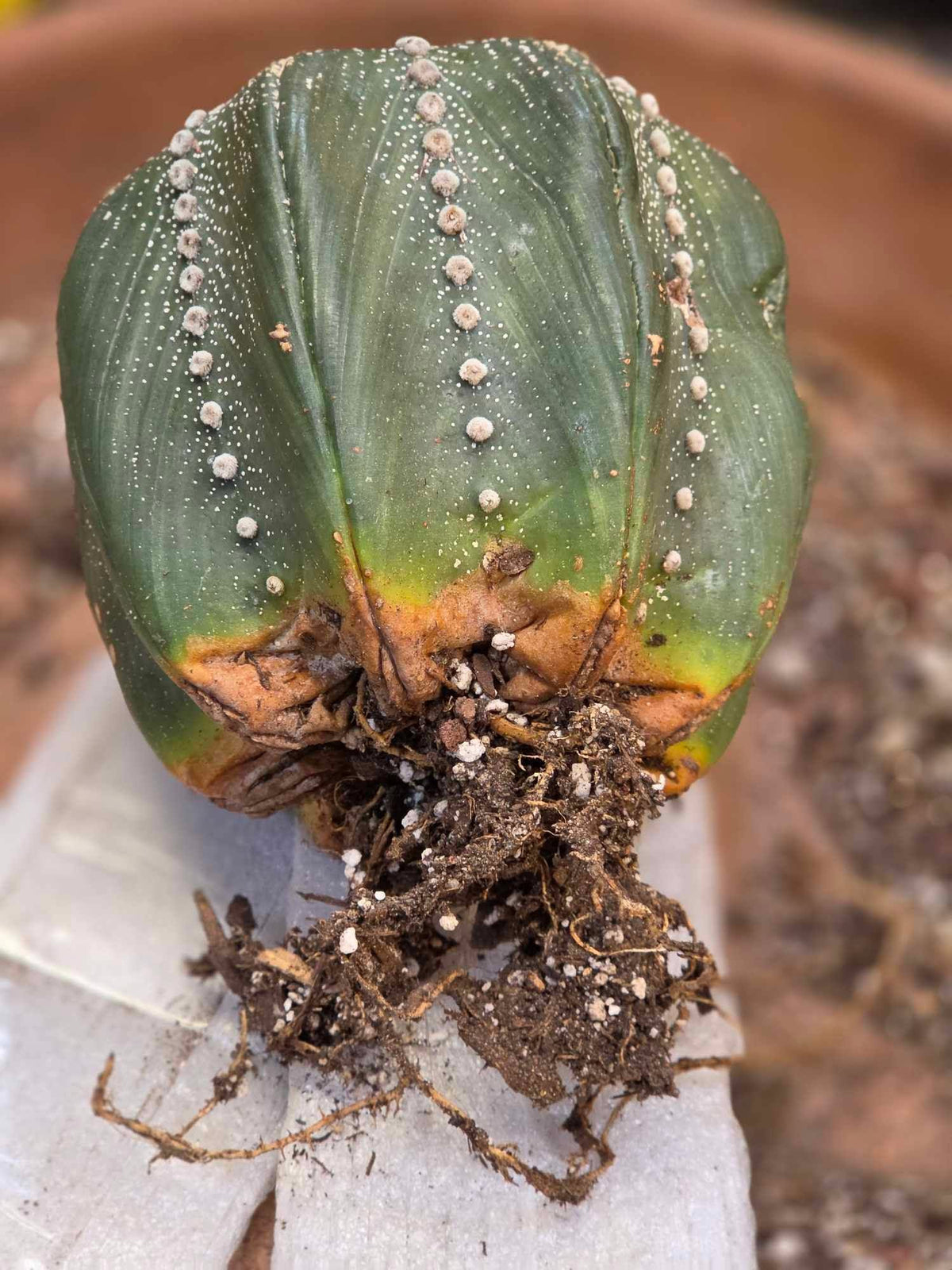
You will receive this exact, large specimen.
Measures approximately 6" wide × 5" tall.
Showcased here in one-of-a-kind Handmade Pottery — Obsidian Basin No. 5 (sold separately).
Roots as shown.
Will be shipped bare root.
🌵
Astrophytum asterias cv. 'Star Type' is a striking cultivated form of the celebrated Star Cactus, distinguished by its pronounced radial symmetry, broad spineless ribs, and beautifully organized rows of pale, woolly areoles. The species is already admired for its remarkable geometric structure, but selected horticultural forms can display especially distinctive rib proportions, epidermal patterns, and overall body shapes. This specimen combines the familiar star-like architecture of Astrophytum asterias with an unusually substantial, rounded body and a restrained pattern of fine white flecking. Its broad, almost sculptural form gives it a commanding presence without the elaborate spination associated with many other collectible cacti.
This exact specimen is particularly impressive for its generous 6-inch width, 5-inch height, deeply defined ribs, and elegant arrangement of white areoles. The body displays a rich blue-green to deep forest-green coloration, with broad vertical ribs separated by pronounced channels that emphasize its rounded, architectural form. Along the rib crests, prominent pale areoles appear in remarkably orderly sequences, becoming smaller and more closely spaced toward the crown. Fine white epidermal flecks are scattered across the surface, with concentrations forming delicate dotted lines and subtle ornamental patterns. The overall effect is beautifully restrained: a substantial, spineless cactus whose visual appeal comes from the precision of its natural geometry rather than excessive ornamentation. Its dark green body is particularly striking against the weathered charcoal and golden tones of the Obsidian Basin.
Care Instructions
☀️ Light
Provide abundant bright light with gentle direct morning sunlight or strong filtered sun. Adequate illumination supports healthy coloration, firm growth, and well-defined ribs. Although Astrophytum asterias is adapted to bright environments, sudden exposure to intense afternoon sunlight can cause scorching, particularly after shipping or a period of indoor cultivation. Gradually acclimate the plant to stronger light and provide protection during extreme heat.
💧 Water
Water thoroughly during active warm-season growth, allowing the growing medium to dry completely or nearly completely between waterings. Reduce watering substantially as temperatures cool and growth slows. During winter dormancy, maintain predominantly dry conditions, particularly when temperatures are low. The substantial body stores moisture, and prolonged saturation around the roots can lead to rot. Resume watering gradually when warm temperatures and active growth return.
🪨 Soil
Requires an exceptionally porous, fast-draining cactus medium with excellent root aeration. A predominantly mineral mixture containing pumice, lava rock, coarse grit, decomposed granite, or similar inorganic components is recommended. A modest proportion of organic material may be included, but the finished medium should drain rapidly and never remain persistently wet. Avoid dense, moisture-retentive soils and containers without adequate drainage.
🌡️ Temperature
Prefers warm growing conditions and protection from prolonged cold and dampness. As a conservative cultivation precaution, maintain temperatures above approximately 45–50°F (7–10°C), particularly when the growing medium contains moisture. Established plants may tolerate brief exposure to somewhat lower temperatures when completely dry, but frost and freezing conditions should be avoided. Warm days, cooler nights, and good air circulation generally support healthy seasonal development.
🌬️ Humidity
Prefers relatively dry atmospheric conditions with excellent air circulation. Avoid prolonged high humidity, particularly during cool weather or dormancy. Good airflow helps prevent moisture from remaining trapped around the crown, areoles, and rib channels. The white epidermal flecks are natural surface structures and should not be scrubbed or aggressively cleaned.
📈 Growth Habit
A slow-growing, spineless cactus that develops a flattened to rounded body with prominent radial ribs. The broad ribs expand and contract as water availability changes, while the orderly rows of woolly areoles emphasize the plant's star-shaped geometry. Cultivated selections may display considerable variation in rib number, body proportions, epidermal markings, and areole arrangement. This specimen has developed a particularly substantial, rounded form. Mature plants may produce attractive yellow flowers with reddish centers near the crown during the active growing season.
✍️ Special Note
This is a large, established specimen measuring approximately 6" wide × 5" tall. Its substantial body and broad rib structure should be handled carefully during repotting to avoid damage to the epidermis or roots. The pale areoles and fine white flecking are natural botanical features, not dust or mineral residue. After bare-root shipping, allow the plant to settle into a dry, well-draining medium before gradually resuming watering. Avoid excessive moisture during cool weather and protect the crown from prolonged dampness.
Why It Stands Out
- Beautiful Astrophytum asterias cv. 'Star Type' — distinctive cultivated Star Cactus
- Large specimen measuring approximately 6" wide × 5" tall
- Substantial, rounded body with pronounced architectural symmetry
- Rich blue-green to deep forest-green epidermal coloration
- Broad, deeply defined ribs separated by elegant vertical channels
- Prominent rows of pale, woolly areoles following the rib crests
- Delicate white epidermal flecking scattered across the green surface
- Subtle dotted patterns that emphasize the natural geometry of the ribs
- Completely spineless growth habit
- Beautifully balanced proportions and strong sculptural presence
- Distinctive example of the ornamental variability found within Astrophytum asterias
- Potential to produce yellow flowers with reddish centers during the growing season
- Showcased in one-of-a-kind Handmade Pottery — Obsidian Basin No. 5 (sold separately)
- Excellent addition to a specialized collection of large Astrophytum and unusual architectural cacti
Collector Notes
Astrophytum asterias, commonly known as the Star Cactus or Sand Dollar Cactus, is one of the most distinctive members of the cactus family. Native to northeastern Mexico and a limited region of southern Texas, the species inhabits open, seasonally dry environments where its compact, flattened body allows it to blend remarkably well into the surrounding landscape. In its natural habitat, the plant may grow partially recessed into the soil, reducing exposure to intense sunlight and limiting moisture loss. Its broad ribs, spineless body, and pale woolly areoles create a remarkably refined structure that has fascinated cactus enthusiasts for generations.
The name Astrophytum derives from Greek roots referring to a star-shaped plant, an especially appropriate description of the genus's distinctive radial architecture. The species name asterias similarly refers to its star-like form. Viewed from above, the broad ribs radiate outward from the central crown, creating a remarkably symmetrical arrangement reminiscent of a star or geometric rosette. This natural organization is one of the principal reasons the species has become such an important subject in ornamental cactus cultivation.
The horticultural designation 'Star Type' emphasizes the specimen's distinctive star-like architecture, although this name should be understood as a cultivated trade designation rather than necessarily a formally registered botanical cultivar. Selected forms of Astrophytum asterias may vary considerably in rib number, body height, epidermal coloration, areole size, and surface flecking. These differences have encouraged generations of collectors and growers to seek particularly attractive individuals with unusual proportions or exceptionally well-defined geometric features.
One of the most remarkable characteristics of Astrophytum asterias is its ability to achieve such a distinctive appearance without prominent spines. Many cacti rely on elaborate spine structures for protection and shading, but this species instead displays a relatively smooth, thick epidermis interrupted by woolly areoles and scattered white trichomes. Its compact body stores moisture, while the ribs allow the plant to expand and contract as water availability changes. These structural adaptations contribute to the species' ability to survive in exposed, seasonally dry environments.
This exact specimen is especially noteworthy for its substantial dimensions and beautifully rounded body. Measuring approximately 6" wide × 5" tall, it possesses considerably more physical presence than the small, flattened Star Cactus specimens frequently encountered in cultivation. Its broad, upright proportions create a powerful sculptural silhouette, while the deeply defined ribs preserve the unmistakable geometric character of the species. The relationship between its width and height is particularly appealing, producing a rounded form that appears both substantial and carefully balanced.
The ribs themselves are among the specimen's most attractive features. Broad, gently convex surfaces rise from the lower body toward the crown, separated by pronounced vertical channels that create beautiful variations in light and shadow. Their arrangement produces a strong sense of radial organization, even when the plant is viewed from the side. The deep green epidermis has a subtle blue-green cast in certain areas, giving the body a rich, understated coloration that contrasts beautifully with the pale areoles.
Along the rib crests, the white woolly areoles form orderly vertical sequences that are especially prominent in this specimen. These specialized structures are characteristic of the cactus family and represent the sites from which spines, flowers, and other growth may emerge. In Astrophytum asterias, the absence of prominent spines leaves the areoles exposed as small, pale, rounded formations. Their regular spacing creates an almost ornamental pattern across the body, reinforcing the plant's natural symmetry and providing a beautiful contrast against the darker epidermis.
The surface flecking introduces another layer of detail. Fine white trichomes are scattered across the green body, sometimes appearing as isolated dots and elsewhere forming delicate lines or clustered patterns. Unlike the extremely dense markings associated with Superkabuto selections, this specimen displays a more restrained arrangement that allows the underlying green epidermis to remain visually dominant. The effect is particularly elegant because the pale markings accentuate the ribs without obscuring their structure. This balance between ornamentation and simplicity is one of the most appealing characteristics of the plant.
As Astrophytum asterias matures, its body may become more substantial, although its natural growth habit generally remains relatively compact compared with the elongated forms found in some other Astrophytum species. Cultivated plants can develop variations in height, rib definition, and overall proportions depending on genetics and growing conditions. The specimen offered here has achieved a particularly impressive rounded form, demonstrating how a familiar species can develop extraordinary presence through size and architectural refinement alone.
Flowering provides another beautiful dimension to the species' appeal. Mature Astrophytum asterias may produce yellow flowers with contrasting reddish or orange-red centers near the crown during periods of active growth. These blooms emerge from the areoles and can be relatively large in proportion to the plant's body. Successful pollination may result in seed-bearing fruits, and seedlings can exhibit considerable variation in rib structure, surface flecking, and other ornamental characteristics. This variability is an important part of the species' continued popularity among collectors and specialist growers.
The presentation in one-of-a-kind Handmade Pottery — Obsidian Basin No. 5 beautifully complements the plant's substantial form. The vessel features a dark charcoal surface with dramatic golden and earthy crackle-like markings, creating the appearance of weathered stone or fractured mineral material. Its broad, irregular rim and low, rounded body provide a strong visual foundation beneath the cactus. The contrast between the smooth, green epidermis and the rugged, highly textured pottery is particularly successful, emphasizing the natural precision of the plant's geometry against the more irregular character of the handmade vessel.
For collectors of distinctive Astrophytum, this exact Astrophytum asterias cv. 'Star Type' offers a compelling combination of generous size, beautifully defined ribs, rich green coloration, prominent white areoles, and elegant epidermal flecking. Measuring approximately 6" wide × 5" tall, it is a substantial specimen whose architectural presence and restrained ornamentation distinguish it from smaller, more conventional examples. Its extraordinary natural symmetry, sculptural body, and established proportions make it a beautiful addition to a serious collection of rare and unusual cacti.