Shangri-Ha Cactus Ranch
Astrophytum asterias - BIG Cluster! 6 Heads
Astrophytum asterias - BIG Cluster! 6 Heads
Couldn't load pickup availability
Astrophytum asterias — BIG Cluster — 6 Heads
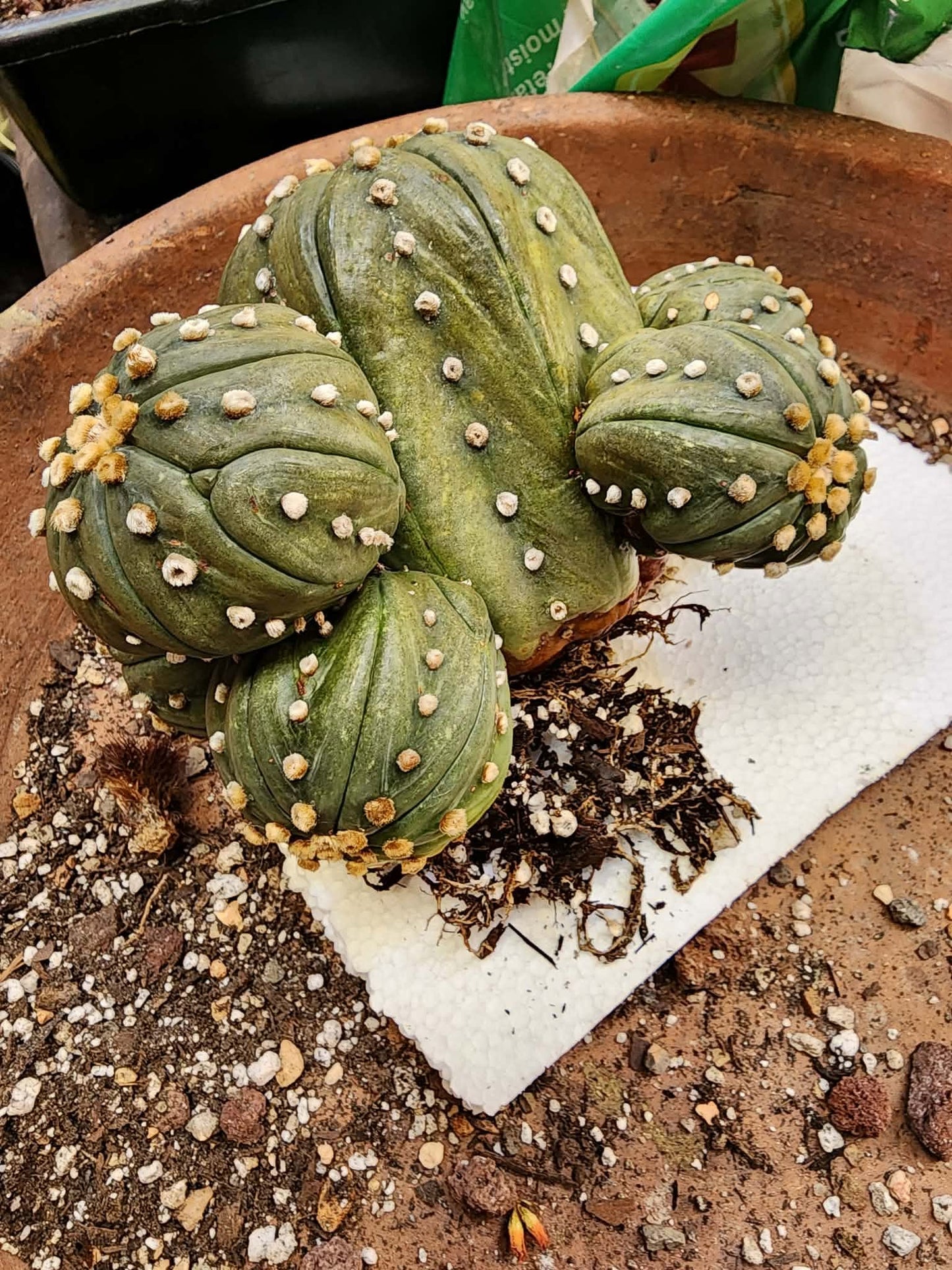
You will receive the exact, large specimen shown here.
Measures approximately 7.5" wide × 5" tall.
Features 6 heads!
Showcased here in Handmade Pottery – Volcanic Drift Basin No. 70 (sold separately).
Roots as shown.
Will be shipped bare root.
🌵
Astrophytum asterias is one of the most distinctive and coveted species in the cactus world, instantly recognizable for its remarkably geometric, spineless body, broad flattened ribs, and prominent woolly areoles. Native to a very limited range in southern Texas and northeastern Mexico, the species typically grows as a solitary, low, button-like cactus, often sitting remarkably close to the soil surface in habitat.
This specimen is anything but typical. It has developed into an exceptionally large six-headed cluster, with substantial mature heads packed tightly together into one wonderfully sculptural mass. Each head retains the classic A. asterias architecture—broad ribs, beautifully defined grooves, muted green epidermis, and creamy woolly areoles—while the clustering habit transforms the familiar solitary star cactus into something much more imposing. At approximately 7.5" across, this is a substantial, established specimen with tremendous presence and the kind of mature character that cannot be replicated quickly.
Care Instructions
☀️ Light
Bright light with several hours of gentle direct sun. Mature plants can tolerate considerable sun when properly acclimated, but protect from abrupt exposure to intense afternoon heat, particularly after shipping or during seasonal transitions.
💧 Water
Water thoroughly during active growth, then allow the soil to dry completely before watering again. Astrophytum asterias is highly susceptible to rot if kept wet for extended periods. Keep substantially drier during cool winter dormancy.
🪨 Soil
Requires an exceptionally fast-draining, mineral-rich cactus mix. A high proportion of pumice, lava rock, grit, or similar inorganic material is recommended.
🌡️ Temperature
Warm-growing during the active season. Protect from frost and prolonged cold, particularly when the soil is damp.
🌬️ Humidity
Prefers dry conditions with excellent air circulation. Avoid prolonged combinations of cool temperatures and high moisture.
📈 Growth Habit
Normally a solitary, low-growing, spineless cactus with a flattened to globose body divided into broad ribs. Clustering specimens are much less typical and can gradually develop offsets around the original plant, eventually forming impressive multi-headed groups such as this mature six-headed specimen.
✍️ Special Note
The combination of a relatively soft, spineless body and sensitive roots makes A. asterias a plant best handled carefully. Avoid burying the body deeply when repotting, and allow any disturbed or damaged roots to dry and callus before watering.
Why It Stands Out
- Six-headed cluster
- BIG, established specimen
- Approximately 7.5" wide × 5" tall
- Unusual multi-headed growth for a normally solitary species
- Beautiful mature rib structure
- Prominent creamy woolly areoles
- Classic spineless Astrophytum architecture
- Outstanding centerpiece for a serious cactus collection
Collector Notes
Astrophytum asterias occupies a special place among North American cacti. Its extraordinarily restrained architecture—typically eight broad ribs, no spines, a flattened body, and orderly rows of woolly areoles—makes it look almost designed rather than grown. In habitat, its low profile allows much of the plant to remain close to or partially level with the surrounding ground, an adaptation that makes wild plants remarkably inconspicuous despite their unmistakable appearance in cultivation.
The species is generally associated with solitary growth, which is part of what makes a large naturally clustered specimen so visually compelling. When offsets do develop and persist, each new head repeats the characteristic geometry of the parent plant. Over time, those individual stars begin to press against one another, creating an increasingly complex colony while still preserving the identity of each head.
This specimen has reached that particularly satisfying stage. Its six distinct heads range around the substantial central growth, creating a dense, mature composition rather than the appearance of a young plant with a few newly forming offsets. The variation in head size also records the plant's development over time and gives the cluster an organic asymmetry that makes it especially sculptural.
At approximately 7.5 inches across, this is not simply an interesting form of Astrophytum asterias—it is a significant specimen of it. Large multi-headed plants require time, careful cultivation, and patience to reach this scale. For the collector who already knows the familiar solitary star cactus, a mature six-headed colony offers something considerably harder to encounter: the classic geometry of A. asterias, multiplied.