Shangri-Ha Cactus Ranch
Astrophytum asterias - BIG Cluster! 6 Heads
Astrophytum asterias - BIG Cluster! 6 Heads
Couldn't load pickup availability
Astrophytum asterias — BIG Cluster — 6 Heads
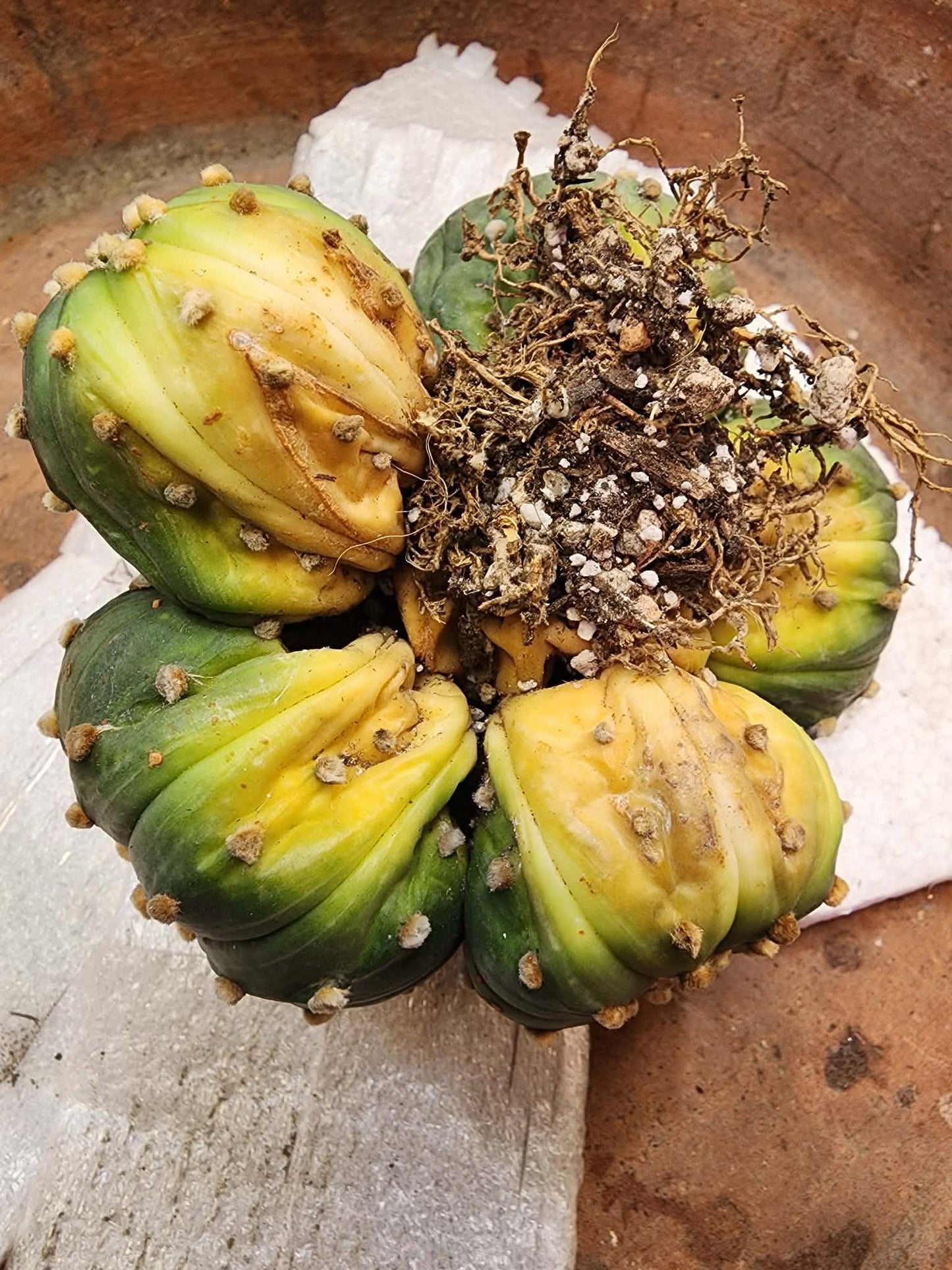
You will receive the exact, large specimen shown here.
Measures approximately 5" wide × 3" tall.
Features an extraordinary 6 heads!
Showcased here in Handmade Pottery – Sand Vein Bowl No. 140 (sold separately).
Roots as shown.
Will be shipped bare root.
🌵
Astrophytum asterias is one of the most distinctive and beloved species in the cactus world, native to southern Texas and northeastern Mexico. Unlike the tall or heavily spined forms associated with many cacti, A. asterias develops as a low, flattened globe divided into beautifully symmetrical ribs. Its spineless body, woolly white areoles and subtle patterning give it an almost geometric appearance — a remarkable adaptation to the hot, exposed landscapes where the species naturally occurs.
This exact specimen takes that classic form to another level. Rather than a solitary head, it has developed into a substantial 6-headed cluster measuring approximately 5 inches across. Each head has its own beautifully defined ribs and woolly areoles, while together they form a dense, sculptural mound with wonderful variation in size and orientation. Multi-headed A. asterias specimens of this scale have tremendous collector presence, and this plant already possesses the character of an established specimen rather than a young single plant.
Care Instructions
☀️ Light: Bright light with plenty of sun. In very hot climates, some protection from the harshest afternoon sun can help prevent scorching. Acclimate gradually after shipping.
💧 Water: Water thoroughly during active growth, then allow the soil to dry completely before watering again. Keep substantially drier during winter dormancy.
🪨 Soil: Requires an exceptionally fast-draining, mineral-rich cactus mix. Excellent drainage is particularly important for A. asterias, which is sensitive to prolonged moisture around the roots.
🌡️ Temperature: Warm conditions are preferred during active growth. Protect from frost and prolonged cold, especially when the soil is damp.
💨 Humidity: Low humidity with excellent air circulation is ideal.
🌱 Growth Habit: Naturally low-growing and flattened-globose. Typically solitary, although some specimens develop offsets and can eventually form impressive multi-headed clusters.
⚠️ Special Note: Astrophytum asterias is particularly sensitive to overwatering. Allow the growing medium to dry thoroughly between waterings and keep the plant considerably drier in cool weather.
Why It Stands Out
- Exceptional 6-headed cluster
- Approximately 5" wide × 3" tall
- Large, established collector specimen
- Beautifully defined geometric ribs
- Distinctive woolly white areoles
- Completely spineless
- Native to Texas and northeastern Mexico
- A spectacular clustered example of one of the most iconic Astrophytum species
Collector Notes
Astrophytum asterias occupies a special place among collector cacti. Its remarkably restrained architecture — flattened body, precise ribs, spineless surface and orderly woolly areoles — makes it look almost designed rather than grown. Viewed from above, mature specimens develop the star-like geometry responsible for the genus name Astrophytum, derived from words referring to a star-shaped plant.
The species occurs naturally in a relatively limited region spanning southern Texas into northeastern Mexico, where plants grow low to the ground and can become remarkably inconspicuous within their surroundings. Their flattened form allows them to remain close to the soil surface, and during periods of drought the plants can contract considerably as they conserve water.
Although the classic image of A. asterias is a single symmetrical disc, established plants can occasionally offset and develop clusters. That changes the visual character dramatically. Instead of one geometric form, multiple heads begin pressing together and overlapping, producing a living composition of repeating ribs, curves and woolly areoles.
This exact specimen has already reached that particularly desirable stage. Its six individual heads vary naturally in size, creating depth and movement across the approximately 5-inch-wide cluster. The largest heads provide substantial mass while the smaller offsets demonstrate the continued development of the colony. It is an exceptionally characterful example of A. asterias — mature, beautifully architectural and already far beyond the familiar single-headed form.