Skip to product information
1 of 7

Shangri-Ha Cactus Ranch

Ariocarpus retusus cv. Cauliflower variegata

Ariocarpus retusus cv. Cauliflower variegata

Regular price $285.00 USD
Regular price $285.00 USD Sale price $285.00 USD
Sale Sold out
Shipping calculated at checkout.

Ariocarpus retusus cv. ‘Cauliflower’ variegata
 Rare Variegated Cauliflower Cactus

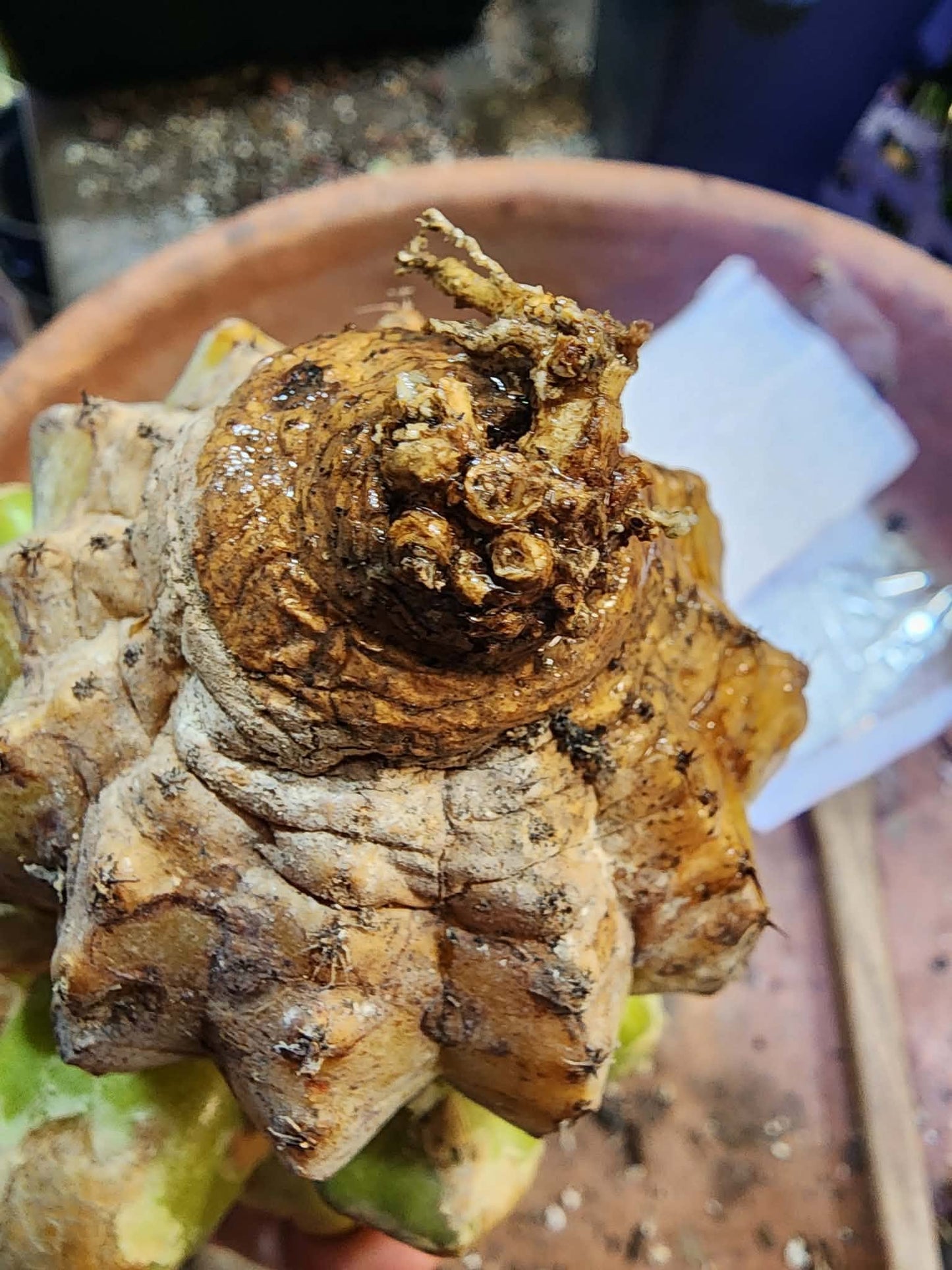
You will receive this exact specimen.
Measures 4.5" wide.
Showcased here in Handmade Pottery – Desert Lime Planter No. 223 (sold separately).
Roots as shown.
Will be shipped bare root.

🌵

Ariocarpus retusus is an extraordinary slow-growing cactus native to northeastern and central Mexico, where it inhabits exposed limestone hills, rocky slopes and other mineral-rich terrain. Rather than producing the familiar ribs and spines associated with most cacti, Ariocarpus develops thick, triangular tubercles arranged into a remarkably sculptural rosette. Plants often grow close to the surface of the surrounding rock and soil, giving them an almost geological appearance and helping them disappear remarkably well into their natural habitat.

The cultivar ‘Cauliflower’ takes that already unusual architecture in an even stranger direction. Its tubercles develop thickened, irregular and distorted growth, creating the knobby, densely textured surface responsible for the cultivar's wonderfully descriptive name. This exact specimen is made still more exceptional by its variegation, with areas of green, yellow-green and creamy coloration moving unpredictably through the unusual growth. At approximately 4.5 inches wide, it is a substantial established specimen with tremendous character — wonderfully strange, highly sculptural and unmistakably Ariocarpus.

Care Instructions

☀️ Light: Bright light with several hours of direct sun is ideal for maintaining compact growth. Because this specimen is variegated, protect the palest portions from extremely intense afternoon sun, particularly in very hot climates. Acclimate gradually after shipping.

💧 Water: Water thoroughly during active growth, then allow the soil to dry completely before watering again. Ariocarpus should be kept considerably drier during winter dormancy. Avoid frequent or unnecessary watering; the substantial taproot is particularly vulnerable to rot when kept wet.

🪨 Soil: Requires an exceptionally fast-draining, predominantly mineral cactus mix. Pumice, limestone, coarse grit and similar inorganic materials are excellent components. Excellent drainage and root aeration are essential.

🌡️ Temperature: Appreciates warmth during active growth and can tolerate cool conditions when kept completely dry. Protect from hard frost and prolonged freezing temperatures.

💨 Humidity: Low humidity with excellent air circulation is preferred. Avoid prolonged combinations of cool temperatures, high humidity and damp soil.

🌱 Growth Habit: Extremely slow-growing and naturally compact. Ariocarpus retusus develops a broad rosette of fleshy tubercles above a substantial underground root system. The ‘Cauliflower’ cultivar produces much more irregular, congested and exaggerated tubercle growth than the typical species.

⚠️ Special Note: Ariocarpus has a large, fleshy root system adapted to storing moisture through extended dry periods. After bare-root shipping or repotting, allow the roots time to settle before watering. Variegated areas contain less chlorophyll and may require some protection from the strongest direct sun.

Why It Stands Out

  • Rare Ariocarpus retusus cv. ‘Cauliflower’
  • Exceptional green, yellow-green and cream variegation
  • Approximately 4.5" wide
  • Extraordinary knobby, irregular cauliflower-like growth
  • Mature, highly sculptural collector specimen
  • Naturally spineless appearance
  • Extremely slow-growing
  • Native species from Mexico
  • Each variegated specimen develops a completely individual pattern

Collector Notes

Ariocarpus occupies a special place among collectible cacti because almost everything about the genus runs contrary to the conventional image of a cactus. There are no towering columns, obvious ribs or formidable displays of spines. Instead, much of the plant's mass exists below ground in a thickened root system, while the exposed portion develops as a compact arrangement of fleshy tubercles that can resemble stone, dried vegetation or fragments of the surrounding landscape.

In habitat, Ariocarpus retusus occurs across parts of northeastern and central Mexico, frequently in limestone-derived soils and exposed rocky environments. Its extraordinarily slow growth and cryptic appearance are part of its adaptation to these demanding conditions. An established plant represents years of patient development, which is one reason mature Ariocarpus specimens have long held such fascination for serious cactus collectors.

The ‘Cauliflower’ cultivar transforms the normally orderly geometry of A. retusus. Instead of developing relatively clean, triangular tubercles, the growth becomes swollen, irregular, folded and congested. The resulting surface can look almost geological — or, true to its name, like the tightly packed florets of a cauliflower. As the plant ages, those distortions become increasingly complex.

Then there is the variegation. Across this exact specimen, areas of green, yellow-green and pale cream interrupt the already irregular growth, producing color changes across individual tubercles and adding another layer of unpredictability to the plant. Combined with its approximately 4.5-inch width, mature form and wonderfully exaggerated surface texture, the result is an Ariocarpus that is difficult to mistake for anything else — a genuinely peculiar and beautiful collector specimen.

View full details