Shangri-Ha Cactus Ranch
Ariocarpus retusus cv. Cauliflower
Ariocarpus retusus cv. Cauliflower
Couldn't load pickup availability
Ariocarpus retusus cv. 'Cauliflower' — Unusual Collector Cactus
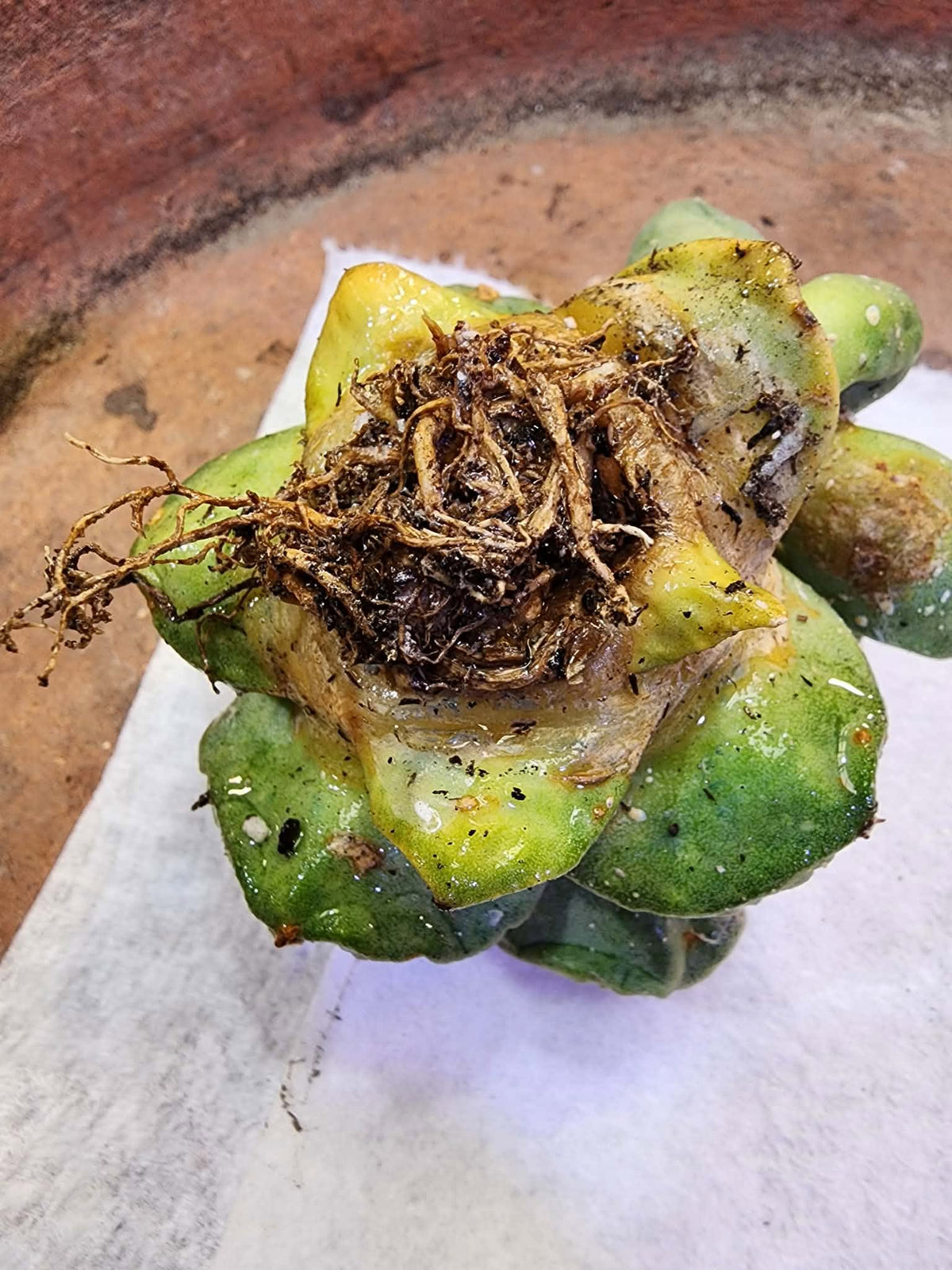
You will receive this exact specimen.
Measures approximately 3" wide.
Showcased here in Handmade Pottery — Golden Fault Basin No. 227 (sold separately).
Roots as shown.
Will be shipped bare root.
🌵
Ariocarpus retusus cv. 'Cauliflower' is an extraordinary cultivated form associated with one of Mexico's most fascinating and unconventional cactus species. Unlike the familiar spiny columns and rounded, ribbed bodies of conventional cacti, Ariocarpus retusus produces thick, triangular tubercles arranged in a compact, low-growing rosette, giving the plant an appearance that is closer to a small geological formation than an ordinary cactus.
The species is native to northeastern and central Mexico, where it inhabits rocky, often limestone-rich environments. In the wild, Ariocarpus plants frequently grow so close to the ground that they can be remarkably difficult to distinguish from the surrounding stones.
Their unusual architecture is an adaptation to demanding environments where water is scarce, soil is often shallow, and survival depends upon conserving resources rather than producing rapid aboveground growth.
The cultivar known as 'Cauliflower' takes this already remarkable botanical form in an even stranger direction.
Rather than presenting the comparatively orderly arrangement of tubercles associated with typical Ariocarpus retusus, plants sold under the 'Cauliflower' name are prized for their irregular, densely developed, cauliflower-like growth. The resulting surfaces can appear crowded, knobby, and highly sculptural, producing a plant whose appearance departs dramatically from the familiar symmetry of the species.
The resemblance to a miniature cauliflower is wonderfully appropriate.
And then there is this specimen.
Measuring approximately 3 inches wide, this is a distinctive collector specimen whose appeal lies in its unusual cultivated form rather than sheer size.
With Ariocarpus, that distinction is particularly important.
These are plants that generally invest heavily in slow, deliberate development, and even comparatively small examples can represent substantial periods of cultivation.
The 'Cauliflower' form introduces an additional level of individuality. Its unusual growth pattern creates an architectural character that distinguishes it from ordinary Ariocarpus retusus and makes it particularly appealing to collectors of rare, unusual, and horticulturally selected cactus forms.
Presented here in Handmade Pottery — Golden Fault Basin No. 227, the plant's sculptural qualities are beautifully complemented by the vessel's dark, textured surface and irregular golden markings.
The pottery is available separately.
Care Instructions
☀️ Light
Provide very bright light with some gentle direct sunlight. Morning sun is particularly beneficial, while protection from intense afternoon sunlight is advisable in hot climates. Although Ariocarpus retusus inhabits exposed environments, cultivated specimens can be vulnerable to sudden changes in light intensity. Acclimate gradually after shipping.
💧 Water
Water carefully during active growth, allowing the substrate to dry thoroughly between waterings. Ariocarpus species possess substantial fleshy storage roots and are particularly vulnerable to rot when kept excessively wet. Reduce watering considerably during cool or dormant periods. Avoid watering when the plant is exposed to prolonged cold conditions.
🪨 Soil
Use an exceptionally fast-draining, mineral-rich cactus mix. Pumice, lava rock, coarse grit, limestone chips, and similar inorganic materials are suitable components. Avoid heavy, moisture-retentive soil. A deep enough container to accommodate the plant's storage root without crowding or damage is important.
🌡️ Temperature
Prefers warm growing conditions with good airflow. Established Ariocarpus retusus can tolerate some cool temperatures when completely dry, but valuable cultivated forms should be protected from frost and prolonged cold. Avoid combining low temperatures with damp soil.
🌬️ Humidity
Prefers relatively dry conditions and excellent ventilation. In humid climates, a highly porous substrate and conservative watering are especially important.
📈 Growth Habit
Typical Ariocarpus retusus develops a compact, low-growing body composed of thick, triangular tubercles supported by a substantial storage root. The cultivated form known as 'Cauliflower' is distinguished by its unusually crowded, irregular growth, which can create a knobby, convoluted surface.
Growth is generally slow, and the development of individual plants may vary considerably.
✍️ Special Note
Ariocarpus plants are particularly sensitive to root damage and prolonged moisture retention.
When repotting, handle the fleshy storage root carefully and avoid unnecessary disturbance. Allow any damaged root tissue to dry and heal before resuming watering.
The irregular growth associated with the 'Cauliflower' form may create recessed areas where water or debris can accumulate. Avoid prolonged moisture retention within these surfaces.
Natural corking, minor scarring, and changes in surface coloration may occur as the plant matures. These characteristics are not necessarily signs of poor health.
The 'Cauliflower' designation is a horticultural cultivar name and should not be confused with a naturally occurring botanical variety formally described from habitat.
Please review all photographs carefully, as you will receive the exact specimen shown.
Why It Stands Out
• Ariocarpus retusus cv. 'Cauliflower', an unusual cultivated cactus form
• Native species originates from Mexico
• Approximately 3" wide
• Distinctive, densely developed cauliflower-like growth
• Extraordinary departure from conventional cactus architecture
• Thick, sculptural tubercles
• Slow-growing collector cactus
• Fascinating adaptation involving a substantial storage root
• Particularly appealing to collectors of unusual Ariocarpus cultivars
• Compact specimen with considerable architectural character
• Showcased in Golden Fault Basin No. 227, sold separately
• The exact specimen shown here
Collector Notes
There are few cactus genera quite as determined to challenge our expectations as Ariocarpus.
They have almost no interest in looking like cacti.
No towering columns.
No dramatic arrangements of long, defensive spines.
No enormous green stems announcing their presence across the landscape.
Instead, they sit close to the gro