Shangri-Ha Cactus Ranch
Aloe maculata - Soap Aloe
Aloe maculata - Soap Aloe
Couldn't load pickup availability
Aloe maculata — Soap Aloe
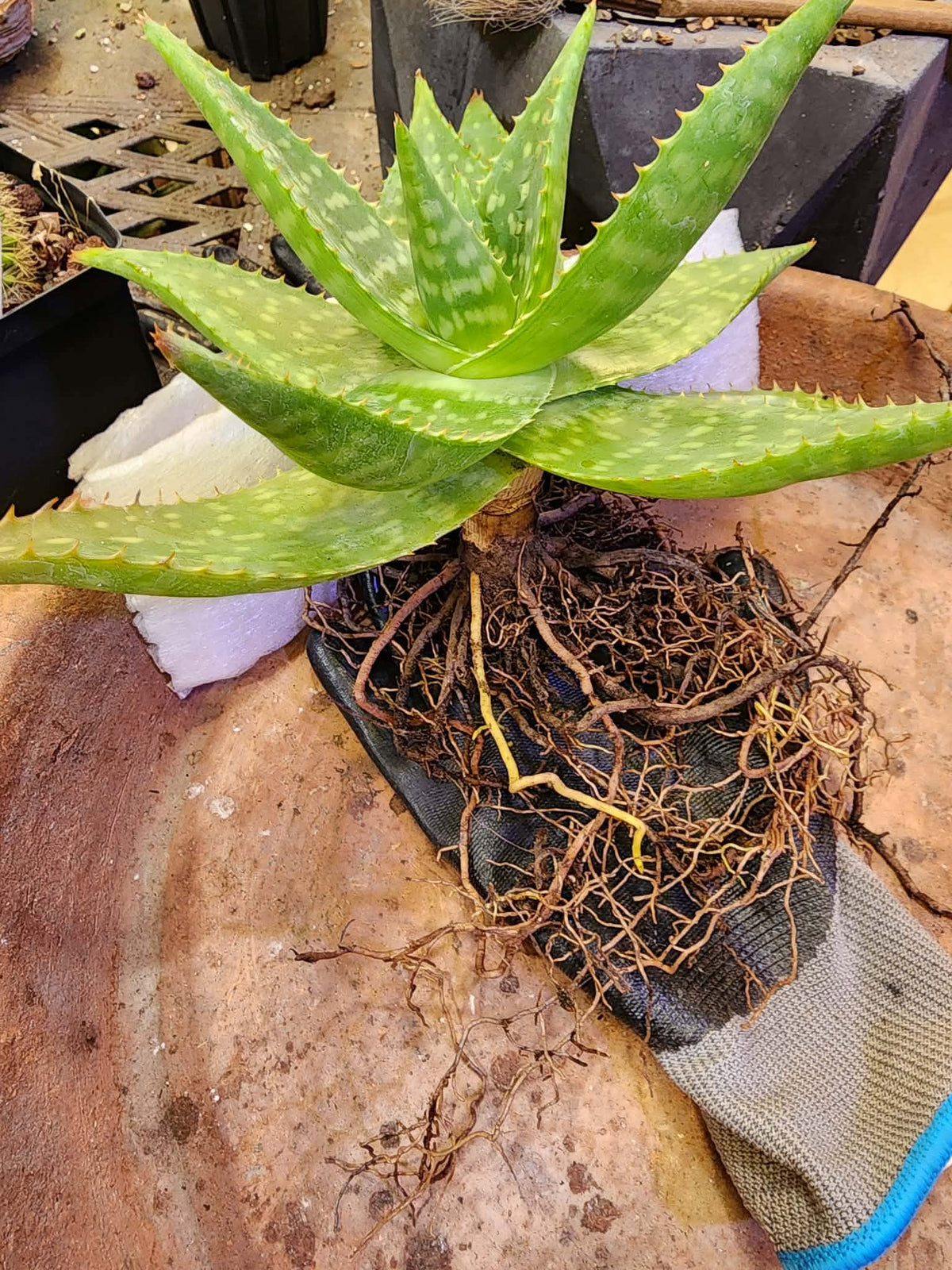
You will receive the exact, well-rooted specimen shown here.
Measures approximately 12" wide × 6" tall.
Showcased here in Tuscany Earthen Planter — Canyon Basin Relic No. 88 (sold separately).
Roots as shown.
Will be shipped bare root.
🌵
Aloe maculata, commonly known as Soap Aloe, is a beautifully patterned South African aloe distinguished by broad, fleshy leaves scattered with pale spots and edged with small reddish-brown teeth. Its low, spreading rosette can shift dramatically in color with season and growing conditions, ranging from fresh green to bronze, reddish, and even purple-tinged tones under strong light or environmental stress.
This exact specimen has developed an impressive 12" spread while remaining only approximately 6" tall, giving it the broad, low architecture characteristic of a well-established plant. Its substantial root system and mature rosette make this an especially satisfying specimen for a rock garden, xeric landscape, or large container.
Care Instructions
☀️ Light
Provide bright light to full sun. Plants grown in strong light generally remain more compact and may develop attractive bronze or reddish coloration. Acclimate gradually to intense direct sun after shipping or periods in filtered conditions.
💧 Water
Water thoroughly, then allow the soil to dry substantially before watering again. Established plants are quite drought tolerant, although occasional deep watering during active growth supports healthy foliage and flowering. Reduce watering during cool or dormant periods.
🪨 Soil
Requires a fast-draining succulent mix with generous mineral content. Pumice, lava rock, coarse grit, decomposed granite, and similar materials help prevent prolonged moisture around the roots.
🌡️ Temperature
Aloe maculata is more tolerant of cool conditions than many tropical aloes, but container-grown specimens should still be protected from severe or prolonged freezes. Cold combined with wet soil is particularly undesirable.
🌬️ Humidity
Tolerates a range of humidity levels when provided with excellent drainage and good airflow. In humid conditions, allow the soil to dry well between waterings.
📈 Growth Habit
Forms broad, relatively low rosettes and can eventually produce offsets, developing into substantial clumps with age. Mature plants send up branching flower stalks bearing clusters of brightly colored tubular flowers.
✍️ Special Note
Leaf coloration in Aloe maculata is highly responsive to growing conditions. Green, bronze, red, and purplish tones can all occur naturally depending on sunlight, temperature, season, and hydration. These changes are part of the plant's normal behavior.
Older leaves may also carry scars, dry tips, weathering, or other evidence of previous growing seasons. These are normal characteristics of an established outdoor-grown aloe rather than imperfections. Please review all photographs carefully, as you will receive the exact plant shown.
Why It Stands Out
- Impressive 12" wide mature rosette
- Well-rooted, established specimen
- Beautifully spotted foliage
- Broad, low architectural form
- Attractive toothed leaf margins
- Color changes dramatically with season and light
- Excellent drought tolerance once established
- Capable of producing striking flower displays
- Can eventually develop into a substantial clump
- Excellent landscape or container aloe
- The exact specimen shown here
Collector Notes
The common name Soap Aloe comes from a practical use that predates its role as an ornamental plant: the sap and lather produced from its leaves have traditionally been associated with washing and soap-like uses.
But the plant itself is far more interesting than the name suggests.
Aloe maculata is native to southern Africa, where it occurs across a remarkably broad geographic and ecological range. That adaptability helps explain why the species has also proven to be such a resilient cultivated aloe.
Its leaves provide the first clue to its identity.
Rather than producing the long, relatively plain leaves familiar from Aloe vera, A. maculata develops broad triangular leaves decorated with irregular pale spots and markings. These patterns break up the green surface, while small teeth along the margins give each leaf a sharply defined outline.
And the color isn't fixed.
Under gentler conditions, a plant may appear predominantly green. Increase the sunlight, reduce available moisture, or expose it to cooler seasonal temperatures and the same rosette may begin moving through shades of olive, bronze, reddish brown, or purple.
The plant effectively changes clothes with the weather.
Its architecture also changes with age.
A young plant may exist as a single compact rosette, but established specimens commonly produce offsets around the original plant. Given enough time and space, what began as one rosette can become a broad colony of overlapping plants.
Then comes the flowering season.
From the low geometry of the foliage rises a tall, branching inflorescence bearing clusters of tubular flowers, often in vivid shades of orange, coral, red, or yellow-orange. The scale of the flower stalk can seem almost disproportionate to the compact plant beneath it.
Those flowers are not merely decorative. Like many aloes, the species participates in the rich relationships between southern African succulents and their animal pollinators, with conspicuous tubular blooms held well above the leaves where they can be easily encountered.
The contrast is wonderful: for much of the year the plant hugs the ground, storing water in heavy leaves and presenting a broad armored rosette to the sun. Then suddenly it sends its reproductive structures high into the air.
At approximately 12" across and only 6" tall, this specimen already demonstrates that horizontal architecture beautifully.
Width matters here.
The appeal isn't height or a perfectly symmetrical tower. It is the way mature leaves occupy space—layering outward from the center until the plant becomes a substantial living rosette.
And beneath that rosette is the equally important feature of this particular specimen: an established root system.
For a plant adapted to unpredictable moisture, roots and leaves perform complementary jobs. Water arriving in the soil can be taken up when available, while the thick succulent foliage provides storage that allows the plant to endure the dry intervals between those opportunities.
Spotted, armored, seasonally colorful, unexpectedly floriferous, and considerably tougher than its ornamental appearance might suggest, Aloe maculata is a beautiful example of how much engineering can be packed into the deceptively simple architecture of an aloe rosette.