Shangri-Ha Cactus Ranch
Aloe perfoliata - Mitre Aloe
Aloe perfoliata - Mitre Aloe
Couldn't load pickup availability
Aloe perfoliata — Mitre Aloe
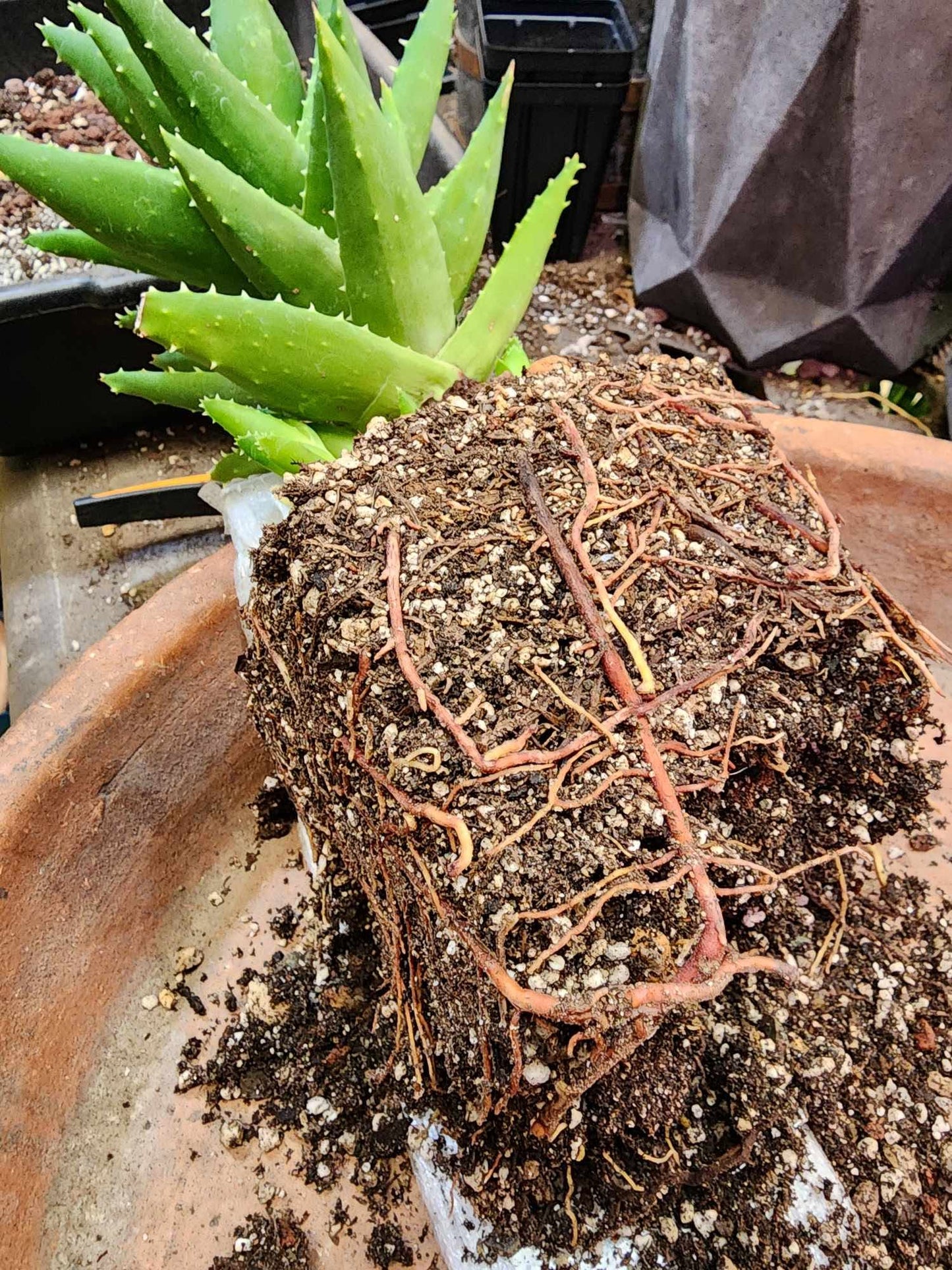
You will receive this exact, well-rooted specimen.
Measures 8" tall x 7" wide.
Roots as shown.
Showcased here in Tuscany Earthen Planter — Cortile Vessel No. 216 (sold separately).
Will be shipped bare root.
🌵
Aloe perfoliata, commonly known as Mitre Aloe, is a distinctive South African species native to rocky slopes and mountainous terrain of the Western Cape. Rather than maintaining the solitary, upright rosette associated with many aloes, this species develops creeping to sprawling stems densely wrapped in overlapping, triangular succulent leaves. The resulting form can look almost architectural, with successive rosettes appearing to climb over one another as the plant gradually expands. Blue-green to grey-green under gentler conditions, the foliage can develop handsome reddish, bronze, and purplish tones with increased sun exposure and environmental stress. Mature plants eventually offset and spread into substantial colonies, making Aloe perfoliata particularly beautiful when allowed to develop its naturally irregular, cascading habit.
Care Instructions
☀️ Light
Bright light to full sun. Strong light encourages compact growth and can bring out the characteristic bronze, red, and purple stress coloration in the foliage. Acclimate gradually to intense direct sunlight after shipping or periods under filtered light.
💧 Water
Water thoroughly during active growth, then allow the soil to dry well before watering again. Established plants are drought tolerant, but appreciate periodic deep watering during warm, active growth. Reduce watering substantially during cool weather and avoid allowing the roots to remain persistently wet.
🪨 Soil
Plant in a fast-draining cactus and succulent mix with generous mineral content. Excellent drainage is important, particularly during cooler months when the combination of low temperatures and wet soil can encourage root problems.
🌡️ Temperature
Tolerates considerable heat and dry conditions once established. Protect from severe or prolonged frost, particularly when container grown. Plants kept relatively dry are generally more tolerant of cool conditions than those in wet soil.
🌬️ Humidity
Prefers dry to moderate humidity with good air circulation. Avoid prolonged cool, damp conditions and stagnant moisture around the crown and roots.
📈 Growth Habit
Begins as a compact rosette but gradually develops elongated, reclining or creeping stems surrounded by densely overlapping leaves. Older plants offset readily and can form broad, sculptural colonies that spread across rocks and slopes. Container-grown specimens may eventually spill outward or develop wonderfully irregular, stacked forms.
✍️ Special Note
Aloe perfoliata has a long and somewhat complicated horticultural history and has circulated under several names. Plants formerly treated as separate species—including the familiar Aloe mitriformis—are now generally included within the variable Aloe perfoliata complex. Considerable variation in leaf shape, rosette form, coloration, and growth habit can therefore occur among plants encountered in cultivation.
As with other aloes, the marginal teeth can be sharp. Handle established specimens carefully when repotting or shipping.
Why It Stands Out
- Distinctive South African species
- Beautiful overlapping, triangular foliage
- Sculptural creeping and sprawling growth habit
- Excellent established root system
- Develops increasingly architectural form with age
- Foliage can flush bronze, red, and purple in strong light
- Naturally offsets to form substantial colonies
- Wonderful specimen for rocky, mineral-rich plantings
- Particularly handsome grown in sculptural pottery
- An established specimen ready to continue developing its characteristic form
Collector Notes
Aloe perfoliata belongs to that wonderful group of succulents whose character becomes increasingly apparent with age. A young plant may begin as a relatively conventional aloe rosette, but over time the stem elongates, reclines, and begins moving outward rather than simply upward. New growth continues from the ends while offsets develop alongside it, eventually producing the sprawling colonies seen across rocky habitat in South Africa's Western Cape.
The species' tightly overlapping leaves are responsible for much of its visual appeal. Arranged densely around the stem, they create an almost scaled or armored effect, particularly on compact plants grown in strong light. Environmental conditions can alter its appearance considerably: foliage may remain cool blue-green under moderate conditions, while brighter sun, drought, and cooler temperatures can introduce increasingly rich bronze, reddish, or purplish coloration.
This well-rooted specimen already shows the substantial, compact architecture that makes Mitre Aloe so appealing. At 10" tall x 7" wide, it has moved well beyond the scale of a young nursery start while remaining beautifully suited to container culture. Given time, strong light, and room to develop, its form should become increasingly irregular and sculptural—the very quality that makes old colonies of Aloe perfoliata so memorable.