Shangri-Ha Cactus Ranch
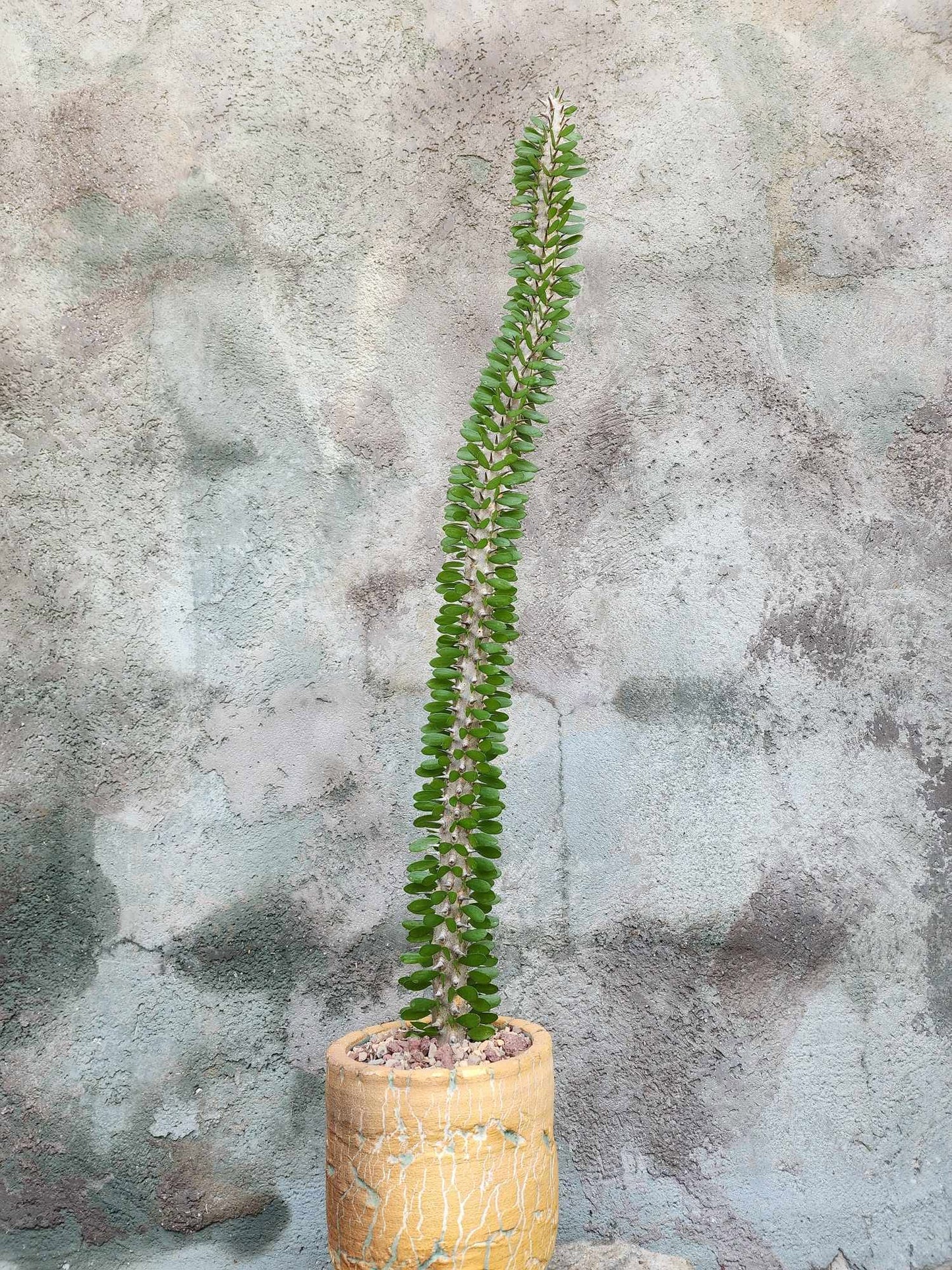
Alluaudia Procera - Madagascar Ocotillo - 27" Tall
Alluaudia Procera - Madagascar Ocotillo - 27" Tall
Couldn't load pickup availability
Alluaudia procera
Madagascar Ocotillo
You will receive the exact specimen shown here.
Very large specimen measuring 27" tall above the soil line.
Roots as shown.
Showcased here in handmade pottery Ochre Fault Planter No. 96 (sold separately).
Will be shipped bare root.
Alluaudia procera, commonly known as the Madagascar Ocotillo, is one of the world's most remarkable succulent trees. Endemic to the spiny forests of southern Madagascar, this extraordinary species develops tall, upright stems lined with paired spines and small, rounded leaves during the growing season. Although it resembles the North American Ocotillo, the two are unrelated—an exceptional example of convergent evolution, where plants from opposite sides of the world independently evolved strikingly similar forms to thrive in arid environments.
🌵 Care Instructions
☀️ Light:
Provide bright light to full sun. Strong light encourages sturdy growth, compact branching, and healthy seasonal foliage. Acclimate gradually when moving into more intense sunlight.
💧 Water:
Water deeply only when the soil is completely dry during the active growing season. Reduce watering significantly during cooler months or when the plant naturally drops its leaves.
🌱 Soil:
Use a very fast-draining cactus and succulent mix with plenty of mineral material such as pumice, lava rock, or perlite. Excellent drainage is essential.
🌡️ Temperature:
Protect from frost. Alluaudia procera thrives in warm, dry conditions and should be protected below approximately 40°F.
✨ Why It Stands Out:
Native only to Madagascar's extraordinary spiny forests, Alluaudia procera combines the graceful silhouette of an Ocotillo with the enduring architecture of a succulent tree. Its paired spines, seasonal foliage, and distinctive upright form make it one of the most iconic plants from Madagascar and a centerpiece specimen in any serious succulent or caudiciform collection.